Antennas against blood cancer
Project on cell-based cancer therapy funded with 650,000 euros / Part of a comprehensive EU projectThe European Union is funding a research project on cell-based cancer therapy under the direction of Prof. Dr. Toni Cathomen, Director of the Institute for Cell and Gene Therapy at the Medical Center - University of Freiburg, with around 650,000 euros. The project is based on the further development of so-called CAR-T cell technology. This involves equipping immune cells with cellular antennae that recognize cancer-typical characteristics of abnormal cells. The cancer cells are then destroyed. The Freiburg researchers are developing efficient and safe gene scissors for this purpose, with which the blueprint of the cellular antennae is introduced into the genetic material of the immune cells. Within four years, the novel method against blood cancer should be ready for large-scale use. The researchers are also looking for ways in which the procedure can also be used against solid tumors such as prostate cancer. The Freiburg project is part of the EU CARAT program, which is funded with six million euros and aims to further develop the CAR-T technology, which has been very complex to date.
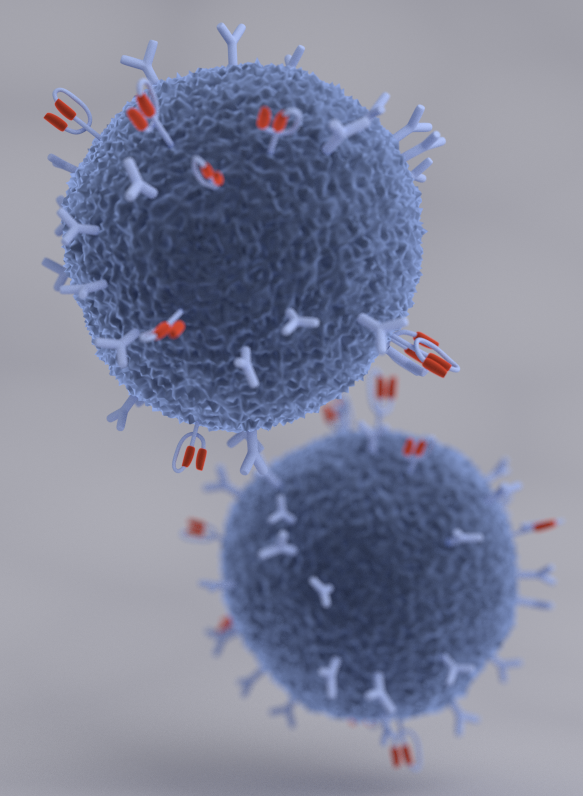
CAR stands for 'Chimeric Antigen Receptor'. Specific receptors are produced for each type of cancer, which recognize the characteristics of the respective cancer. The Freiburg researchers are developing the gene scissors based on the CRISPR-Cas method for the entire consortium. The genetic scissors are used to insert the blueprint of the CAR into the genetic material of the T cells. The T cells then produce the receptors and place them on the cell surface. When an immune cell comes into contact with a cancer cell, it recognizes it and destroys it. "Our CAR T cells should not only be highly selective in recognizing cancer cells, but should also be able to be switched off at any time if necessary," says Prof. Cathomen. This should further increase the safety of the method.
The Freiburg researchers are also working on ways to use CAR-T technology for solid tumors. Until now, researchers have faced the problem that the tumor tissue produces factors that inhibit the T-cell-mediated immune response. The Freiburg researchers led by Prof. Cathomen are therefore attempting to overcome this inhibition by making targeted genetic changes to the CAR-T cells. Corresponding laboratory studies are already underway.
In addition to the development of the gene scissors and the extension to solid tumors, the automation of the production of CAR-T cells is an important part of the large-scale project. "In future, every hospital with an appropriate clean room should be able to produce the required CAR-T cells on site," says Prof. Cathomen.
Initial clinical studies with adults and children suffering from a very aggressive form of acute lymphoblastic leukemia give rise to high hopes. A study by the University of Pennsylvania reports 89 percent of people cured after the application of CAR-T cells. The US Food and Drug Administration sees this as a breakthrough in the treatment of previously treatment-resistant forms of leukemia.
Caption: With CAR-T cell technology, researchers can introduce receptors (with red area) specially adapted to the type of cancer into the immune cells. Unlike with the body's own receptors (blue), the immune system now recognizes the cancer cells and can destroy them.
Image source: Carat Consortium
Further information:
Press release: Award for gene researcher