
Brain of the world's oldest vertebrate examined
Detailed examinations of the oldest brain can provide new insights into age-related brain diseases / Study published in the journal Acta Neuropathologica
It was born in 1774 when J.W. Goethe wrote "The Sorrows of Young Werther" and has lived to the present day: the Greenland shark is the oldest known vertebrate in the world, very rare, hardly researched and can live to be around 500 years old. Now, an international team of researchers led by the Medical Center - University of Freiburg, together with scientists from the Marine Institute in Hafnarfjörour, Iceland, has succeeded for the first time in examining the brain of an approximately 245-year-old Greenland shark in detail. The Icelandic team led by Dr. Klara B. Jakobsdóttir and can now provide neuroscientists with new insights into the processes of ageing. The study was published on October 16, 2020 in the journal Acta Neuropathologica.
"This finding is a stroke of luck for the neurosciences," says project leader Prof. Dr. Marco Prinz, Medical Director of the Institute of Neuropathology at the Medical Center - University of Freiburg and member of the Freiburg Cluster of Excellence CIBSS - Centre for Integrative Biological Signalling Studies at the Medical Center - University of Freiburg. "For neurodegenerative diseases in humans such as Parkinson's and Alzheimer's, age was previously considered the greatest risk factor. Statistically, more than 40 percent of over 90-year-olds suffer from Alzheimer's disease. A detailed histopathological examination of an extremely long-lived vertebrate is therefore of great interest."
When the brains of patients with Parkinson's and Alzheimer's disease arrive at the Institute of Neuropathology at the Medical Center - University of Freiburg, they are usually very clearly altered. In addition to shrinkage of specific brain structures, physicians see deposits of misfolded, potentially toxic proteins under the microscope, a significant loss of nerve cells, reactive tissue changes and age-related vascular changes that lead to bleeding in the brain and disruption of the blood-brain barrier.
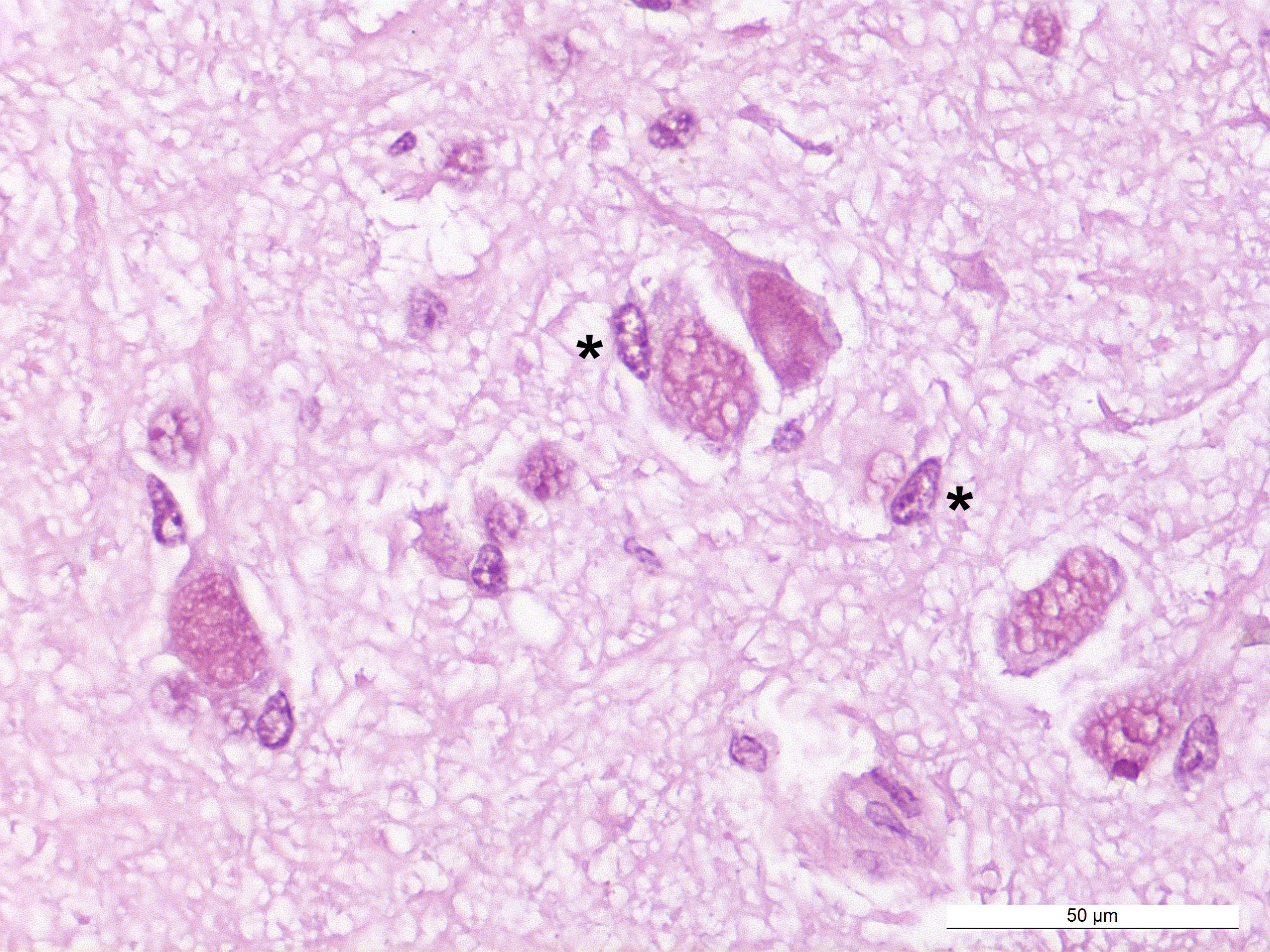
Using novel, high-resolution microscopy techniques, the researchers have now succeeded in examining the approximately 245-year-old brain of the Greenland shark in detail and comparing it with those of people with Parkinson's and Alzheimer's disease. "Surprisingly, we found no age-related changes in the brain of the shark, which was in its 3rd century of life, as we know them from humans," as Dr. Daniel Erny, neuropathologist and first author from the Institute of Neuropathology at the Medical Center - University of Freiburg, points out. "Since these animals live very secluded lives at greater depths, move extremely slowly, have a very reduced metabolism and grow exceptionally slowly, mere chronological age can no longer be considered the main risk for neurodegenerative changes. Rather, in addition to genetic factors, environmental influences and species-specific factors are also decisive." The researchers want to investigate exactly what these are in future studies.
Figure 1 : The hematoxylin-eosin staining of the approximately 245-year-old Greenland shark brain shows large nerve cells without signs of pathological changes. In addition, presumed microglial cells with bean-shaped nuclei and typical nuclear chromatin were found (marked with *). Bar: 50 µm.
Image source: Medical Center - University of Freiburg / Daniel Erny
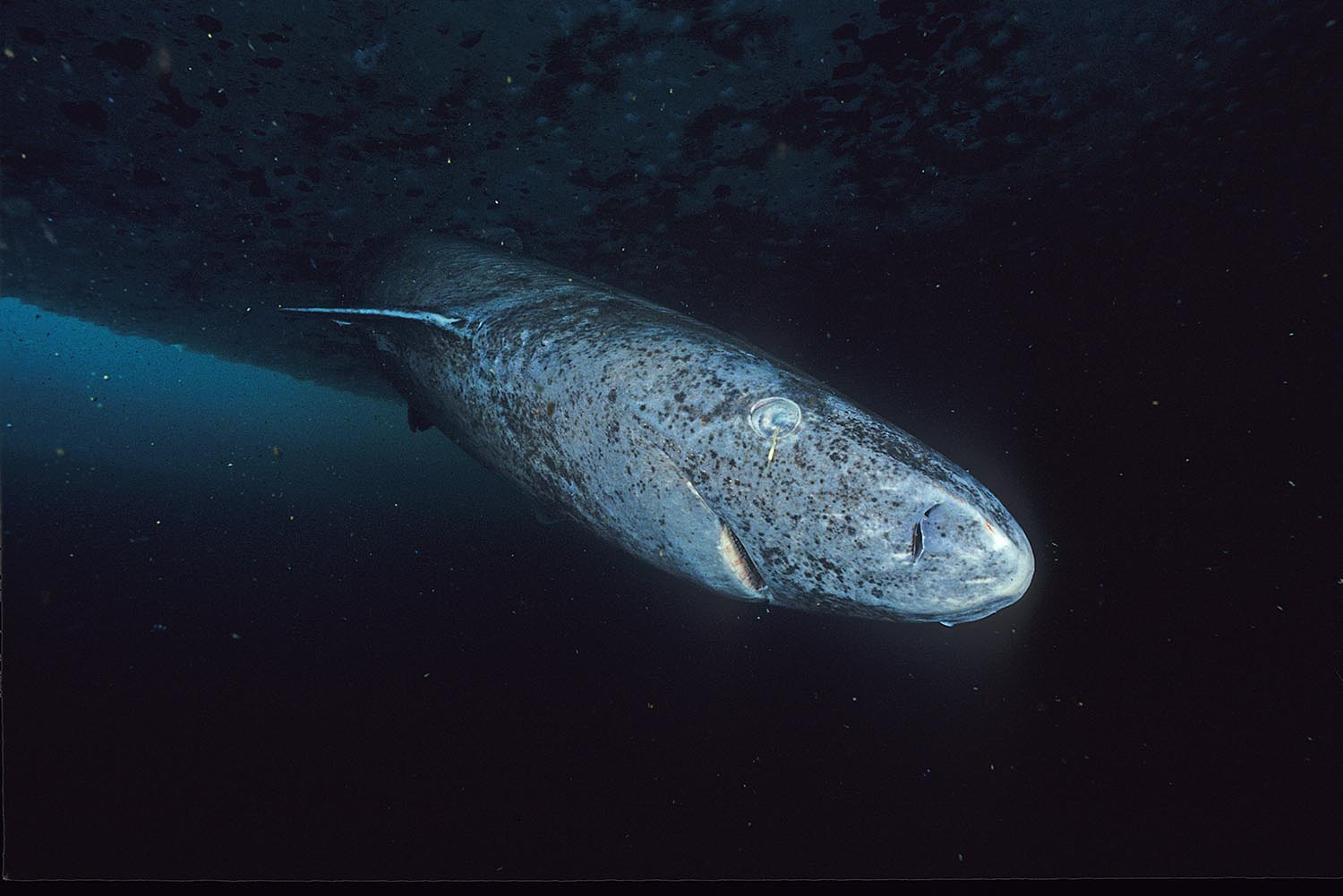
Image 2: Greenland sharks can live up to 500 years. By studying the brain, the Freiburg researchers were able to gain important insights into age-related changes in the brain.
Image source: Hemming1952 / CC BY-SA 4.0
Original title of the study: Neuropathological evaluation of a vertebrate brain aged 245 years.
DOI: doi: 10.1007/s00401-020-02237-4
Link to the study: https://link.springer.com/article/10.1007/s00401-020-02237-4
Contact:
Prof. Dr. Marco Prinz
Institute of Neuropathology
Uniklinik Freiburg
Phone: 0761 270-51060
marco.prinz@uniklinik-freiburg.de
Back
Medical Center - University of Freiburg
Central Information
Phone: 0761 270-0
info@uniklinik-freiburg.de
For press inquiries:
Corporate Communications
Breisacher Straße 153
79110 Freiburg
Phone: 0761 270-84830
kommunikation@uniklinik-freiburg.de