
Precise irradiation of aggressive brain tumors thanks to innovative imaging and AI
The European Union is providing 1.2 million euros in funding for an international project led by the Medical Center - University of Freiburg on the irradiation of dangerous brain tumors / Combination of PET and MRI imaging to be evaluated with AI
Glioblastomas are rare but particularly aggressive brain tumors. They are often treated with radiotherapy. In the MATTO-GBM study, an international research team led by the Medical Center - University of Freiburg is now investigating how the tumor can be irradiated with maximum intensity while sparing surrounding healthy tissue. The researchers are relying on advanced imaging and support from artificial intelligence for image analysis. The project is being funded by the European Union with 1.2 million euros over three years as part of the Horizon 2020 program.
"We hope that this will significantly improve the radiation treatment of patients with brain gliomas," says the head of the research project Prof. Dr. Anca-L. Grosu, Medical Director of the Department of Radiation Oncology at the Medical Center - University of Freiburg. Physicians and researchers at the Department of Radiation Oncology have been investigating the role of imaging in radiation treatment for patients with brain tumors for many years.
Important insights into the tumor
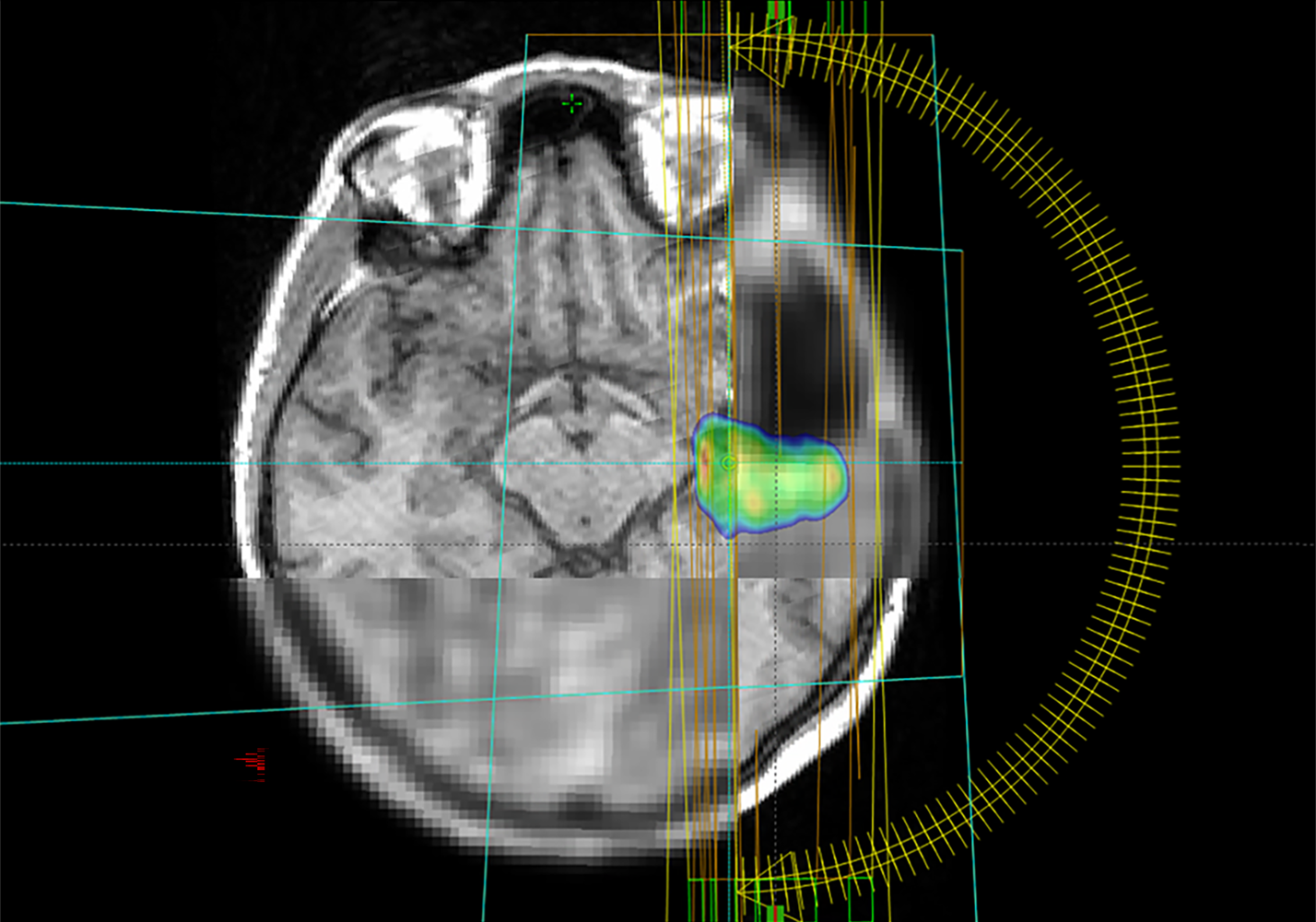
Instead of only using images from magnetic resonance imaging (MRI), as was previously the case, the research team from Spain, Germany and Austria is also using positron emission tomography (PET) imaging in the current study. "We want to use the combination of MRI and PET to better understand the biological properties of the tumors. This will make the metabolism in the tumor visible and enable highly effective irradiation of particularly dangerous parts of the tumor," says physicist Monserrat Carles Fariña, who is actively involved in the project both in Valencia, Spain, and at the Medical Center - University of Freiburg.
Standardizing treatment internationally with AI
Another focus of the study is the use of artificial intelligence: it helps to define the tumor on the images more precisely and predict when and where it could potentially recur. A major goal of the researchers is to create a freely accessible digital tool. This should enable hospitals worldwide to tailor glioblastoma therapy to the individual risk pattern of individual patients and thus improve their quality of life. The project brings together specialists from the fields of artificial intelligence, radiation oncology, nuclear medicine, neuroradiology, medical physics, neuropathology and neurosurgery.
Caption: The European research team led by Freiburg is investigating how radiotherapy of aggressive brain tumors can be further improved through combined imaging.
Image source: Medical Center - University of Freiburg
Back
Medical Center - University of Freiburg
Central Information
Phone: 0761 270-0
info@uniklinik-freiburg.de
For press inquiries:
Corporate Communications
Breisacher Straße 153
79110 Freiburg
Phone: 0761 270-84830
kommunikation@uniklinik-freiburg.de