Successful combination therapy for aggressive leukemia
Most common form of blood cancer in adults affected / Cure through originally palliative therapy / Publication in Nature MedicineResearchers at the University Medical Center Freiburg have found a new, very effective therapy for the most common form of leukaemia in adults, acute myeloid leukaemia (AML). In around one in eight AML patients, the cancer cannot be suppressed in the long term with either chemotherapy or a stem cell transplant. The Freiburg researchers have now shown that these patients benefit from a combined treatment: They transferred T immune cells from healthy donors and gave the drug sorafenib at the same time. Some of the patients were cured, in many the cancer was significantly reduced. In extensive laboratory studies, the researchers deciphered the mode of action of the therapy: Sorafenib makes the tumor cells visible to the immune cells, which then destroy the cancer. The laboratory results were confirmed by data from over 400 patients from 39 study centers worldwide. The study was published in the journal Nature Medicine on February 12, 2018 .
Acute myeloid leukemia is the most common form of leukemia in adults. Around one in four people affected have a genetic mutation that makes the cancer resistant to chemotherapy. A transplant of immune stem cells from healthy donors leads to a cure in just under half of these patients. However, in almost 60 percent of those affected, the cancer returns and is then - until now - quickly fatal. These patients could now benefit from the new therapy.
"Originally, sorafenib was only given to patients to slow down the progression of the disease. We then discovered that the cancer disappears in patients who had previously received a transplant of healthy immune cells. We were extremely surprised by this," says study leader Prof. Dr. Robert Zeiser, senior physician and head of the Section for Tumor Immunology at the Department of Internal Medicine I at the Freiburg University Medical Center.
From the bedside to the lab and back
Prof. Zeiser's team replicated the clinical findings in the laboratory and showed that sorafenib boosts the production of the messenger substance interleukin-15 in leukemia cells. This overrides the camouflage mechanisms of the cancer cells and makes them visible to the immune system. "The transplanted, healthy immune T cells thus recognize the cancer cells and kill them. In addition, the transplanted cells live longer thanks to the messenger substance and can destroy more cancer cells," says first author of the study Nimitha Mathew, biotechnologist in Prof. Zeiser's team at the Department of Internal Medicine I at the Freiburg University Medical Center.
In addition to the laboratory data, the Freiburg researchers coordinated a large-scale analysis of 409 patients from 39 study centers in Europe, the USA, Australia and Asia. The patients were all treated with different drugs due to an AML leukemia relapse. "The combination of sorafenib and T-cell transfer clearly led to the best probability of survival," says Prof. Zeiser.
Sorafenib is already approved for the treatment of liver, kidney and thyroid cancer. Until now, it was known to stop the proliferation of certain cancer cells and inhibit the tumor's blood supply. However, it does not have this effect on leukemia cells. "Because sorafenib has already been approved, patients can be treated with it immediately," says Prof. Zeiser.
"The study is a prime example of the translation that is so often required in medical research: the impetus came from observations in patients, was examined in the laboratory and then checked again in the clinic," says Prof. Dr. Justus Duyster, Medical Director of the Department of Internal Medicine I at the Freiburg University Medical Centre.
Title of the original study: Sorafenib promotes graft-versus-leukemia activity in mice and humans through IL-15 production in FLT3-ITD-mutant leukemia cells
DOI: 10.1038/nm.4484
Link to the study: https: //www.nature.com/articles/nm.4484
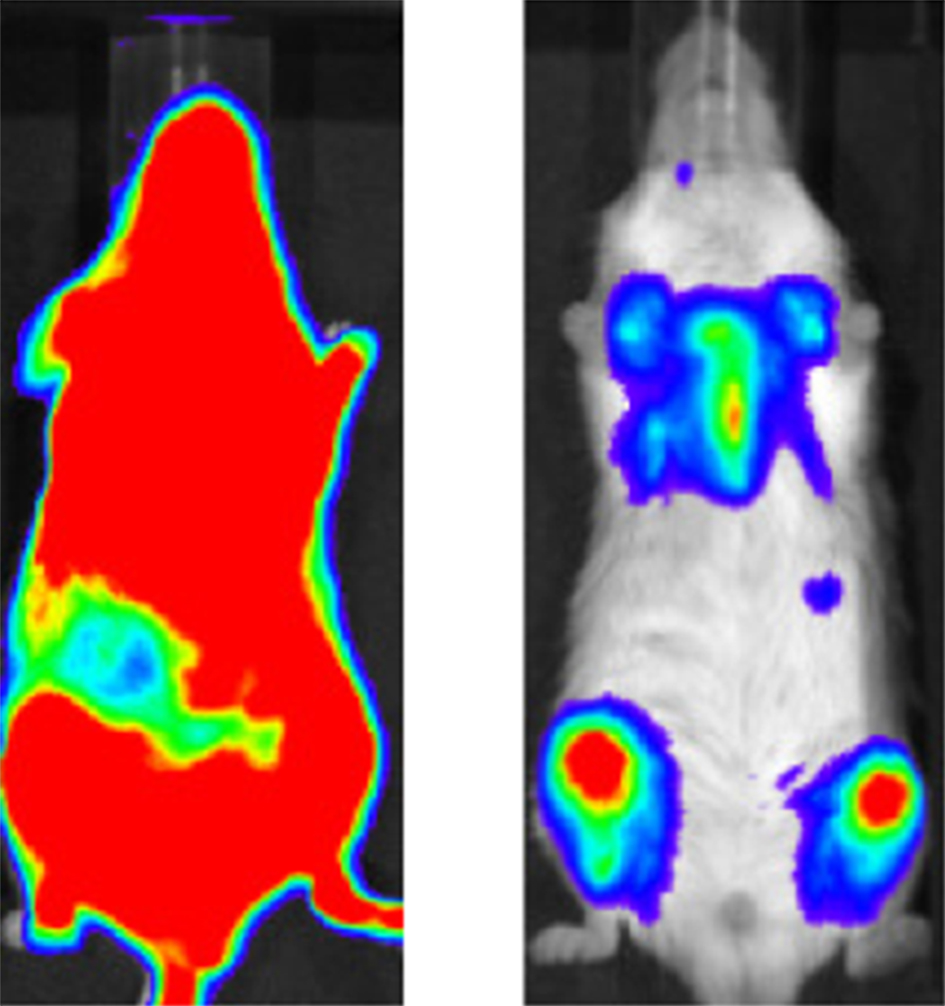
Caption: Mice with leukemia: Transplantation of healthy immune cells is not sufficient (left). However, if sorafenib is given at the same time, the tumor cells are suppressed. (red: many cancer cells, blue: few cells). Bioluminescence imaging.
Image source: Zeiser/Nat Med
Further information:
Website of the Section for Tumor Immunology and Immune Regulation
Contact:
Prof. Dr. Robert Zeiser
Head of the Section for Tumor Immunology
Department of Internal Medicine I
Freiburg University Medical Center
Phone: 0761 270-34010
robert.zeiser@uniklinik-freiburg.de