Concentrated expertise under one roof
The Center for Chronic Immunodeficiency and the Comprehensive Cancer Center Freiburg have moved into the new Center for Translational Cell Research (ZTZ)In the newly built Center for Translational Cell Research (ZTZ) at the Medical Center - University of Freiburg, cells have been scrutinized since the beginning of March in order to find new approaches for the treatment of immunodeficiencies and cancer. 260 employees of the Center for Chronic Immunodeficiency (CCI) and the Comprehensive Cancer Center Freiburg (CCCF) are now working there to better help patients with immune diseases and cancer patients. The aim of the new center is to transfer findings from basic research into clinical application. The fact that the specialists are now working under one roof will make research even more productive, as immune cells and cancer cells have many things in common - the shared use of equipment, joint seminars and daily discussions will bring the two disciplines even closer together and promote the exchange of ideas.
On the trail of rare immunodeficiencies
Four eyes see more than two. And what about 16, 18 or 24? When patients with very rare and sometimes life-threatening immunodeficiencies come to the Center for Chronic Immunodeficiency (CCI) at the Medical Center - University of Freiburg, a whole host of physicians and scientists are involved in the case. Immunologists, infectiologists, rheumatologists, pediatricians and other specialists work together to find an answer to the question: Where is the problem and how can we help? This type of collaboration is called translational medicine and it shortens the distance between the theoretical findings of research and their practical application in the clinic. In order to be able to take this shortcut, physicians and researchers at the CCI often had to get on their bicycles or into their cars, as large parts of the CCI were housed in a branch office in the Freiburg-Nord industrial area and others in the Tumor Biology Clinic. This is now a thing of the past. If Medical Director Professor Dr. Stephan Ehl wants to consult with Scientific Director Professor Dr. Bodo Grimbacher, he only has to go one door down in the CCI's new building, the Center for Translational Cell Research (ZTZ) in Breisacher Straße. "Interdisciplinary collaboration is much easier here on campus," says Professor Dr. Bodo Grimbacher, Scientific Director at the CCI. And it's not just this route that is shorter. "The three specialized outpatient clinics for children, adults and HIV patients are now also very close by," emphasizes Professor Dr. Stephan Ehl, Medical Director at the CCI.
The Center for Chronic Immunodeficiency (CCI) at the Medical Center - University of Freiburg is an integrated research and treatment center that has been funded by the German Federal Ministry of Education and Research (BMBF) since 2008. The work of the CCI aims to better understand immune diseases through the collaboration of experts from different disciplines, so that immunodeficiency can be recognized earlier and treated more effectively. More: www.uniklinik-freiburg.de/cci
Focus on optimal therapies
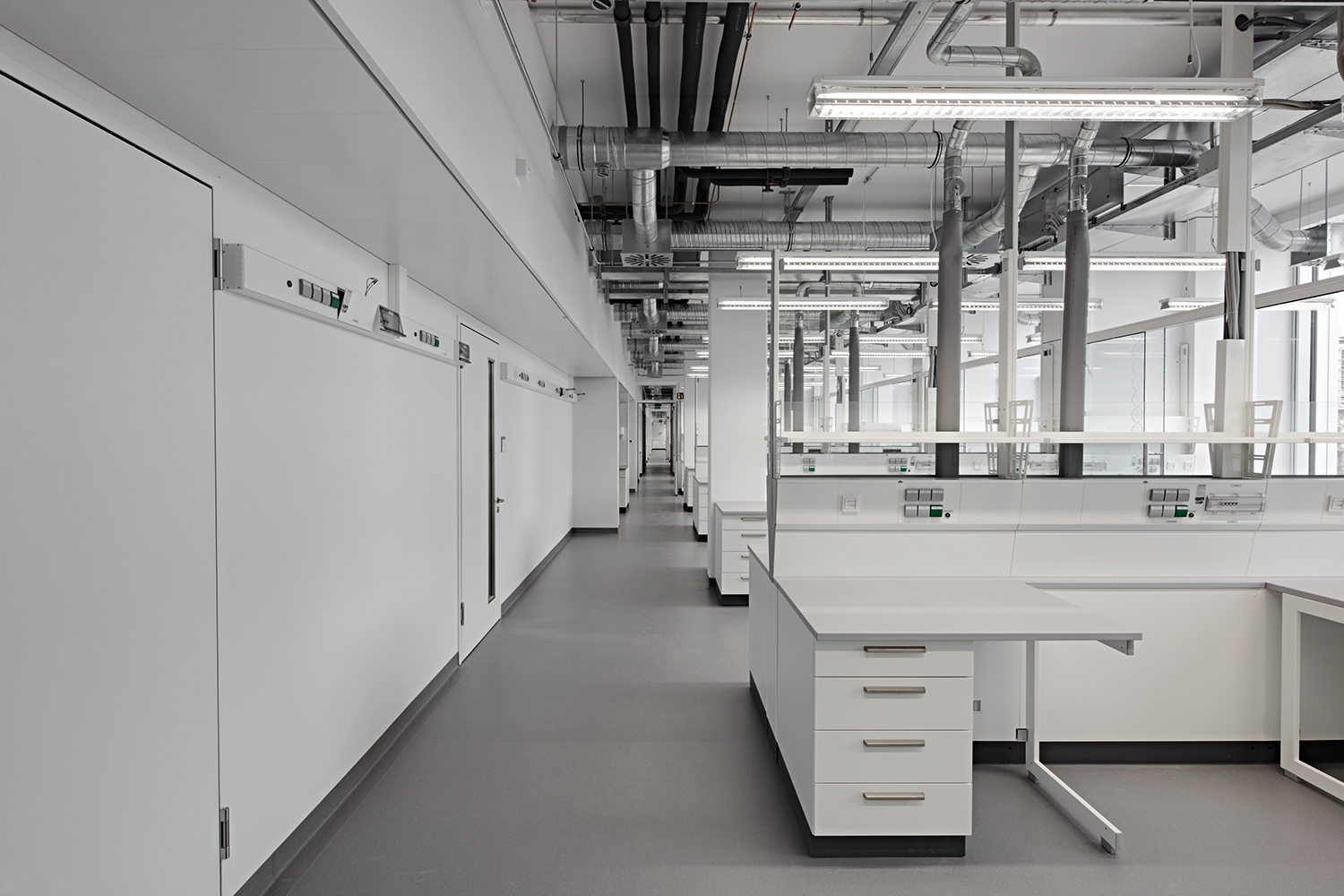
The ZTZ is home not only to the CCI's immune researchers, but also to the cancer researchers of the Comprehensive Cancer Center Freiburg (CCCF). All areas of the Tumor Center are constantly working on tailor-made, well-tolerated therapies that take into account modern molecular biological insights into oncogenesis. Translational research acts as a link between basic research and clinical application and has now been given generous laboratory space in the newly built Center for Translational Cell Research (ZTZ). Here, oncologists are researching, for example, which cell biological mechanisms control the uncontrolled spread of cancer cells and can therefore serve as starting points for causal, biologically based therapies. "The CCCF uses state-of-the-art research methods to achieve the goal of transferring fundamental findings on carcinogenesis, cancer development, early diagnosis, cancer prevention and novel therapeutic treatment approaches into clinical application and setting new standards," says Prof. Dr. Christoph Peters, Scientific Director of the Comprehensive Cancer Center Freiburg - CCCF.
The Comprehensive Cancer Center Freiburg - CCCF is one of the 13 top oncology centers in Germany awarded by German Cancer Aid and is also part of the German Consortium for Translational Cancer Research (DKTK) together with seven other sites in Germany. The CCCF is a leader in the comprehensive treatment of cancer patients and in cancer research. The Comprehensive Cancer Center Freiburg - CCCF is also a point of contact for medical colleagues, patient organizations, self-help groups and numerous other cooperation partners in the region. More: www.uniklinik-freiburg.de/cccf
The ZTZ as a building
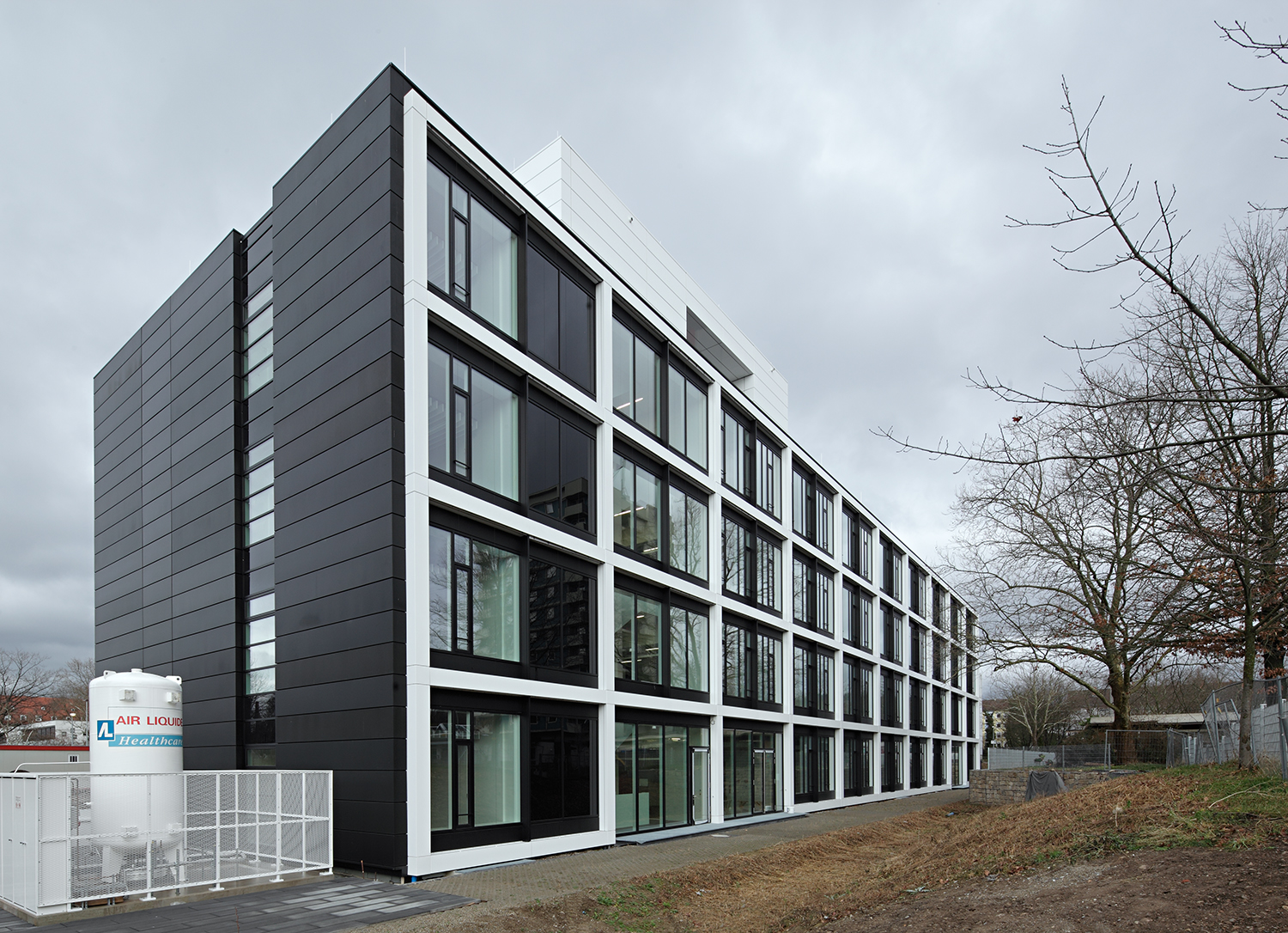
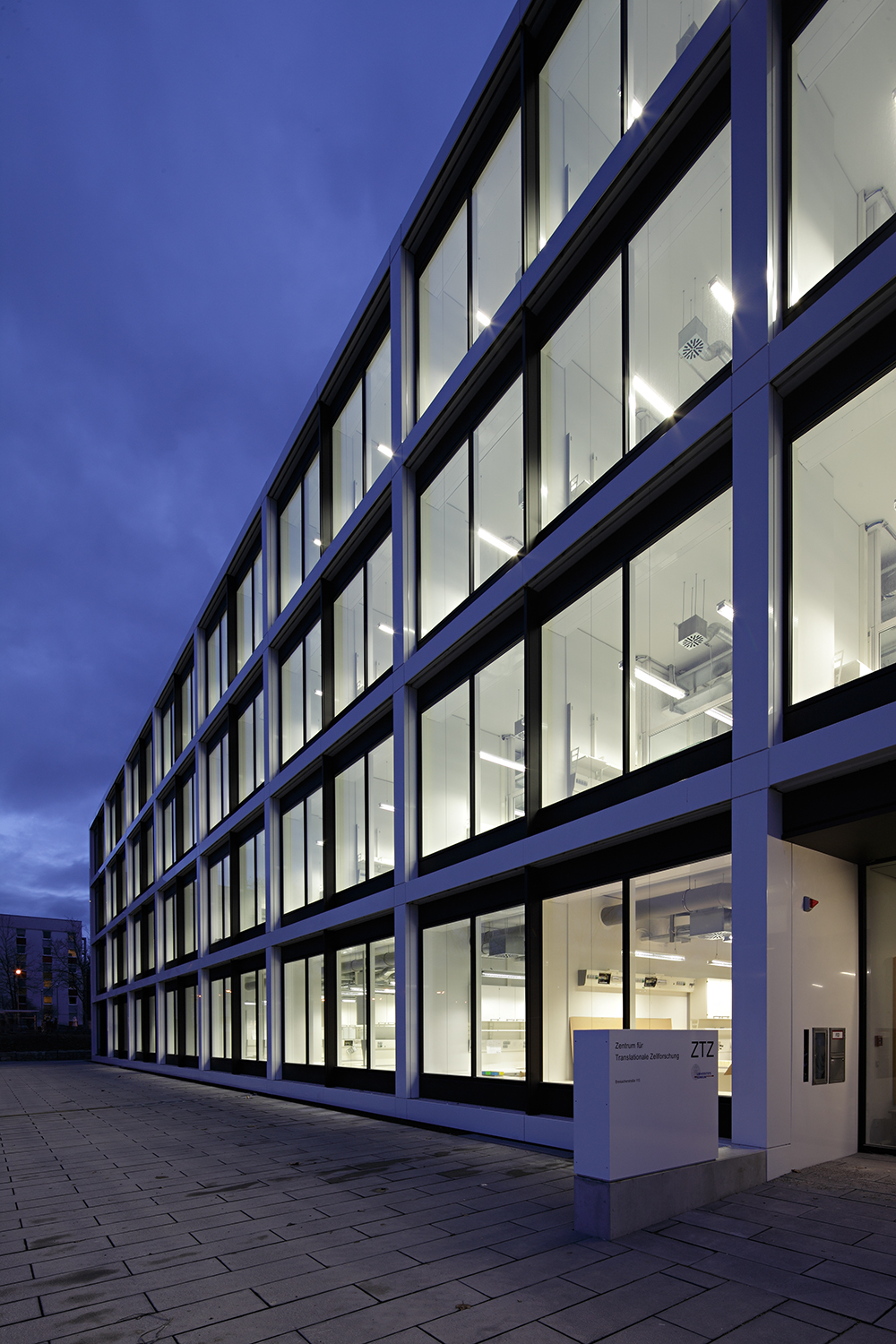
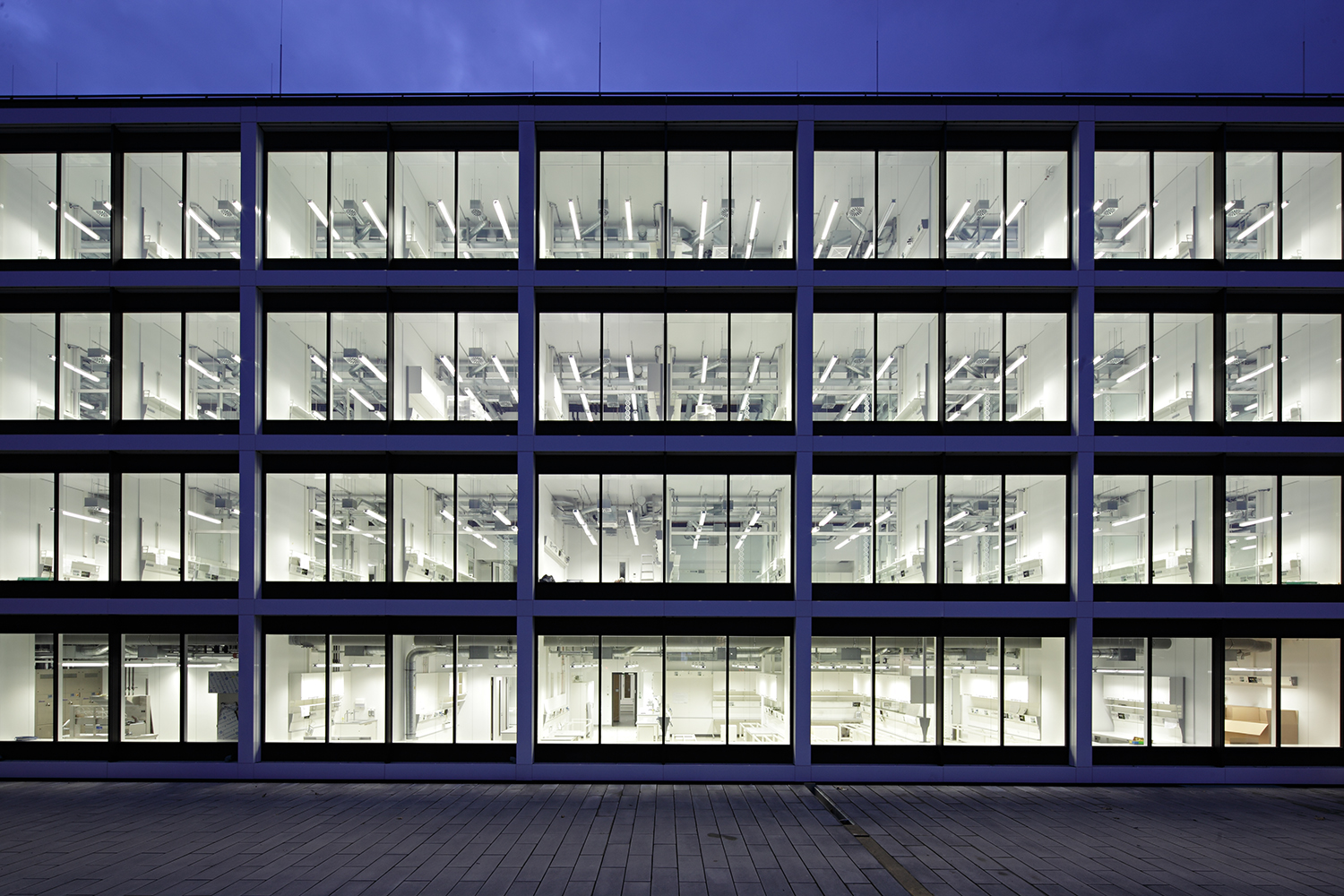
The 24.5 million euro, modern new building with black and white cubes and lots of glass has a usable area of 3,800 m² on six floors, two of which are underground. The laboratories are located on the north side facing Breisacher Strasse, while the south side houses offices and communication areas that promote interdisciplinary exchange within and between the two centers - CCI and CCCF. The art on the building was created by artist Ricarda Roggan in reference to the 1997 science fiction film Gattaca, which deals with genetic engineering. Two original photos taken in the cinema have been edited and hang in large format in the foyer. The designed walls of the staircase are reminiscent of the double helix structure of DNA.
Caption (images 1-4): Immunologists and oncologists conduct research under one roof in the newly built Center for Translational Cell Research
Image rights: Oliver Kern/Universitätsklinikum Medical Center - University of Freiburg