Predicting the danger of new flu pathogens
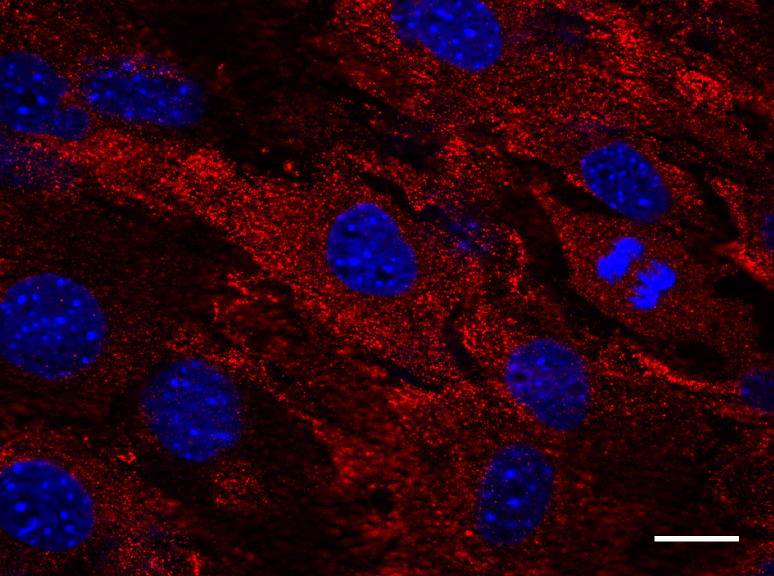
Researchers at the Medical Center - University of Freiburg have developed a method that can be used to assess whether animal influenza viruses are dangerous to humansInfluenza A viruses that are transmitted from animals to humans can cause waves of illness worldwide. One example is influenza viruses from birds, which can cause severe flu if they infect humans. They can also lead to devastating pandemics. For newly discovered virus types from birds, it has so far been difficult to predict whether they will make people ill and whether they can spread in the human population. Scientists at the Medical Center - University of Freiburg have now succeeded in experimentally testing the risk of such an infection. To do so, they equipped laboratory mice with a gene for human influenza virus resistance. The resistance factor MxA is considered an essential component of genetic virus defense in humans. While normal mice without MxA are sensitive to many influenza A virus types, mice with the human resistance gene were highly resistant to animal influenza viruses. However, they were sensitive to those virus types that have been circulating in the human population for some time.
The new animal model can therefore help to better assess the risk potential of new influenza viruses from the animal world for the human population. "With our approach, we can quickly and reliably determine whether newly discovered influenza viruses pose a risk to humans," says Prof. Dr. Peter Stäheli, research group leader at the Institute for Virology at the Medical Center - University of Freiburg. "In the future, a corresponding test could significantly supplement the risk assessment based on virus genome analyses that have been used to date. This would allow protective measures against an increased risk potential to be adapted in good time." The study was published on April 10, 2017 in The Journal of Experimental Medicine.
You can find a detailed summary of the study in English at: www.eurekalert.org/emb_releases/2017-04/rup-rdm040417.php
Original title of the publication: In vivo evasion of MxA by avian influenza viruses requires human signature in the viral nucleoprotein
DOI: 10.1084/jem.20161033
Link to the study: http: //jem.rupress.org/cgi/doi/10.1084/jem.20161033?PR
Caption: Cells of a mouse with human MxA protein (MxA: red, cell nuclei: blue)
Image source: Deeg et al., 2017
Contact:
Prof. Dr. Peter Stäheli
Institute for Virology
Uniklinik Freiburg
Phone: 0761 203-6579
peter.staeheli@uniklinik-freiburg.de