Confetti in the brain: Control of important immune cells in brain diseases clarified
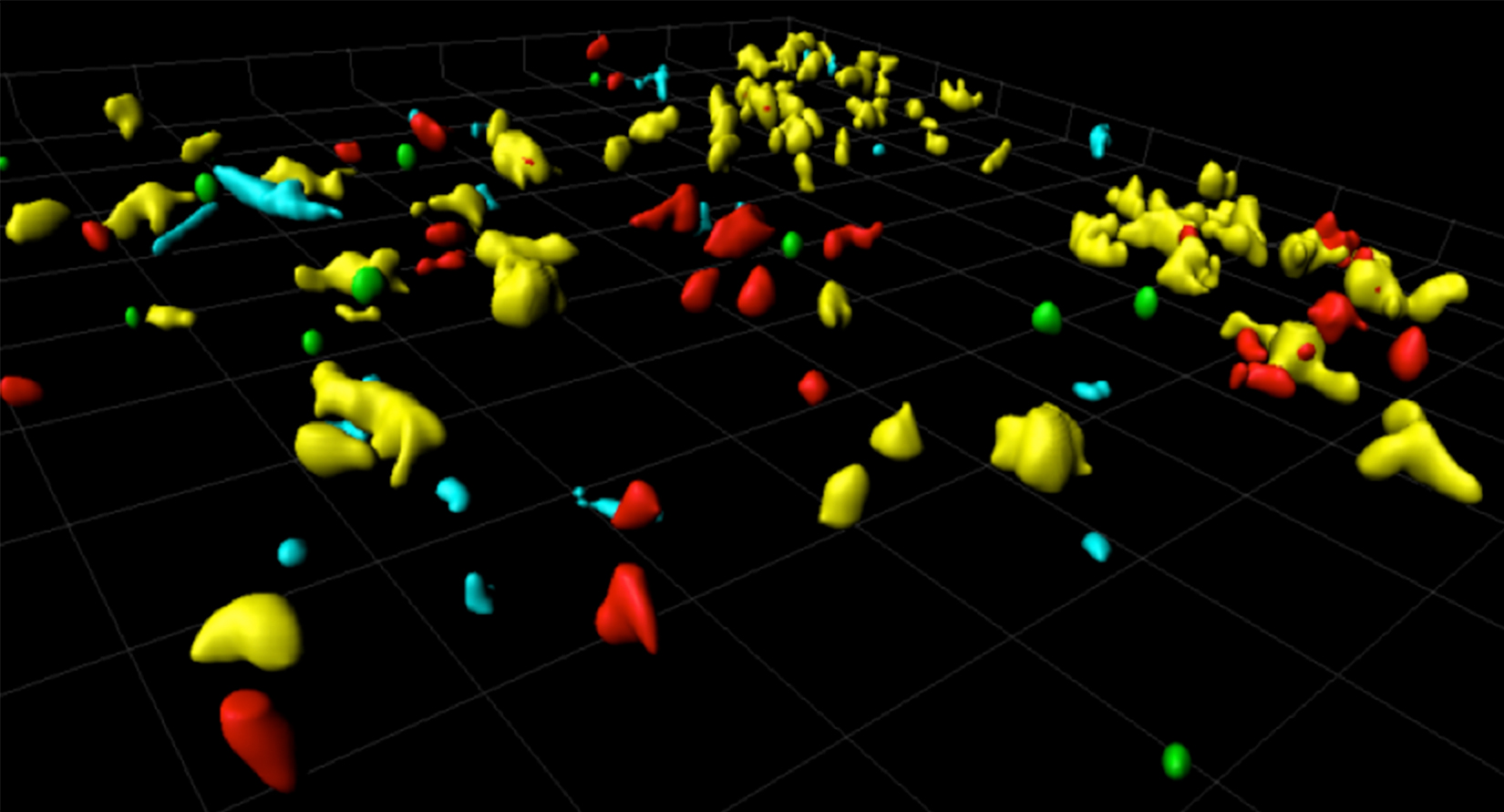
New color coding shows origin and movement of individual cells / Study by Freiburg researchers in the journal Nature NeuroscienceMicroglia, the so-called scavenger cells or macrophages of the brain, protect nerve cells from pathogens, but are also involved in diseases such as Alzheimer's disease. In the brain, they form a uniform network around the nerve cells. Researchers at the Medical Center - University of Freiburg have now demonstrated for the first time in mice how the microglia network is remodeled in the course of a brain disease in order to stop the disease. They also observed that excess cells migrate to neighboring brain regions after the end of the disease. The findings could form the basis for new therapies for neurodegenerative and neurological diseases. For the study, which appeared in the journal Nature Neuroscience on 17 April 2017, the scientists used a genetic trick to mark microglia cells with different colors. This colorful "microglia confetti" in the brain enabled them to precisely trace the origin, movement and degradation of the cells.
In their investigations, the researchers first produced genetically modified mice in which the microglia network in the healthy brain consists of cells of different colors. With the onset of a neurodegenerative brain disease, microglia clouds of the same color formed after just a few days and the network became denser overall. "In the case of disease, the brain switches very quickly: from a slow proliferation of many microglia cells to a massive proliferation of a few cells," said Prof. Dr. Marco Prinz, Medical Director of the Institute of Neuropathology at the Medical Center - University of Freiburg. This switch stimulates the cells to divide in order to be able to supply or remove altered nerve cells particularly well.
Microglia cells are thought to play a crucial role in diseases such as Alzheimer's, multiple sclerosis and some psychiatric disorders such as autism and schizophrenia. Incompletely or excessively activated microglia can also have a disease-worsening effect in brain diseases. "Our data also have great potential for cell therapy. This is because we are now in a much better position to investigate the differences in the control of microglia in healthy and diseased brains," says Prof. Prinz.
The researchers also discovered that the microglia return to their normal state once the disease has subsided. "Contrary to previous assumptions, supernumerary cells do not always die, but also migrate to neighboring brain regions," said Dr. Tuan Leng Tay, lead author of the study and biologist at the Institute of Neuropathology at the Medical Center - University of Freiburg. The significance of this in the development of brain diseases is now being investigated further. For their study, the researchers marked microglial cells with genes for the colors red, green, yellow and cyan. Cells that were then created by cell division had the same color. Using a mathematical method, the scientists were able to track changes in the number and origin of the cells.
In addition to scientists from the Medical Center - University of Freiburg, researchers from Berlin, Heidelberg, Regensburg, Israel and the Max Planck Institute of Immunobiology and Epigenetics in Freiburg were also involved in the study. The work is part of the recently launched collaborative research center "NeuroMac" (SFB/TRR 167) headed by Prof. Prinz. The aim of this research initiative is to develop treatment options for diseases such as Alzheimer's, multiple sclerosis and stroke based on the use of microglia cells in the brain.
Caption: The scavenger cells of the brain, called microglia, were color-coded (yellow, red, blue, green) using a genetic trick. This made it possible for the first time to observe the movement of the cells in healthy and diseased brains.
Image source: Medical Center - University of Freiburg
Original title of the study: A new fate mapping system reveals context-dependent random or clonal expansion of microglia
DOI: 10.1038/nn.4547
Link to the study:https: //www.nature.com/neuro/journal/vaop/ncurrent/full/nn.4547.html
Contact:
Prof. Dr. Marco Prinz
Medical Director
Institute of Neuropathology
Medical Center - University of Freiburg
Phone: 0761 270-51060
marco.prinz@uniklinik-freiburg.de
Dr. Tuan Leng Tay
Biologist
Institute of Neuropathology
Medical Center - University of Freiburg
Phone: 0761 270-51060
tuan.leng.tay@uniklinik-freiburg.de