
Deep brain stimulation alleviates severe depression, even in the long term
Persistent effectiveness of the procedure demonstrated for the first time worldwide by physicians at the Medical Center - University of Freiburg in a four-year study / Conceivable as an optional therapy for seriously ill patients in the future
Deep brain stimulation can alleviate or even eliminate the symptoms of patients with previously untreatable, severe forms of depression over several years. This has now been shown by researchers at the Medical Center - University of Freiburg in the first published long-term study on this form of therapy. Seven of the eight patients treated had sustained improvements in symptoms with continuous stimulation up to the observation point after four years. The therapy remained equally effective over the entire period. Any mild side effects that occurred could be avoided by adjusting the stimulation. The study was published on March 1, 2017 in the journal Brain Stimulation.
"The majority of patients responded to the therapy. What is unique is that they do so permanently. Other forms of therapy often lose their effectiveness over time. This makes deep brain stimulation a promising approach for people with previously untreatable depression," says study leader Prof. Dr. Thomas Schläpfer, Head of the Department of Interventional Biological Psychiatry at the Department of Psychiatry and Psychotherapy at the Medical Center - University of Freiburg. Deep brain stimulation is a procedure based on mild electrical stimuli that can be used to influence precisely selected areas of the brain.
Effect of stimulation from the first month
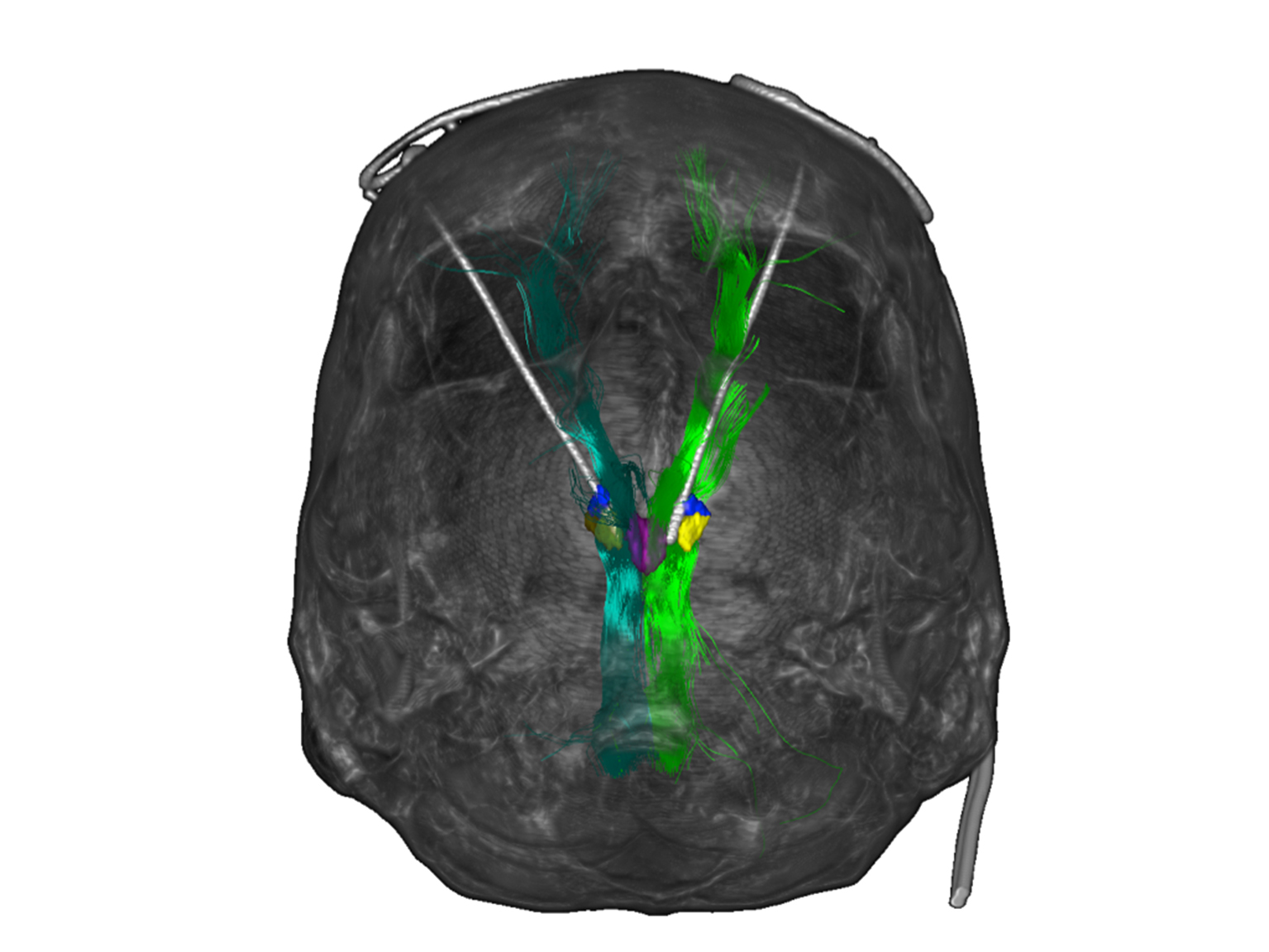
The eight test subjects suffered from severe depression for between three and eleven years, for which neither drug or psychotherapeutic treatments nor stimulation methods such as electroconvulsive therapy brought any improvement. The physicians implanted wafer-thin electrodes and stimulated an area of the brain that is involved in the perception of pleasure and is therefore also important for motivation and quality of life. The physicians evaluated the effect of the therapy on a monthly basis using the established Montgomery-Asberg Rating Scale (MARDS). Already in the first month, the MARDS score fell on average from 30 points to 12 points and even fell slightly further by the end of the study. Four people fell below the MARDS score of 10 points, above which depression is diagnosed.
Some patients suffered from blurred vision or double vision for a short time. "We were able to eliminate the side effects by reducing the level of stimulation without reducing the antidepressant effect of the therapy," says Prof. Dr. Volker A. Coenen, Head of the Department of Stereotactic and Functional Neurosurgery at the Department of Neurosurgery at the Medical Center - University of Freiburg. No personality changes, thought disorders or other side effects were observed in any of the patients.
Larger follow-up study to enable registration as a therapeutic procedure
If the effectiveness and safety of the therapy is confirmed in a further five-year study with 50 patients currently underway at the Medical Center - University of Freiburg, Prof. Coenen sees the possibility of a European registration of the therapy procedure. This would also allow the therapy to be used outside of studies: "Deep brain stimulation could be an effective treatment option for patients with severe depression in a few years' time," says Prof. Coenen.
Original title of the study: Deep Brain Stimulation to the Medial Forebrain Bundle for Depression- Long-term Outcomes and a Novel Data Analysis Strategy
Doi: 10.1016/j.brs.2017.01.581
Link to the study: www.sciencedirect.com/science/article/pii/S1935861X17306034
Caption: The physicians from Freiburg used electrodes to stimulate a region in the brain that is involved in the perception of joy. This alleviated depression in seven of the eight patients treated.
Copyright: Medical Center - University of Freiburg
Contact:
Thomas Schläpfer
Head of the Department of Interventional Biological Psychiatry
Department of Psychiatry and Psychotherapy
Uniklinik Freiburg
Phone: 0761 270-68820 or 0761 270-50210
thomas.schlaepfer@uniklinik-freiburg.de
Back
Medical Center - University of Freiburg
Central Information
Phone: 0761 270-0
info@uniklinik-freiburg.de
For press inquiries:
Corporate Communications
Breisacher Straße 153
79110 Freiburg
Phone: 0761 270-84830
kommunikation@uniklinik-freiburg.de