
"We need to better protect teachers from burnout"
More and more teachers are absent due to psychosomatic complaints such as burn-out. This puts a strain on those affected and the entire school system. Prof. Dr. Claas Lahmann is therefore calling for faster and unbureaucratic support for teachers.
Stress, insults, experience of violence: teachers experience a range of factors that promote psychological complaints such as burnout. At the same time, the workload of colleagues increases due to the above-average length of absence of those affected. "We urgently need to better protect the mental health of teachers, both acutely and preventively," demands Prof. Dr. Claas Lahmann, Medical Director of the Department of Psychosomatic Medicine and Psychotherapy at the Freiburg University Medical Center. "It is particularly important that those affected receive help quickly and unbureaucratically. There is still a clear need for improvement here." Studies have shown that rapid intervention following a negative experience can significantly reduce the burden on those affected. The "Teacher coaching groups based on the Freiburg model", which were developed at the Clinic for Psychosomatic Medicine and Psychotherapy, show what such support can look like.
"We are seeing more and more teachers at the clinic for whom stress and negative experiences also manifest themselves physically. Many suffer from depressive episodes, anxiety, chronic headaches or other functional physical complaints such as irritable bowel syndrome or dizziness," says Lahmann. He has been involved in the prevention and treatment of work-related psychosomatic complaints for many years and is co-editor of the standard work "Psychische und Psychosomatische Gesundheit in der Arbeit" (Mental and Psychosomatic Health at Work).
Threats of violence tripled
The importance of support services is shown by a survey conducted over several years by the University Medical Center Freiburg among almost 4,000 teachers, 380 of whom were surveyed in the last school year. One in four respondents had to endure serious insults at school in the past year. Six percent of teachers were threatened with physical violence, around three times as many as in 2014. The number of those who were victims of physical violence also doubled to almost four percent, as Lahmann reported in mid-April at a hearing in the Baden-Württemberg state parliament.
A forsa survey from 2016, which was commissioned by the Verband Bildung und Erziehung (Education Association) among teachers in Baden-Württemberg, also shows that solutions are urgently needed. Only two thirds of teachers felt sufficiently supported by their institution after experiencing violence. "Unlike in the business world, we often still see a greater reluctance among authorities and schools when it comes to support for modern workplace health promotion, especially with regard to mental stress. However, quick and unbureaucratic help is needed here," says Lahmann.
Teacher coaching groups - a successful program
To prevent this from happening, the "Teacher Coaching Groups based on the Freiburg Model" were developed at the University Medical Center Freiburg and have been continuously developed for many years. Chronic conflicts with pupils are one of the main stress factors for teachers. The coaching groups take a preventative approach here and improve the relationship skills of teachers in their dealings with pupils, but also with parents, colleagues and superiors. "First of all, it is crucial that conflicts can be recognized and addressed," says Lahmann. In the next step, participants learn strategies to avoid or resolve conflicts. The project is funded by the Baden-Württemberg Ministry of Culture and, according to Lahmann, is an important and successful step in the right direction.
Setting the right course during studies
"Prospective teachers must also learn how to deal with negative emotions and experiences," demands Lahmann. It is therefore necessary to anchor teaching content in their studies that enables future teachers to deal safely with stressful situations.
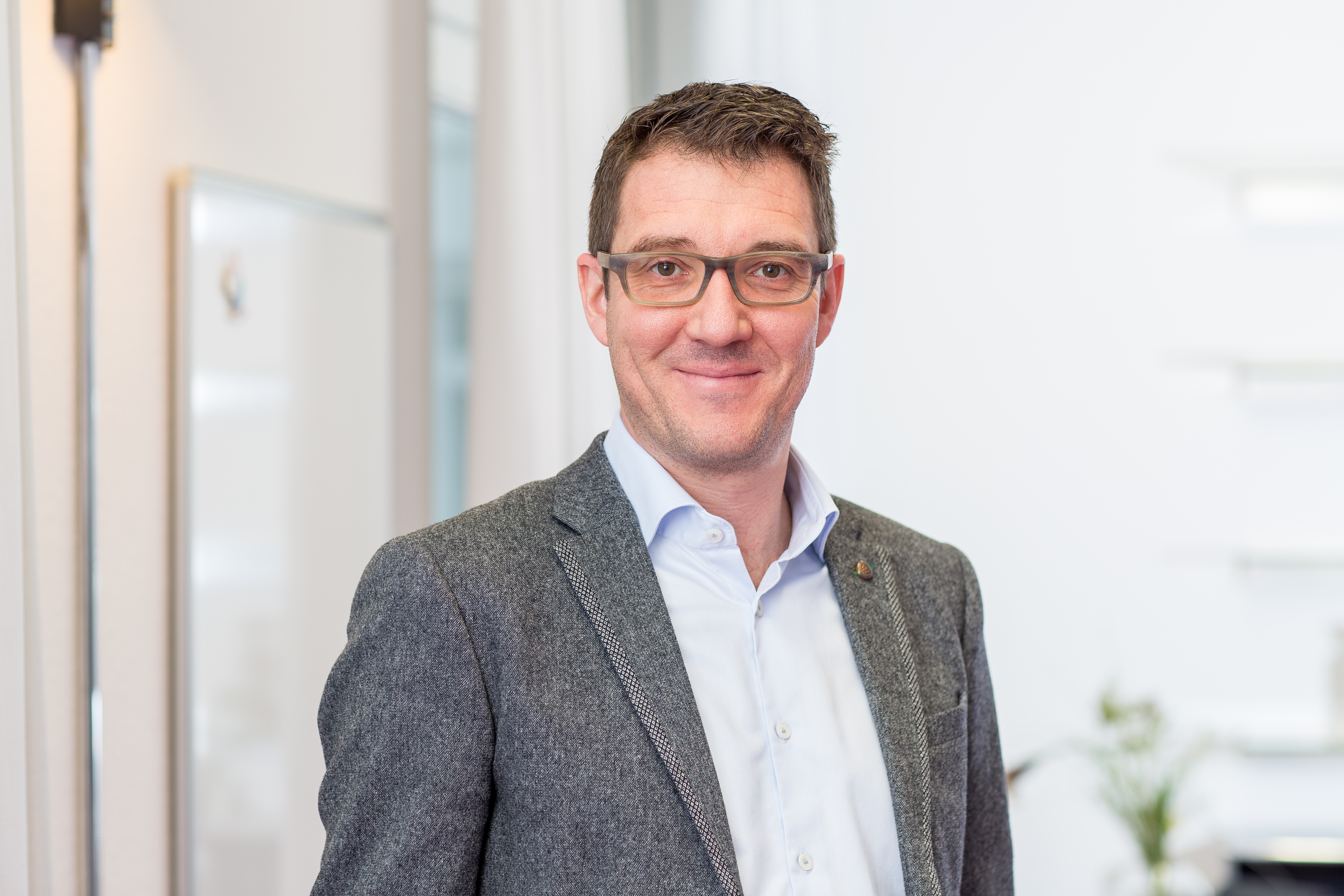
Caption: Prof. Dr. Claas Lahmann
Image source: University Medical Center Freiburg / Britt Schilling
Contact:
Prof. Dr. Claas Lahmann
Medical Director
Clinic for Psychosomatic Medicine and Psychotherapy
University Medical Center Freiburg
Phone: 0761 270-68050
claas.lahmann@uniklinik-freiburg.de
Further information:
Website "Teacher coaching groups based on the Freiburg model "
Back
Medical Center - University of Freiburg
Central Information
Phone: 0761 270-0
info@uniklinik-freiburg.de
For press inquiries:
Corporate Communications
Breisacher Straße 153
79110 Freiburg
Phone: 0761 270-84830
kommunikation@uniklinik-freiburg.de