
Radiation research for the journey to Mars
Researchers at the Medical Center - University of Freiburg are investigating the effects of cosmic radiation on hematopoietic stem cells / Understanding is important for long-term manned missions in space
The European Space Agency (ESA) is funding a research project by the Department of Radiation Oncology at the Medical Center - University of Freiburg as part of its CORA-IBER program. The program aims to improve research into the effects of cosmic radiation on the human organism. Cosmic radiation, which consists of charged particles, can cause serious damage to the human body and is therefore a central problem for manned space travel. In this respect, a profound understanding of the biology of cosmic radiation has been identified by ESA as a milestone for the realization of future manned long-term missions in space. The Freiburg researchers are now investigating the effects of particle radiation on the hematopoietic system and the regenerative capacity of bone marrow. The long-term goal of the research is to find out whether and how hematopoietic stem cells can be protected or reactivated after damage.
"Only if we have a better understanding of the damage that cosmic radiation causes in the bodies of astronauts can the health of astronauts also be protected during long-term missions," says project leader PD Dr. Dr. Nils Nicolay, senior physician at the Department of Radiation Oncology at the Medical Center - University of Freiburg. "In addition to shielding measures against radiation, it would be conceivable, for example, to activate healthy radiation-resistant stem cells," says Nicolay. At more than 600 millisieverts, the particle radiation to which astronauts would be exposed on the way to Mars and back alone is several hundred times higher than the natural radiation exposure on Earth.
Nicolay's research group is working intensively on the effects of radiation on adult mesenchymal stem cells in the context of radiation damage in normal tissue. As part of a competitive international tendering process, Nicolay, together with Dr. Alexander Rühle, a member of the research group and assistant physician at the Department of Radiation Oncology at the Medical Center - University of Freiburg, applied for inclusion in the CORA-IBER program as well as beam time for particle radiation worth around 50,000 euros at the Heidelberg Ion Beam Therapy Center.
The project is to be realized as part of an already established cooperation with researchers from the Karlsruhe Institute of Technology and Heidelberg University.
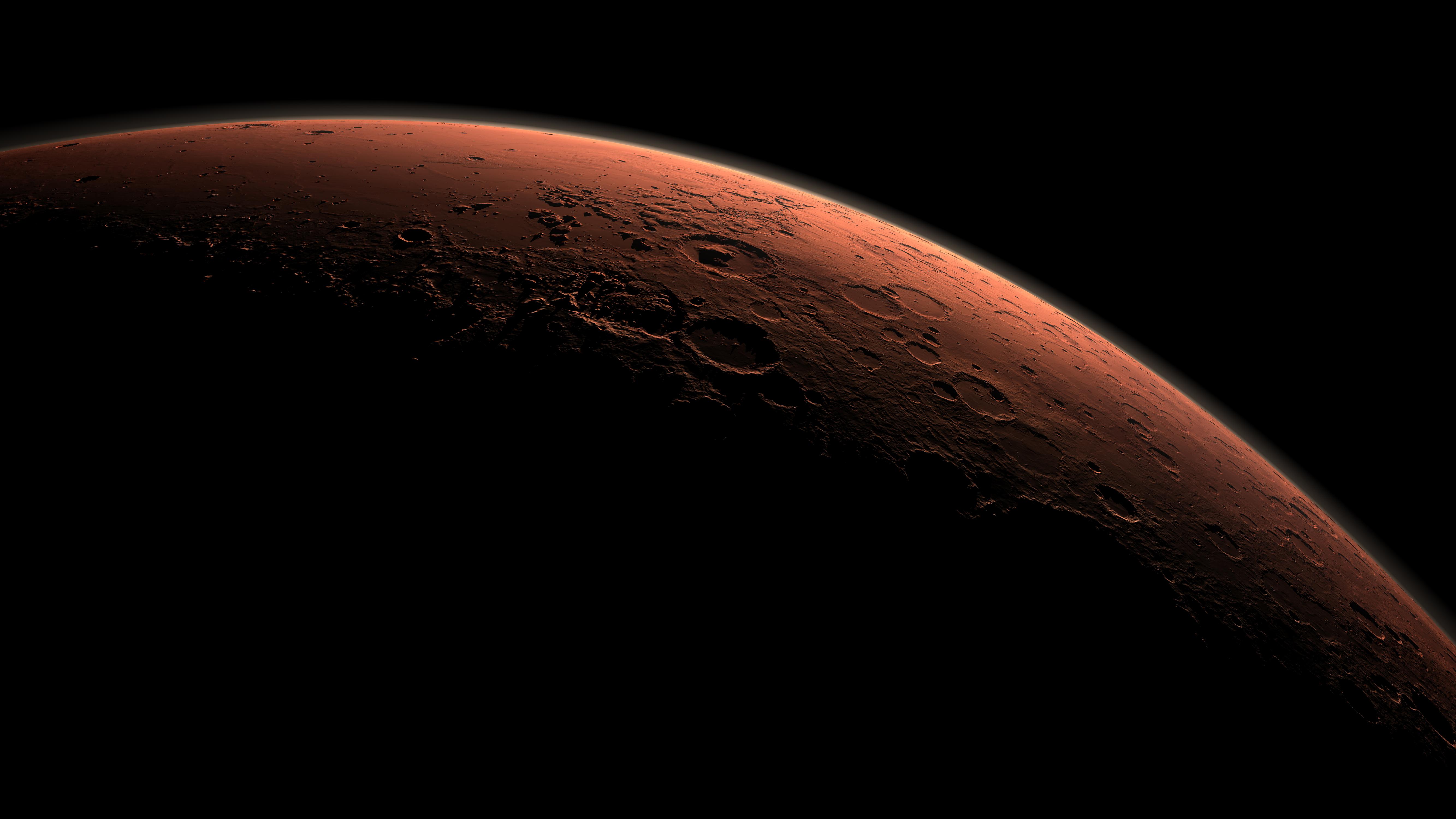
Caption: This computer-generated view shows part of Mars at the boundary between darkness and daylight.
Image source: NASA/JPL-Caltech
Further free photographic material is available on the NASA website.
Contact:
PD Dr. Dr. Nils Nicolay
Senior Consultant
Department of Radiation Oncology
Medical Center - University of Freiburg
Phone: 0761 270-95200
nils.nicolay@uniklinik-freiburg.de
Back
Medical Center - University of Freiburg
Central Information
Phone: 0761 270-0
info@uniklinik-freiburg.de
For press inquiries:
Corporate Communications
Breisacher Straße 153
79110 Freiburg
Phone: 0761 270-84830
kommunikation@uniklinik-freiburg.de