
International study makes stem cell transplants safer
Life-threatening complications after a stem cell transplant can be prevented much more effectively than before with a new therapy / Approval already granted in the USA and expected for Europe / Study in the New England Journal of Medicine
A transplant of blood stem cells from healthy donors is often the last chance of treatment for blood cancer and severe immunodeficiencies. However, in around one in four patients, a life-threatening immune reaction occurs in which donor immune cells attack the recipient's tissue. Experts refer to this as a graft-versus-host reaction or graft-versus-host disease (GVHD). Researchers from the Medical Center - University of Freiburg and the University Medical Center Schleswig-Holstein have now jointly shown in an international study that a new drug therapy with the active ingredient ruxolitinib can often prevent this immune reaction. The clinical phase III study with 309 patients was published in the New England Journal of Medicine on April 22, 2020.
"This therapy can make stem cell transplants significantly safer. We therefore very much hope that it will soon be approved in the European Union," says Prof. Dr. Robert Zeiser, Head of the Department of Tumor Immunology and Immunoregulation at the Department of Medicine I at the Medical Center - University of Freiburg. Together with Prof. Dr. Nikolas von Bubnoff, Director of the Department of Hematology and Oncology at the University Medical Center Schleswig-Holstein - Campus Lübeck, he coordinated and led the study with 105 study centers in 22 countries. GVHD leads to uncontrolled tissue damage to the intestines, skin and liver. In a fifth of cases, the inflammatory reaction leads to the death of the patient due to infection or serious organ damage. "The approval of ruxolitinib in the USA is the first approval of a drug for the treatment of cortisone-refractory graft-versus-host reaction worldwide," says von Bubnoff.
Treatment success significantly higher than before
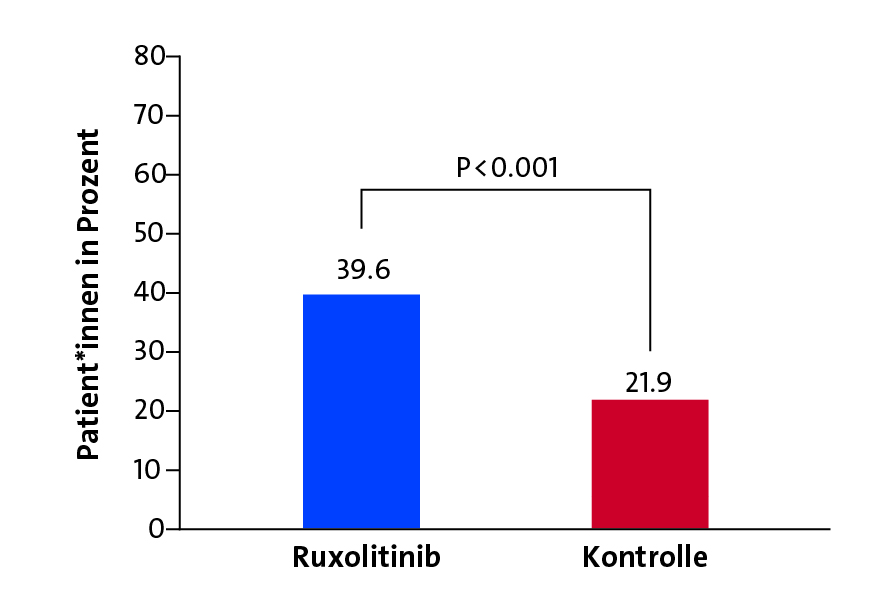
The patients treated in the REACH2 study had all developed a graft-versus-host reaction following a stem cell transplant, which could not be stopped with cortisone preparations and became acutely life-threatening. Half of those affected received ruxolitinib, the other half the previous standard therapy. After 28 days of therapy, 62 percent of patients on the new therapy showed a complete or partial reduction in GVHD. Under the standard therapy, the figure was 39 percent. After around two months, the control of the immune response with ruxolitinib was almost twice as high (almost 40 percent) as with the standard therapy (22 percent). "Treatment with ruxolitinib thus leads to lasting treatment success," Zeiser is pleased to report.
Research from the Petri dish to the patient
In previous work, the research groups led by Zeiser and von Bubnoff were initially able to show in cell and animal studies that ruxolitinib inhibits the activation and mutual reinforcement of the transplanted immune cells. This preliminary work formed the basis for the subsequent application in humans. The current Phase III REACH2 study is likely to play a key role in the approval process in Europe. "The study results confirm our many years of work on GVHD and provide an important basis for approval," says von Bubnoff. The REACH2 study was conducted by Novartis Pharma.
Graphic: After around two months, around 40 percent of patients responded to the new therapy. With the previous therapy, this figure was only around 20 percent.
Image: Prof. Dr. Robert Zeiser, Prof. Dr. Nikolas von Bubnoff
Image source: DKFZ/Uwe Anspach
Original title of the study: Ruxolitinib for Glucocorticoid-Refractory Acute Graft-versus-Host Disease.
DOI: 10.1056/NEJMoa1917635
Link to the study: https://www.nejm.org/doi/full/10.1056/NEJMoa1917635
Contact:
Prof. Dr. Robert Zeiser
Head of the Department of Tumor Immunology and Immune Regulation
Department of Medicine I (Specialties: Hematology, Oncology, Stem Cell Transplantation)
Department of Medicine I (Specialties: Hematology, Oncology and Stem Cell Transplantation)
Phone: 0761 270-34010
robert.zeiser@uniklinik-freiburg.de
Prof. Dr. Nikolas von Bubnoff
Director
Clinic for Hematology and Oncology
University Medical Center Schleswig-Holstein
Campus Lübeck
Ratzeburger Allee 160
23538 Lübeck
Tel: 0451 - 500 44151
Fax: 0451 - 500 44154
Nikolas.vonBubnoff@uksh.de

Back
Medical Center - University of Freiburg
Central Information
Phone: 0761 270-0
info@uniklinik-freiburg.de
For press inquiries:
Corporate Communications
Breisacher Straße 153
79110 Freiburg
Phone: 0761 270-84830
kommunikation@uniklinik-freiburg.de