
Multicolor imaging with magnetic nanoparticles
New measuring device at the Medical Center - University of Freiburg maps the distribution of active substances, cells or receptors in fractions of a second / Use in brain tumor therapy is being researched in animal models
A new type of imaging measuring device was put into operation at the Medical Center - University of Freiburg's Department of Neurosurgery at the beginning of August. The so-called Magnetic Particle Imaging system (MPI) makes use of the magnetic properties of tiny iron oxide particles just a few nanometers in size. These nanoparticles participate in blood flow and metabolism without interfering with bodily functions. The special feature of the MPI is that it can measure different types of nanoparticles simultaneously. It can also use its own calibration curves to distinguish whether and where one and the same substance is present in bound or free form. This enables a "multi-colored" representation of different nano-bound active substances or nano-labeled cells. As part of the "Functional Magnetotherapy" research consortium funded by the German Federal Ministry of Education and Research (BMBF), the technology is now to be further developed in an animal model for the targeted treatment of brain tumors.
Research goal: Targeting brain tumors with high precision
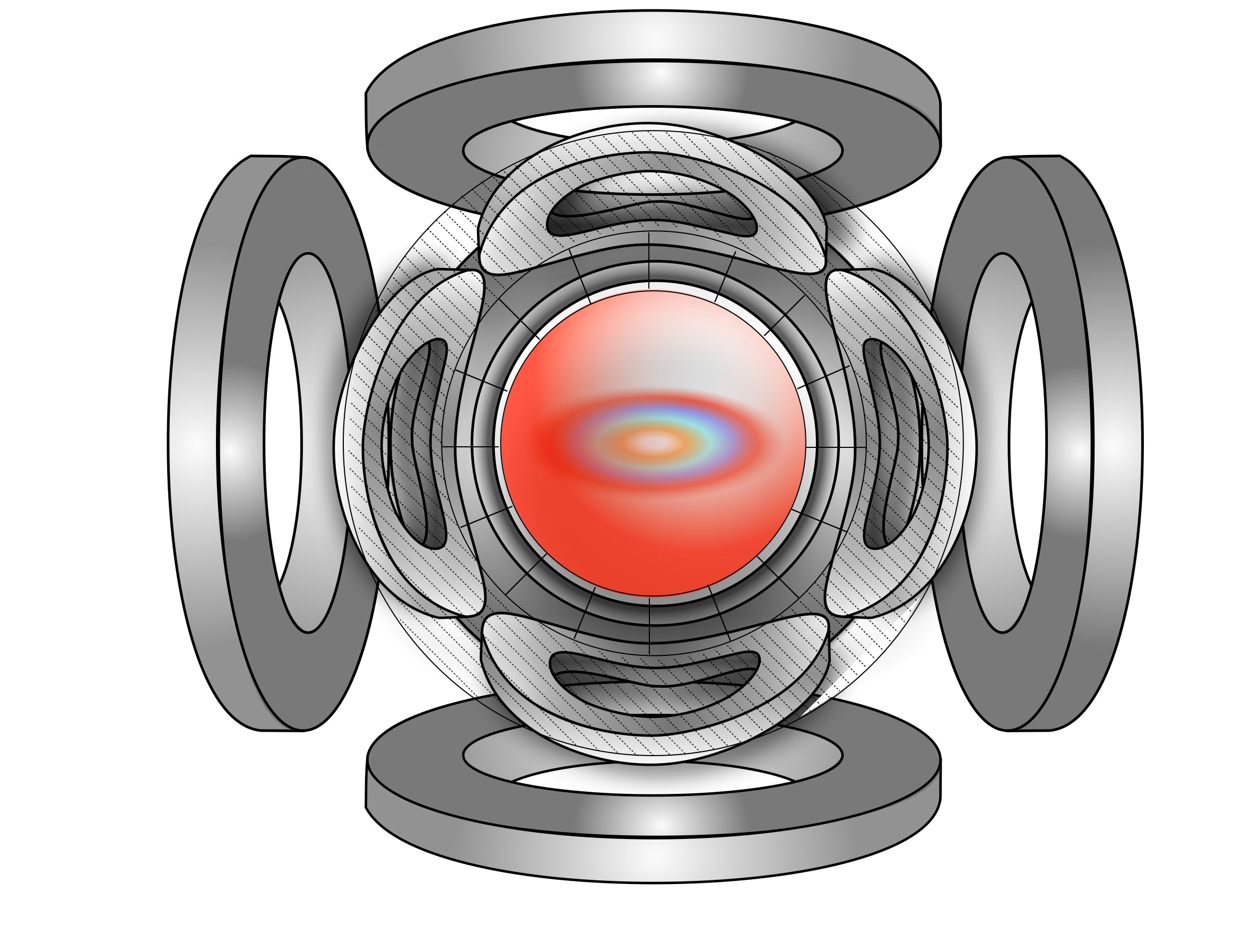
The research group led by Prof. Dr. Ulrich Hofmann in the Neuroelectronic Systems Section of the Department of Neurosurgery at the Medical Center - University of Freiburg uses the concept of the so-called field-free point for imaging using the MPI system. Using a complex arrangement of strong electromagnets inside the MPI device, they form an elliptical area about one millimeter in size without a magnetic field. While the nanoparticles are completely magnetized in strong magnetic fields, they provide measurable electrical signals in weak magnetic fields. If the field-free point is moved through the measurement area, the spatial distribution of the nanoparticles can be reconstructed as a three-dimensional image from these signals. A measuring volume the size of a chicken egg is electronically scanned in around 1/50th of a second.
"Magnetic particle imaging is ideal for measuring dynamic processes such as rapid blood flow in the heart or brain, as the magnetic fields penetrate the body virtually unhindered," says Hofmann. What's more, the method does not involve any harmful radiation; the magnetic fields generated are harmless to living organisms. "Our aim is to use MPI to track chemotherapeutic agents against brain tumors in the blood to their destination in the brain. There, the blood-brain barrier could ideally be weakened by targeted magnetic heating of the nanoparticles so that the drugs take effect directly in the tumor and spare the surrounding healthy brain tissue."
Another area of application could be the mapping of certain receptors to which the SARS-CoV-2 coronavirus, for example, docks: "If suitable nanoparticles are used, magnetic particle imaging could be used to track exactly which organs the virus is affecting," explains Hofmann.
Contact:
Prof. Dr. Ulrich G. Hofmann
Research group leader
Department of Neurosurgery
Medical Center - University of Freiburg
Phone: 0761 270-50076
ulrich.hofmann(at)klinikum.uni-freiburg.de
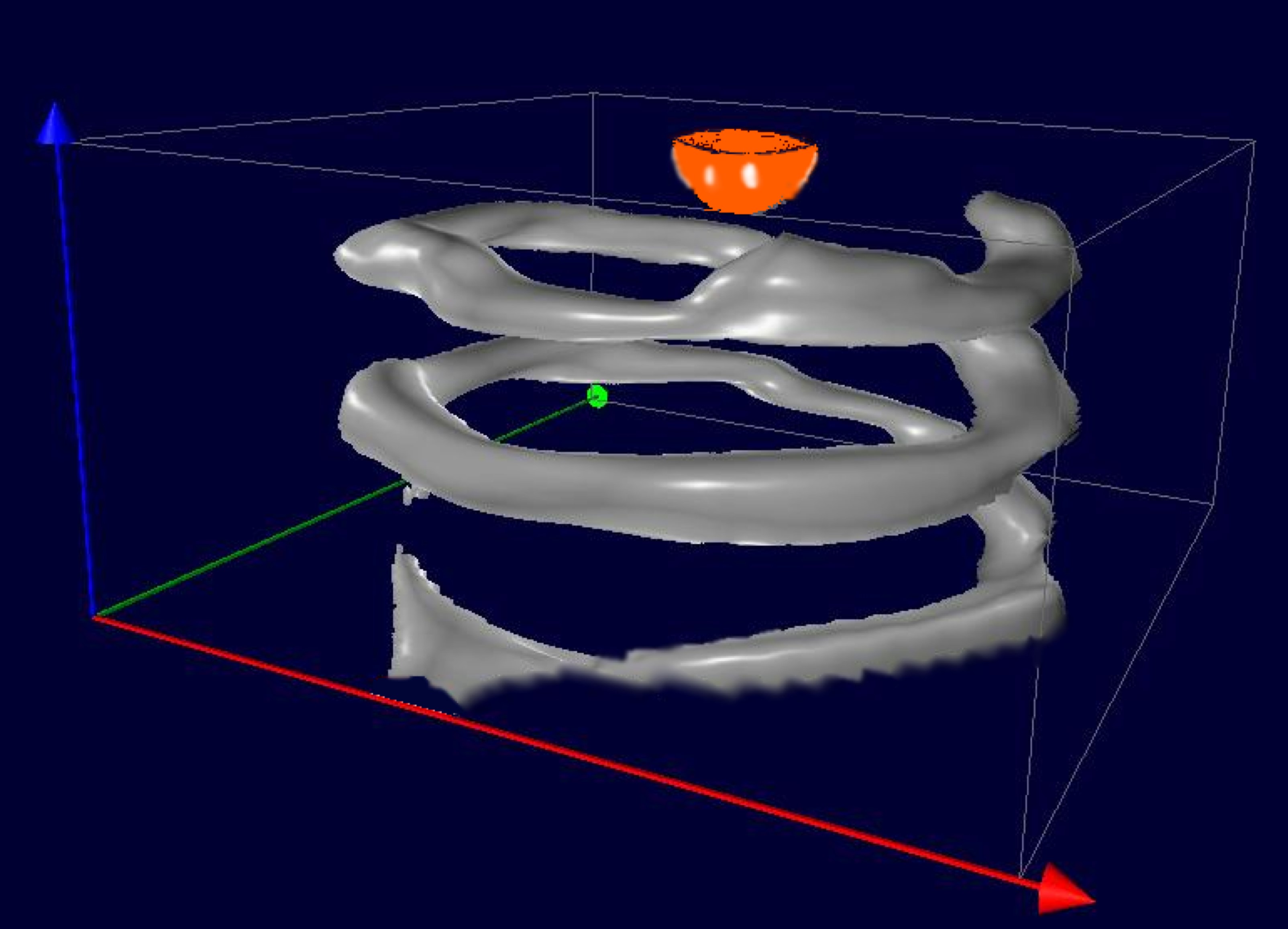
Figure 1: Simulated blood vessel (gray) and foreign body (orange): A spirally wound plastic tube (ø 1mm) was filled with nanoparticles of one size and measured together with a test body made of other nanoparticles. The colored representation results from the different calibration curves of the two substances.
Figure 2: A complex arrangement of strong electromagnets (gray) moves a field-free point for measuring the density of nanoparticles (white center in red sphere) through the measuring field in an MPI scanner.
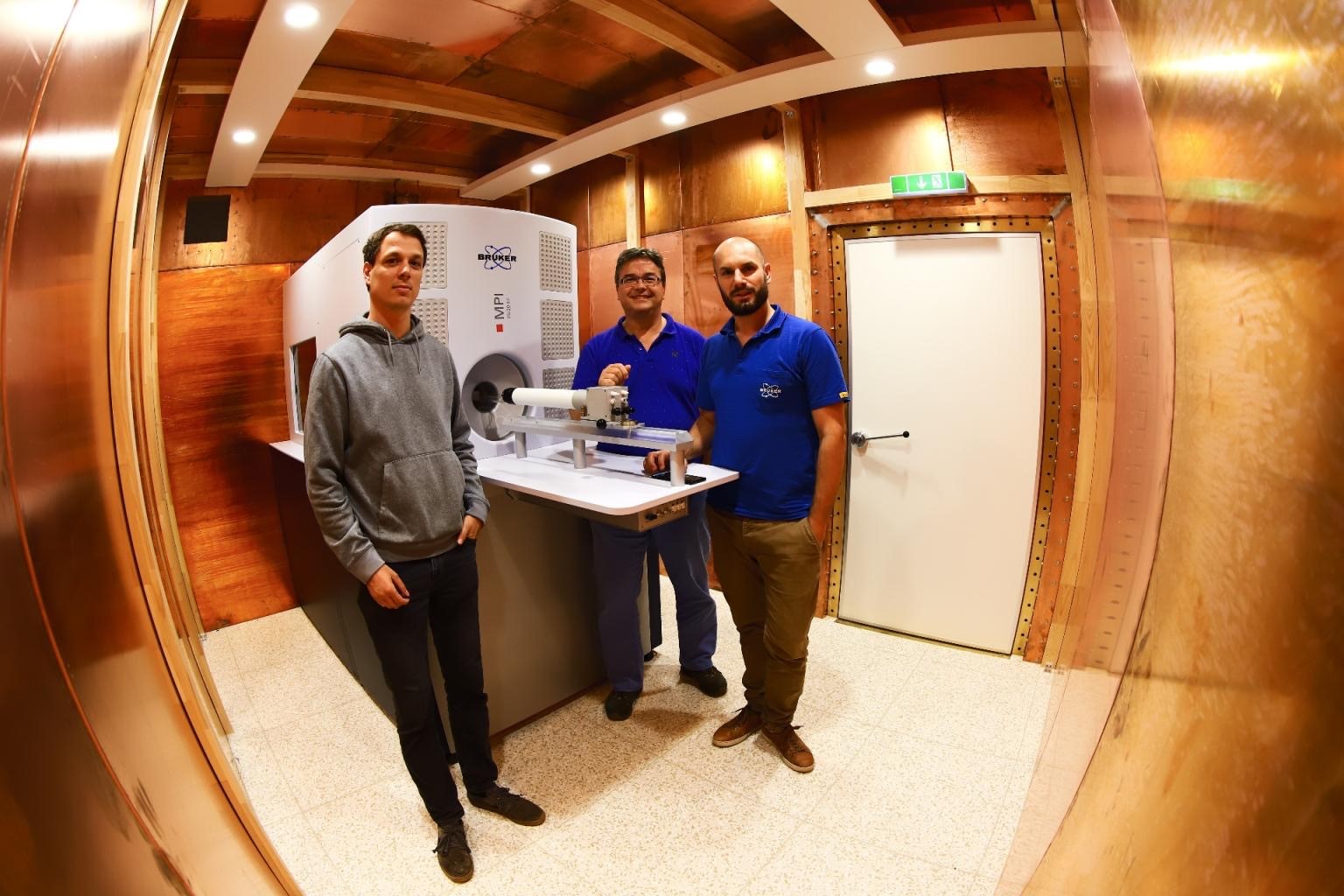
Figure 3: The team led by Prof. Dr. Ulrich Hofmann (center) at the takeover of the first preclinical Magnetic Particle Imaging system in a clinic in southern Germany.
Image rights: © Medical Center - University of Freiburg
Back
Medical Center - University of Freiburg
Central Information
Phone: 0761 270-0
info@uniklinik-freiburg.de
For press inquiries:
Corporate Communications
Breisacher Straße 153
79110 Freiburg
Phone: 0761 270-84830
kommunikation@uniklinik-freiburg.de