
Brain and kidneys: Two special research areas approved
New Collaborative Research Center on kidney diseases approved at the Medical Center - University of Freiburg / Extension of a Collaborative Research Center on brain research / Total funding of around 24 million euros
On November 26, 2020, the German Research Foundation (DFG) announced the funding of a new and an existing Collaborative Research Center (CRC) under the direction of the Medical Center - University of Freiburg. The SFB 1453 "Nephrogenetics (NephGen)", in which physicians and scientists use genetic information to search for mechanisms of kidney disease, was newly approved. NephGen will receive 13.5 million euros over the next four years. The Collaborative Research Center/Transregio 167 "Development, Function and Potential of Myeloid Cells in the Central Nervous System" (NeuroMac), which investigates the immune cells of the human brain, will be funded for a further four years. Around 10.6 million euros will be made available for this purpose. Scientists at the Medical Center - University of Freiburg are involved in a total of eleven Collaborative Research Centers and Transregios, in six of which they are the spokespersons.
"My congratulations go to the scientists involved, whose achievements and commitment have further strengthened medical research in Freiburg," says Prof. Dr. Norbert Südkamp, Dean of the Faculty of Medicine - University of Freiburg.
Kidney diseases: Frequent, but difficult to treat
Kidney disease is a huge health problem worldwide. Around one in ten adults suffers from chronic kidney disease. In cases of kidney failure, regular dialysis, also known as blood washing, or even a donor organ are the only treatment options. There are also people with kidney cancer. "With NephGen, we want to use genetic kidney diseases to identify suitable target structures in kidney cells in order to facilitate the search for suitable pharmaceutical drug candidates. We hope that this will enable us to improve the treatment and prevention of kidney diseases in the long term," said Prof. Dr. Anna Köttgen, Director of the Institute of Genetic Epidemiology at the Medical Center - University of Freiburg. One of the main reasons why kidney diseases have so far been difficult to treat causally is that the underlying mechanisms as well as the molecular sites and principles of action for potential new drugs are not yet sufficiently known.
Pharmacological substances can act on target molecules that are associated with genetic diseases in humans. "Such substances are twice as successful in clinical development as substances whose target molecules have no connection to genetic diseases," explains Köttgen. NephGen will therefore select target molecules based on hereditary kidney diseases, which will then be characterized and tested with regard to their therapeutic potential. To this end, the participants have already set up large patient and population studies and established numerous molecular biological investigations and methods for analyzing the very large and complex data sets.
In addition to the University of Freiburg and the Medical Center - University of Freiburg, Charité - Universitätsmedizin Berlin is also involved in the project.
The brain's immune system: a key to Alzheimer's and co.
In addition, the German Research Foundation has approved an extension of the Collaborative Research Center (SFB)/Transregio (TRR) "Development, Function and Potential of Myeloid Cells in the Central Nervous System" (NeuroMac) under the leadership of the Medical Center - University of Freiburg. The SFB/TRR 167 will be funded with a total of around 10.6 million euros, of which around 6.3 million euros will go to Freiburg.
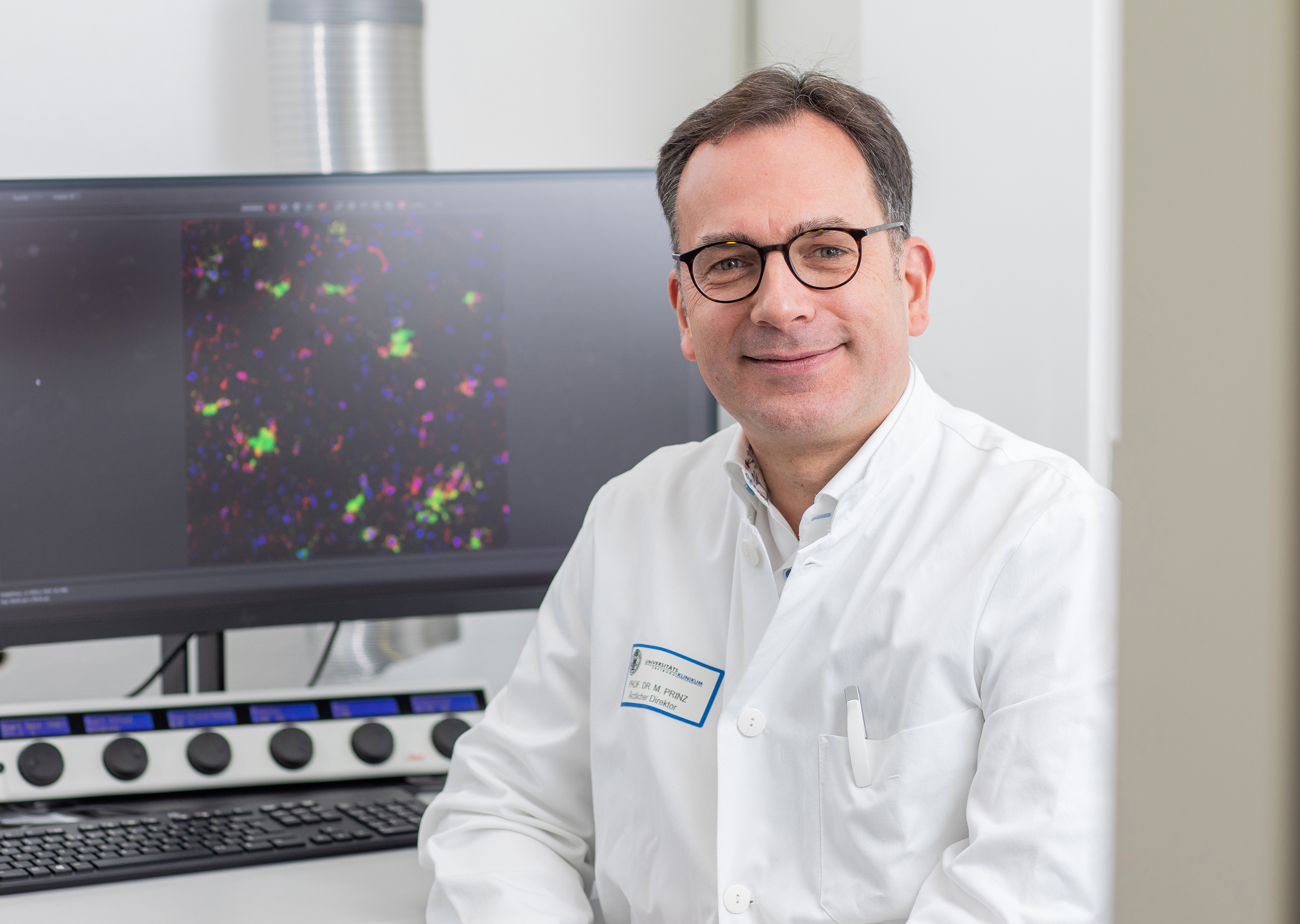
In NeuroMac, physicians and scientists are investigating special white blood cells in the central nervous system (CNS), known as myeloid cells or macrophages, which form the immune system of the human brain. There is hardly a disease event in the CNS in which these cells are not involved. Various types of these cells are present in the brain, including sedentary as well as disease-related immigrant cells. "During the first funding phase, we were able to gain new insights into the heterogeneity of these cells in CNS diseases. The latest methods for the single-cell analysis of myeloid cells were applied, so that new maps of the immune system in brain diseases could be created. NeuroMac members are world leaders in these novel methods. In the new phase, the main focus will be on researching the function of the newly discovered cell populations and their therapeutic potential," said NeuroMac spokesperson Prof. Dr. Marco Prinz, Medical Director of the Institute of Neuropathology at the Medical Center - University of Freiburg.
The researchers' long-term goal is to gain new insights into the origin and function of these specific immune cells of the brain. In doing so, they hope to create the basis for improving the treatment of brain diseases such as Alzheimer's, stroke or multiple sclerosis as well as psychiatric illnesses such as schizophrenia, autism or depression. In addition to the University of Freiburg, the Medical Center - University of Freiburg and the Max Planck Institute of Immunobiology and Epigenetics, the Charité - Universitätsmedizin Berlin and the Weizmann Institute of Science in Rehovot, Israel, are also involved in the research network.
Image 1: Prof. Dr. Anna Köttgen
Image source: Medical Center - University of Freiburg
Image 2: Prof. Dr. Marco Prinz
Image source: Medical Center - University of Freiburg / Britt Schilling
Contact:
Prof. Dr. Anna Köttgen
Director
Institute of Genetic Epidemiology
Medical Center - University of Freiburg
Phone: 0761 270-78050
anna.koettgen@uniklinik-freiburg.de
Prof. Dr. Marco Prinz
Medical Director
Institute of Neuropathology
Medical Center - University of Freiburg
Phone: 0761 270-51050
marco.prinz@uniklinik-freiburg.de

Back
Medical Center - University of Freiburg
Central Information
Phone: 0761 270-0
info@uniklinik-freiburg.de
For press inquiries:
Corporate Communications
Breisacher Straße 153
79110 Freiburg
Phone: 0761 270-84830
kommunikation@uniklinik-freiburg.de