
Blood cancer: More tolerable therapy for older people proven in Europe-wide study
Novel leukemia treatment can replace or supplement highly stressful chemotherapy in high-risk patients / Significantly fewer side effects than with chemotherapy / Publication at international specialist congress
Acute myeloid leukemia (AML) is the most common form of acute blood cancer in adults. People over the age of 60 are particularly often affected. Until now, patients have received intensive chemotherapy followed by a stem cell donation. However, because chemotherapy is often stressful, especially for older patients, a subsequent allogeneic blood stem cell transplant is often no longer possible. Despite new research approaches in recent years to expand intensive chemotherapy with novel inhibitors, allogeneic blood stem cell transplantation still achieves the highest cure rates in these patients.
Physicians at the Medical Center - University of Freiburg have now been able to prove with international partners that older AML patients in particular benefit from reduced-intensity, so-called "epigenetic" therapy. The patients had significantly fewer side effects than with conventional chemotherapy, although the treatment is just as effective. The study was presented at the European Hematology Association (EHA) Congress in Vienna on June 11, 2022 and was selected as a highlight of the congress.
"For many older AML patients, intensive chemotherapy is more of a health burden than a long-term help. With our study, we are showing that there is a gentler alternative," says study leader Prof. Dr. Michael Lübbert, Senior Physician at the Department of Medicine I at the Medical Center - University of Freiburg (Medical Director: Prof. Dr. Justus Duyster), explaining the need for a less aggressive form of therapy.
Gentle therapy without a long hospital stay
A total of 606 patients were treated at 54 locations in eight European countries. The epigenetically active agent decitabine was used in the study. In contrast to conventional chemotherapy drugs, this does not destroy the cancer cells immediately, but primarily influences which genes are transcribed in the cancer cells and thus prevents their pathological proliferation. "Patients can often lead a completely normal life with this better-tolerated therapy, without stressful hospital stays. This is a very important goal for us, alongside the cure," says Lübbert. The development of new epigenetic therapies and research into the corresponding fundamental biological processes are among the research priorities of the Faculty of Medicine - University of Freiburg, for example in the Collaborative Research Center 992, MEDEP.
AML: Aggressive blood cancer in older people
Only a small proportion of AML patients over the age of 60 survive the diagnosis for more than five years: either because standard chemotherapy alone does not lead to a cure, or because it cannot be used at all due to the patient's poor state of health. A combination of intensive chemotherapy and subsequent blood stem cell transplantation has so far been considered the most promising. This has been carried out at the Medical Center - University of Freiburg for years under Prof. Dr. Jürgen Finke, Head of the Allogeneic Stem Cell Transplantation Section of the Department of Medicine I at the Medical Center - University of Freiburg.
In the clinical trial that has now been published, patients were initially treated with either Decitabine or standard chemotherapy for ten days. This was followed by a stem cell transplant. If this was not possible, the patients either continued to receive Decitabine or up to three further courses of chemotherapy. "With this study, we were able to establish a treatment sequence that could be superior to classic intensive chemotherapy in older AML patients due to its better tolerability," says Lübbert. In terms of survival rates after four years, chemotherapy and decitabine did not differ fundamentally (30 percent, 26 percent). However, severe side effects occurred significantly less frequently with decitabine (3.6 percent) than with chemotherapy (6.4 percent).
The EORTC 1301 study (EudraCT number 2014-001486-27) was organized by the European Organisation for Research and Treatment of Cancer (EORTC, Brussels) in collaboration with several other European study groups.
Caption:
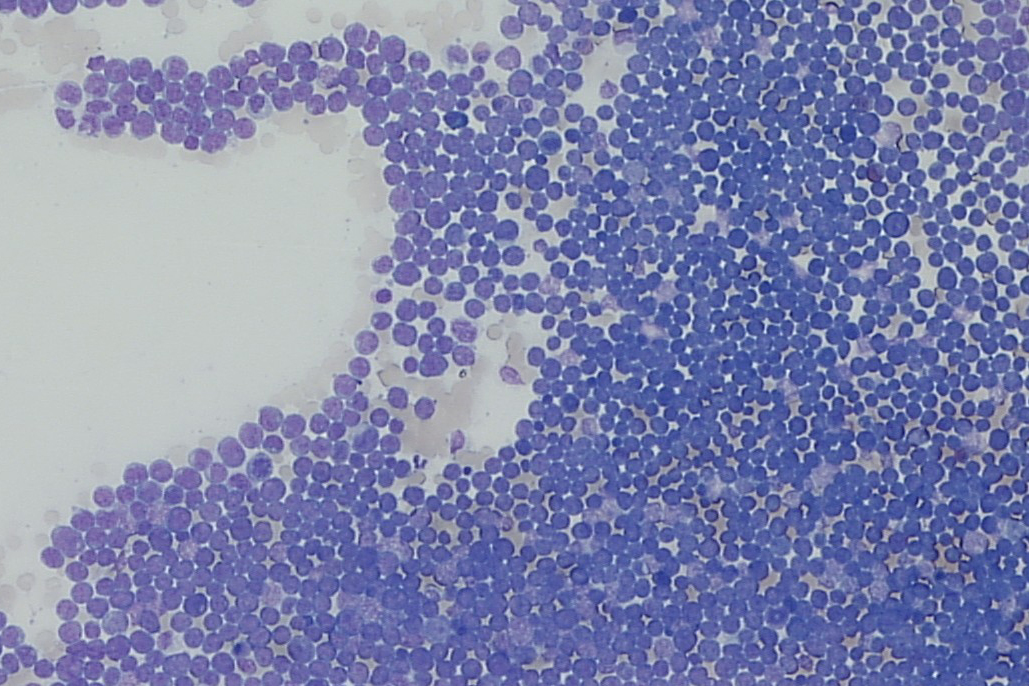
Figure 1: Swamped by blood cancer: smear of a bone marrow sample; in acute myeloid leukemia (AML), a precursor type of white blood cell (myeloblasts, dark color) proliferates excessively and displaces other blood cell types. The novel therapy stops this cell proliferation.
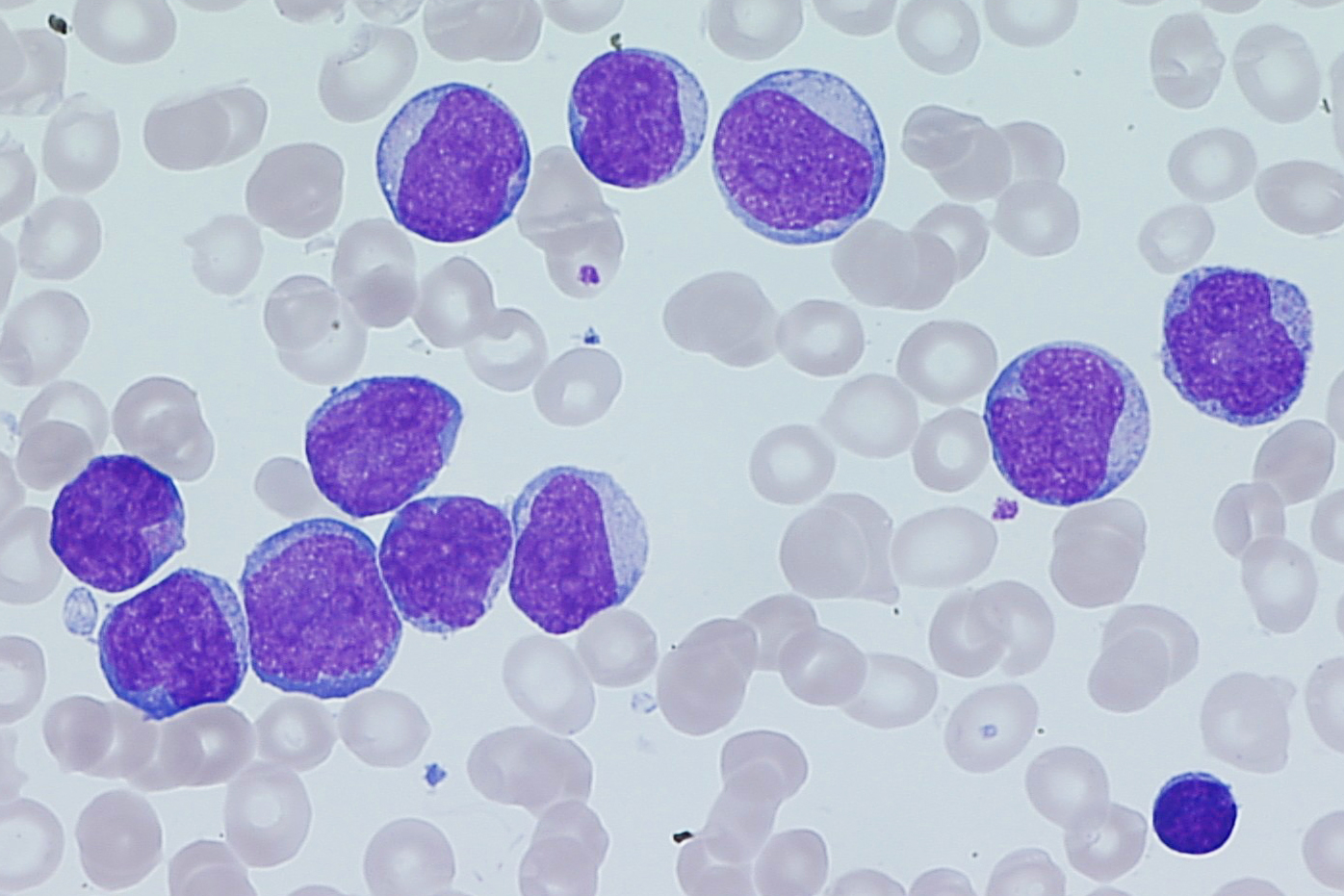
Figure 2: Cancer cells in detail: myeloblasts are characterized by their very large, round-oval nucleus. Transparent: red blood cells.
Copyright: Medical Center - University of Freiburg
Contact:
Prof. Dr. Michael Lübbert
Department of Medicine I (Haematology, Oncology and Stem Cell Transplantation)
Medical Center - University of Freiburg
Phone: 0761 270-36190
michael.luebbert@uniklinik-freiburg.de
Back
Medical Center - University of Freiburg
Central Information
Phone: 0761 270-0
info@uniklinik-freiburg.de
For press inquiries:
Corporate Communications
Breisacher Straße 153
79110 Freiburg
Phone: 0761 270-84830
kommunikation@uniklinik-freiburg.de