
Seven million euros for artificial intelligence in imaging
Research program coordinated at the Medical Center - University of Freiburg to be funded for a further three years from March 2023 / AI-supported analysis of medical image data to help detect new signs of disease more quickly
The priority program "Radiomics: Next Generation of Medical Imaging" is entering its second round: The German Research Foundation (DFG) is funding the program for another three years from March 2023 with more than seven million euros. In 15 sub-projects across Germany, research is being conducted into how artificial intelligence can be used to evaluate medical image data in such a way that physicians can recognize typical disease patterns more quickly and find the appropriate therapy. The overall coordination of the program continues to lie with Prof. Dr. Fabian Bamberg, Medical Director of the Department of Radiology at the Medical Center - University of Freiburg. In addition to the cooperation project, three other sub-projects are based there.
"In modern medicine, imaging plays a central role in the treatment of almost all clinical pictures," says project coordinator Bamberg. "Our aim is to firmly establish AI-supported image analysis in everyday clinical practice in Germany and make it usable as the basis for tailored therapies."
Improved diagnostics and therapy
Imaging techniques such as computed tomography and magnetic resonance imaging are increasingly being used in large-scale research projects such as the NAKO Health Study. The image data obtained from large population groups can be used to identify typical patterns for certain diseases. Radiomics refers to IT-supported image data processing.
With the help of powerful large-scale computing systems, artificial intelligence and deep learning methods, even extremely large and complex data collections can be searched for very specific patterns that provide valuable information on comparable patient cases, probable disease progression and suitable therapies.
"In order to offer our patients the most precise diagnosis and treatment possible, we need to make consistent use of the extensive possibilities offered by digitalization. The AI-supported evaluation of complex medical data is an important component of quality-centered, cutting-edge university medicine. The fact that the DFG Priority Program Radiomics is being led and driven forward in Freiburg is a great testament to our digital strength," says Prof. Dr. Frederik Wenz, Chief Medical Officer of the Medical Center - University of Freiburg.
Combined expertise
In the first funding phase from December 2019, 16 research projects on advanced image analysis have already been successfully linked. "It is now our task to further improve cooperation between the individual research projects within the program and with external stakeholders in science and industry at national and international level in order to advance the still young field of research with combined forces," says Bamberg, outlining the goals of his coordination team for the second funding phase.
Further information:
Website of the Radiomics priority program
Contact:
Prof. Dr. Fabian Bamberg
Medical Director
Department of Radiology
Medical Center - University of Freiburg
Phone: 0761 270-38050
fabian.bamberg@uniklinik-freiburg.de
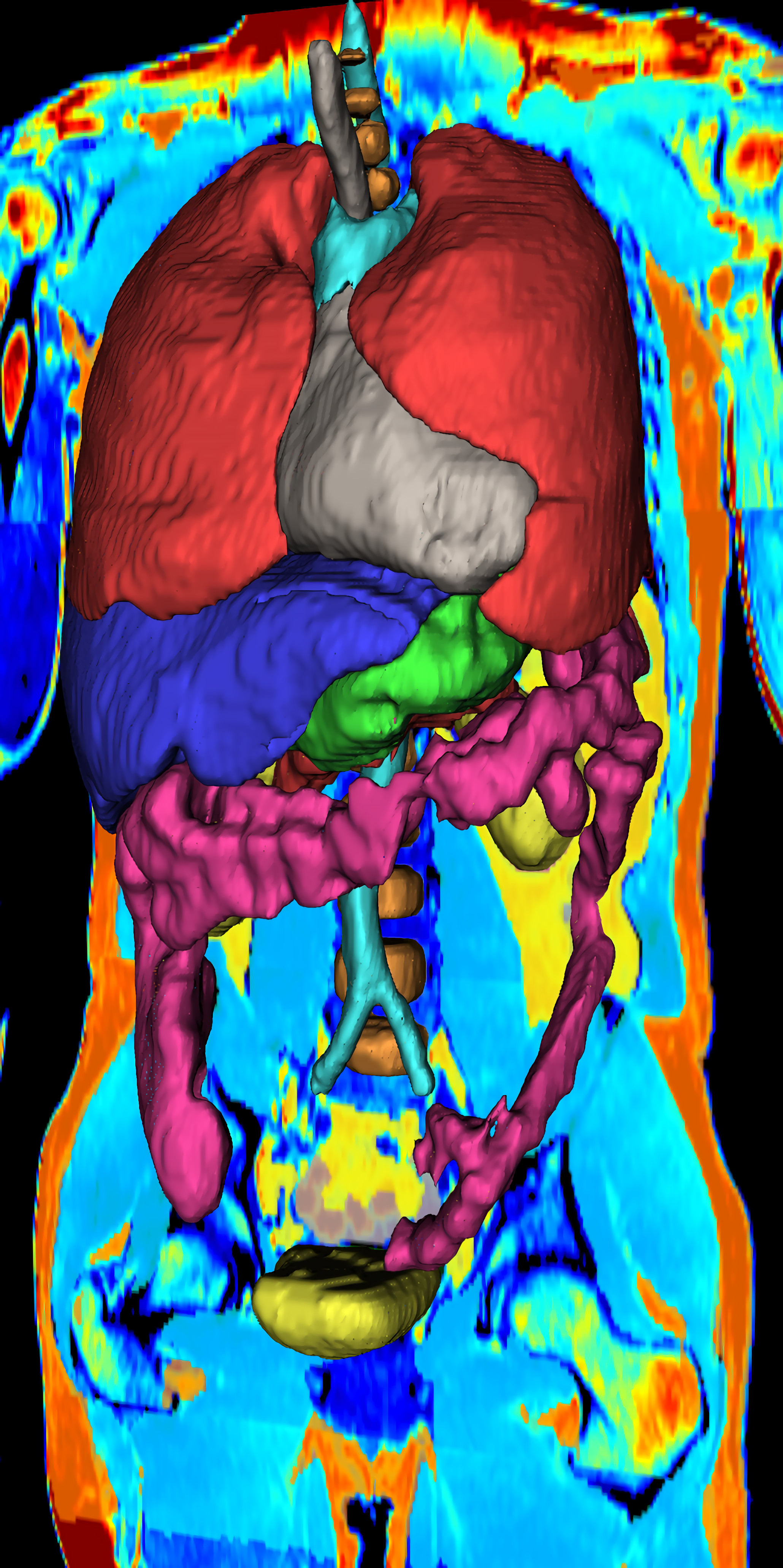
Caption: The organ representation generated using artificial intelligence (Deep Neural Patchworks on the NORA platform) is based on whole-body MRI data. The results now allow individual organ structures such as the lungs or liver to be assigned and analyzed.
Image source: Medical Center - University of Freiburg
Back
Medical Center - University of Freiburg
Central Information
Phone: 0761 270-0
info@uniklinik-freiburg.de
For press inquiries:
Corporate Communications
Breisacher Straße 153
79110 Freiburg
Phone: 0761 270-84830
kommunikation@uniklinik-freiburg.de