
CO2 calculator for healthcare facilities published
The Medical Center - University of Freiburg has developed an open-access CO2 calculator for hospitals with the Öko-Institut e.V. / Calculator to enable CO2 comparison between hospitals / Carbon footprint of the Medical Center - University of Freiburg offe
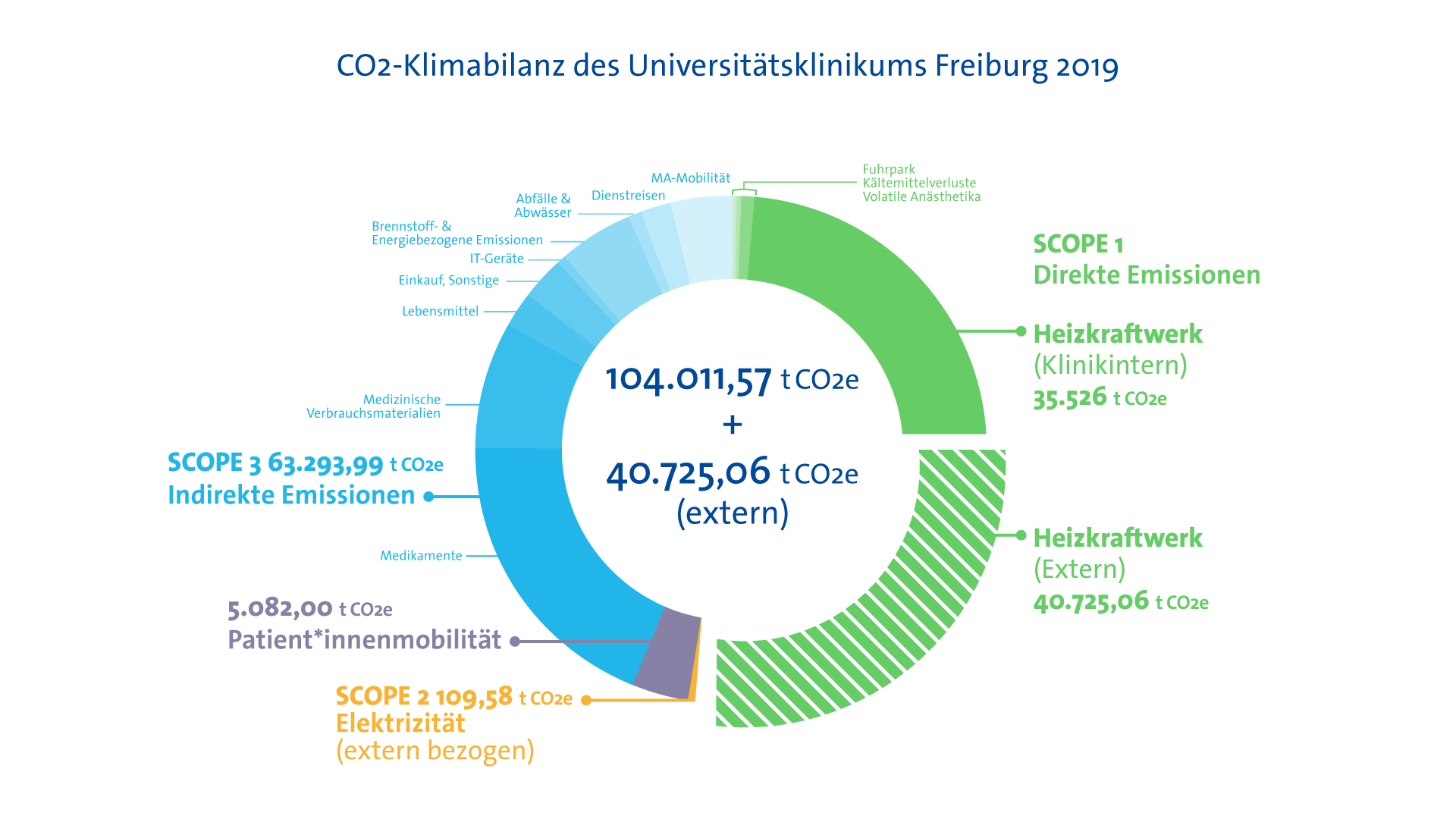
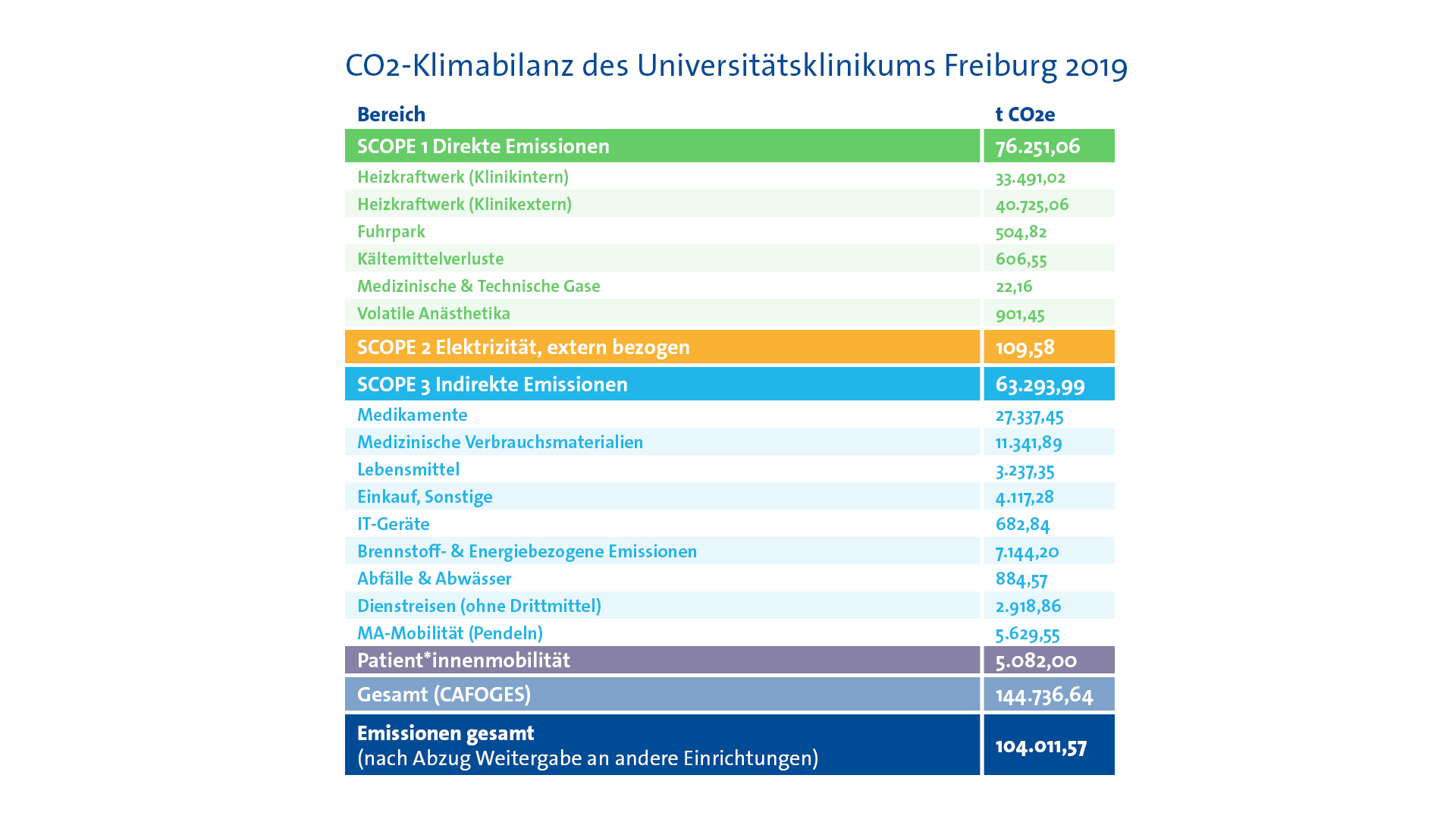
According to projections, the healthcare sector accounts for more than five percent of CO2 emissions in Germany. Hospitals play a significant role in this, but the emissions have not yet been adequately recorded. Now the Medical Center - University of Freiburg, together with the Öko-Institut e.V., has developed an open-access CO2 calculator with funding from the German Federal Environmental Foundation (DBU) and published it on May 22, 2023. The calculator enables hospitals to create a detailed carbon footprint in accordance with international standards. This makes it easier to compare different healthcare facilities. The emissions of the Medical Center - University of Freiburg, which can be attributed to ongoing hospital operations, amounted to 104,000 tons of CO2 equivalents in the 2019 survey year. With 1,616 beds, this corresponded to CO2 emissions of 64.36 tons of CO2 per hospital bed. The CO2 balance includes emissions in the areas of energy, mobility and nutrition, as well as those generated during the production and transportation of medicines and medical consumables.
"We are aware of the great responsibility that hospitals bear as energy-intensive facilities. That is why we have been focusing on sustainable strategies for many years. With the Open Access CO2 calculator and the publication of our carbon footprint, we are taking important steps to make the healthcare sector as a whole more sustainable," says Prof. Dr. Frederik Wenz, Chief Medical Officer of the Medical Center - University of Freiburg. "Hospitals can only make concrete changes if they know the key parameters. In this way, we create transparency and enable comparison between hospitals," continues Wenz.
Compact carbon footprint
The Medical Center - University of Freiburg emits 104,000 tons of CO2 as part of its hospital operations. At around 53,000 tons of CO2 equivalents, the largest share is generated during the production, transport and use of goods and services purchased by the University Medical Center. The in-house production of heating, cooling and electricity used at the hospital generates around 33,000 tons of CO2 equivalents. Around 5,000 tons of emissions are attributable to the transportation of patients. In addition, the production of district heating for other state institutions such as the University of Freiburg in the hospital's combined heat and power plant generates around 41,000 tons of greenhouse gases. For this balance sheet, the Öko-Institut evaluated consumption data from the Medical Center - University of Freiburg from 2019.
"While our internal energy figures are very precise, very few pharmaceutical companies and other suppliers were able to provide us with information on the carbon footprint of their own products. There is still a long way to go to achieve a complete carbon footprint," says Prof. Dr. Andy Maun, Director of the Institute of General Medicine and CAFOGES project manager.
Major efforts in recent years show success
The Medical Center - University of Freiburg is a signatory to the WIN Charter and has been driving forward the conversion to a sustainable hospital for many years. For example, around 5,000 tons of CO2 are saved annually through the use of engine and exhaust gas heat in the combined heat and power plant. Climate-damaging anaesthetic gases have been replaced, reduced and, where possible, recycled in the anaesthesia department, contributing to an annual reduction of more than 450 tons of CO2 equivalents. Construction measures such as passive building cooling with Black Forest groundwater, the use of regional wood as a building material and the expansion of large photovoltaic systems also help to conserve resources. Incentives for ecological employee mobility and adjustments in the hospital's catering and Administration departments also contribute to reducing CO2 emissions. The Uniklinik Freiburg forest recently planted by employees also binds around 1,000 tons of CO2 over its entire lifetime.
"We are well on the way to becoming a sustainable hospital, but we still have a long way to go. Our 15,000 employees are an important factor in our success: They contribute through innovative ideas and by acting in a climate-friendly way themselves," says Wenz.
The CO2 calculator
The free open-access CO2 calculator was developed by the Medical Center - University of Freiburg in close cooperation with the Öko-Institut e.V. in the CAFOGES (Carbon Footprint in Healthcare) project. The calculator is based on the internationally recognized Greenhouse Gas Protocol for industrial companies. "We have extrapolated the carbon footprint of products and processes at the university hospital as an example. This makes our approach a scientific and freely available addition to the usual top-down methods, whose calculations are usually based solely on financial data," says Maun. The CAFOGES tool thus helps to improve the accuracy of CO2 balances. The calculator is being continuously developed to make it more precise and user-friendly.
The German Federal Environmental Foundation (DBU) funded the development of the Excel tool for calculating greenhouse gas emissions as part of the research project "CAFOGES - Carbon Footprinting in Healthcare" with 125,000 euros.
Further information:
Website of the project "Carbon Footprint in Healthcare - CAFOGES" with climate balance of the Uniklinik Freiburg
www.uniklinik-freiburg.de/allgemeinmedizin/cafoges
Website of the Ökoinstitut www.oeko.de
Back
Medical Center - University of Freiburg
Central Information
Phone: 0761 270-0
info@uniklinik-freiburg.de
For press inquiries:
Corporate Communications
Breisacher Straße 153
79110 Freiburg
Phone: 0761 270-84830
kommunikation@uniklinik-freiburg.de