
Non-invasive diagnostics for high-risk heart patients for the first time
Ultra-high-resolution, fully digital photon counting computed tomography enables precise, non-invasive examination of heart disease in high-risk patients for the first time / Study in the journal Radiology
Physicians and researchers at the Medical Center - University of Freiburg have shown in a recent study that the new generation of CT scanners, known as photon counting CTs, significantly improves the diagnosis and image quality of coronary heart disease in high-risk patients. This could be a significant advantage for people who previously required an invasive cardiac catheterization. The study was published on June 20, 2023 in the journal Radiology.
"Our results show that with the new CT technology, significantly more patients benefit from a non-invasive CT scan of the heart than before," says Prof. Dr. Fabian Bamberg, Medical Director of the Department of Radiology - University of Freiburg. "This is excellent news for these patients and will further improve clinical care."
Precise images as the basis for therapy
Coronary CT angiography is particularly suitable for ruling out coronary heart disease in patients with a low or medium risk of changes to the coronary arteries. In people at high risk, however, this has so far been difficult due to the frequent occurrence of coronary calcifications and stents. Muhammad Taha Hagar, first author of the study and physician at the Department of Radiology at the Medical Center - University of Freiburg, explains: "In classic CT images, calcifications of the coronary arteries often appear larger than they actually are. The larger the calcification, the stronger this effect is." In the past, this could lead to an overestimation of narrowing and plaques and consequently to overtreatment. This is why these people have so far been quickly referred for cardiac catheterization or magnetic resonance imaging.
In the study conducted by Hagar and colleagues, 68 test subjects were examined using photon counting CT and invasive coronary angiography as a reference standard. The patients all suffered from severe aortic valve stenosis, a common but serious heart condition that reduces or blocks blood flow from the heart to the aorta. The photon counting CT scan was very accurate in detecting or ruling out coronary artery disease. The image quality was also rated as good or excellent in almost 80 percent of cases.
Photon counting CT is significantly more sensitive than conventional CT scanners and actually requires less radiation for comparable images. However, in order to achieve the image quality achieved in the study, a slightly higher radiation exposure was necessary than with conventional CT procedures. For this reason, the method is initially primarily suitable for high-risk patients, who particularly benefit from the high-resolution images.
Strong spread of the technology expected
Photon counting CT devices such as the one at the Medical Center - University of Freiburg are still relatively rare worldwide, but experts expect this technology to become increasingly widespread over the next ten years and significantly change CT diagnostics.
In photon counting, the high-resolution direct conversion of the incoming photons produces a digital signal that can be analyzed directly. The method is therefore regarded as the basis for substantially improved digital patient care and for using the generated data for future therapeutic approaches.
The research team is now investigating the diagnostic potential of photon-counting CT technology in other clinical scenarios, such as oncology. Furthermore, it would like to expand its studies to subgroups for which CT imaging is currently not feasible, such as patients with coronary stents or the assessment of the heart muscle with photon counting CT.
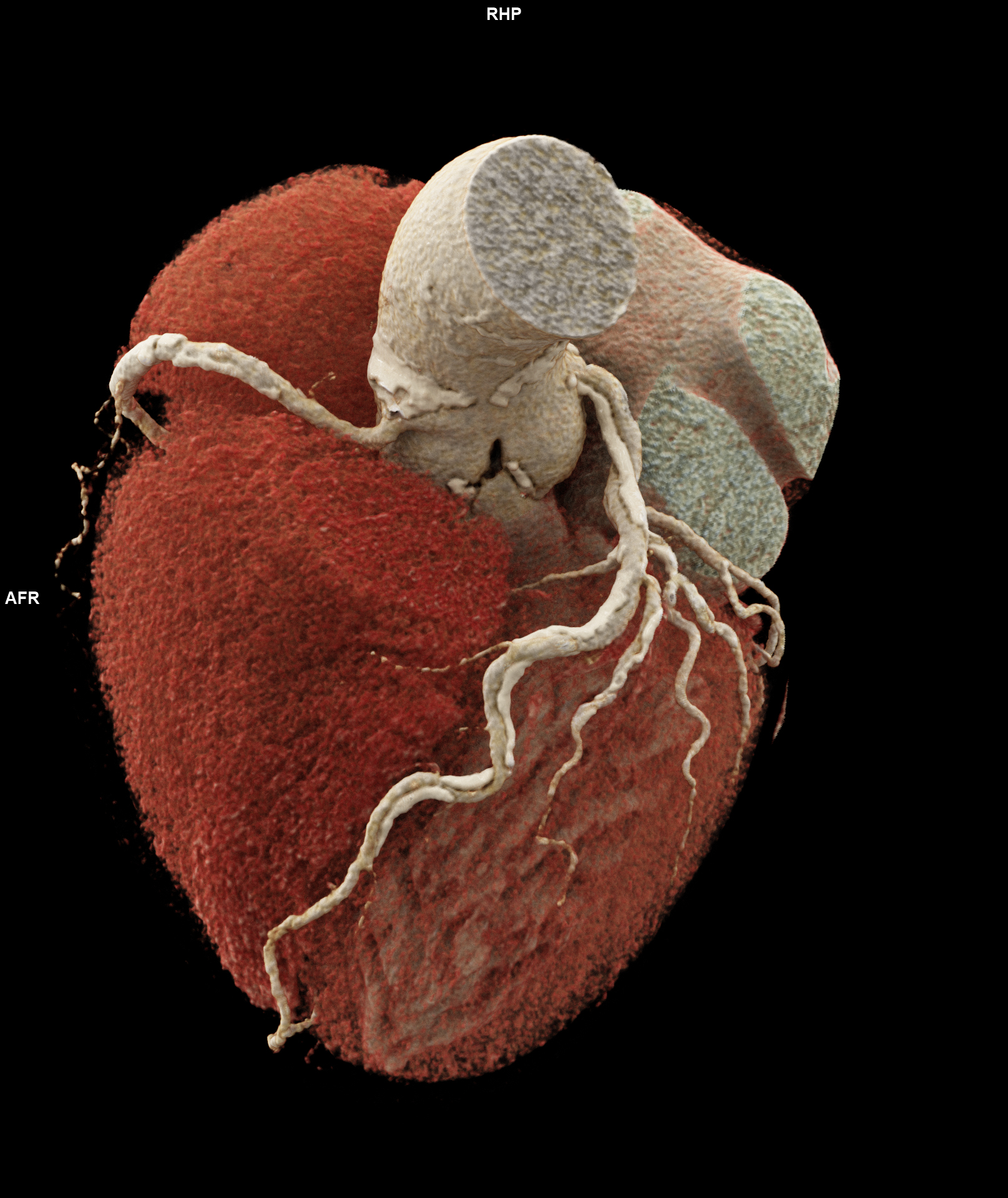
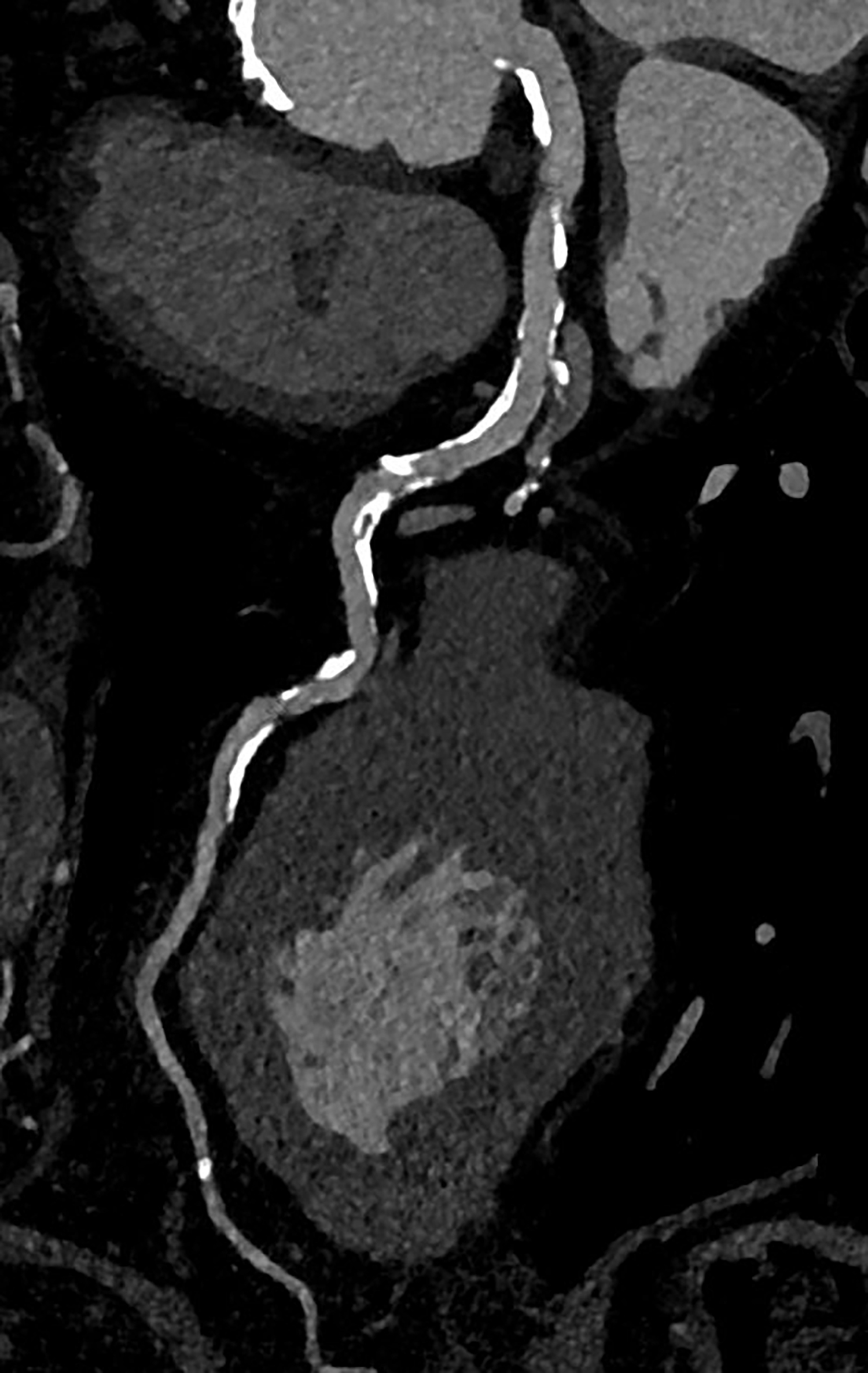
Caption: Photon counting CT of the heart of an 87-year-old patient. Despite very severe calcifications on the vessel walls (visible in the 3D image), a diagnostic image is obtained which shows that the vessels are not blocked. A catheter intervention is not necessary in this case.
Image source: Medical Center - University of Freiburg
Original title of the publication: Accuracy of Ultrahigh-Resolution Photon-counting CT for Detecting Coronary Artery Disease in a High-Risk Population
Back
Medical Center - University of Freiburg
Central Information
Phone: 0761 270-0
info@uniklinik-freiburg.de
For press inquiries:
Corporate Communications
Breisacher Straße 153
79110 Freiburg
Phone: 0761 270-84830
kommunikation@uniklinik-freiburg.de