
Prostate cancer: Newly developed inhibitor shows great potential
New epigenetic inhibitor also works on therapy-resistant prostate cancer cells
More than 65,000 men are diagnosed with prostate cancer in Germany every year. 12,000 men develop a treatment-resistant form that is ultimately fatal. A team of researchers from the Faculty of Medicine - University of Freiburg has now developed an active substance that could represent a new therapeutic option in the future. This active substance, known as KMI169, targets an enzyme that plays a key role in the development of prostate cancer. Among other things, the inhibitor showed great potential in cancer cells that were resistant to conventional therapies. The researchers from the Department of Urology at the Medical Center - University of Freiburg and the Institute of Pharmaceutical Sciences at the University of Freiburg published their study in the journal Nature Communications on January 2, 2024.
"We had been targeting the KMT9 enzyme as a potential target for prostate cancer for a long time. The development of the specific inhibitor is now a decisive step towards significantly improving the fight against prostate cancer," explains study leader Prof. Dr. Roland Schüle, Scientific Director of the Department of Urology at the Medical Center - University of Freiburg and Dr. Eric Metzger, group leader in Schüle's department.Its potential use in therapy-resistant forms of cancer is particularly valuable. "With this resistance to therapy, conventional anti-hormonal treatment often fails within a few months and the disease then progresses rapidly. The inhibitor we have developed offers us a highly innovative therapeutic approach here," says Schüle.
New approach also relevant for bladder cancer
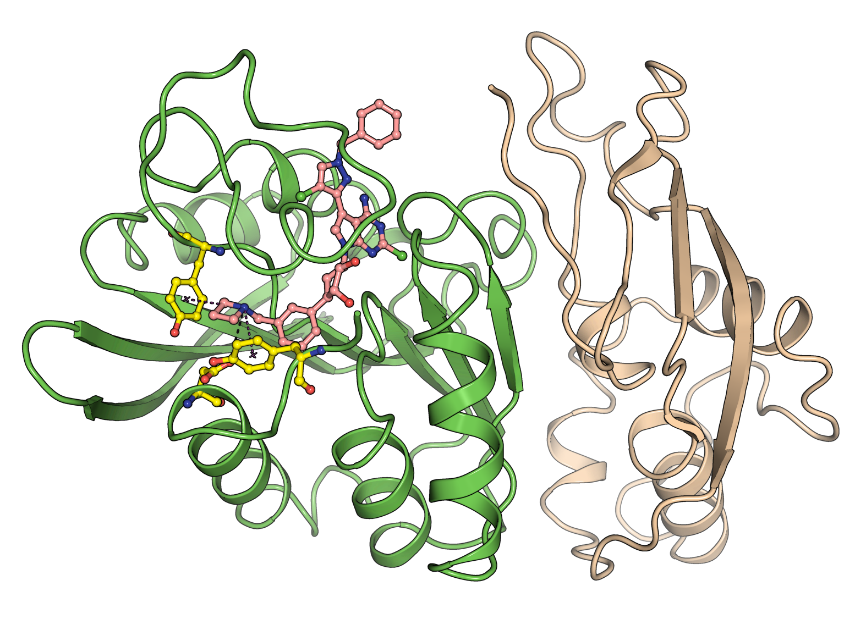
The groups led by Schüle and co-author Prof. Dr. Manfred Jung, head of the Chemical Epigenetics working groupat the Institute of Pharmaceutical Sciences, were able to show in cell cultures that the enzyme KMT9, a so-called methyltransferase, is a critical factor in the development and progression of certain types of cancer such as prostate or bladder cancer. "The inhibitor fits like a tailor-made key in its lock and blocks the function of KMT9 and thus also the growth of both prostate and bladder cancer cells," says Jung. The development of KMI169 was guided by the crystal structure analysis of KMT9 and numerous other investigations. "We have modified the compound several times to increase its potency, selectivity and druggable properties."
Original title of the study: Structure-guided design of a selective inhibitor of the methyltransferase KMT9 with cellular activity. Nat Commun15, 43 (2024).
DOI: 10.1038/s41467-023-44243-6
Link to the study:www.nature.com/articles/s41467-023-44243-6
Caption: Structure of KMT9 in complex with the inhibitor KMI169. The proteins KMT9a (green) and KMT9b (brown) are shown as a cartoon. KMI169 (pink) and amino acids important for the interaction (yellow) are shown as sticks. Interactions (black) between KMT9a and KMI169 are shown as dashes.
Image source: Medical Center - University of Freiburg
Back
Medical Center - University of Freiburg
Central Information
Phone: 0761 270-0
info@uniklinik-freiburg.de
For press inquiries:
Corporate Communications
Breisacher Straße 153
79110 Freiburg
Phone: 0761 270-84830
kommunikation@uniklinik-freiburg.de