
Precise cancer treatment: Medical Center - University of Freiburg relies twice on the world's most modern linear accelerators
Two linear accelerators of the latest generation were put into operation for the first time in Germany at the Medical Center - University of Freiburg / Extremely fast, high-resolution 3D imaging enables even more precise treatment of cancer patients
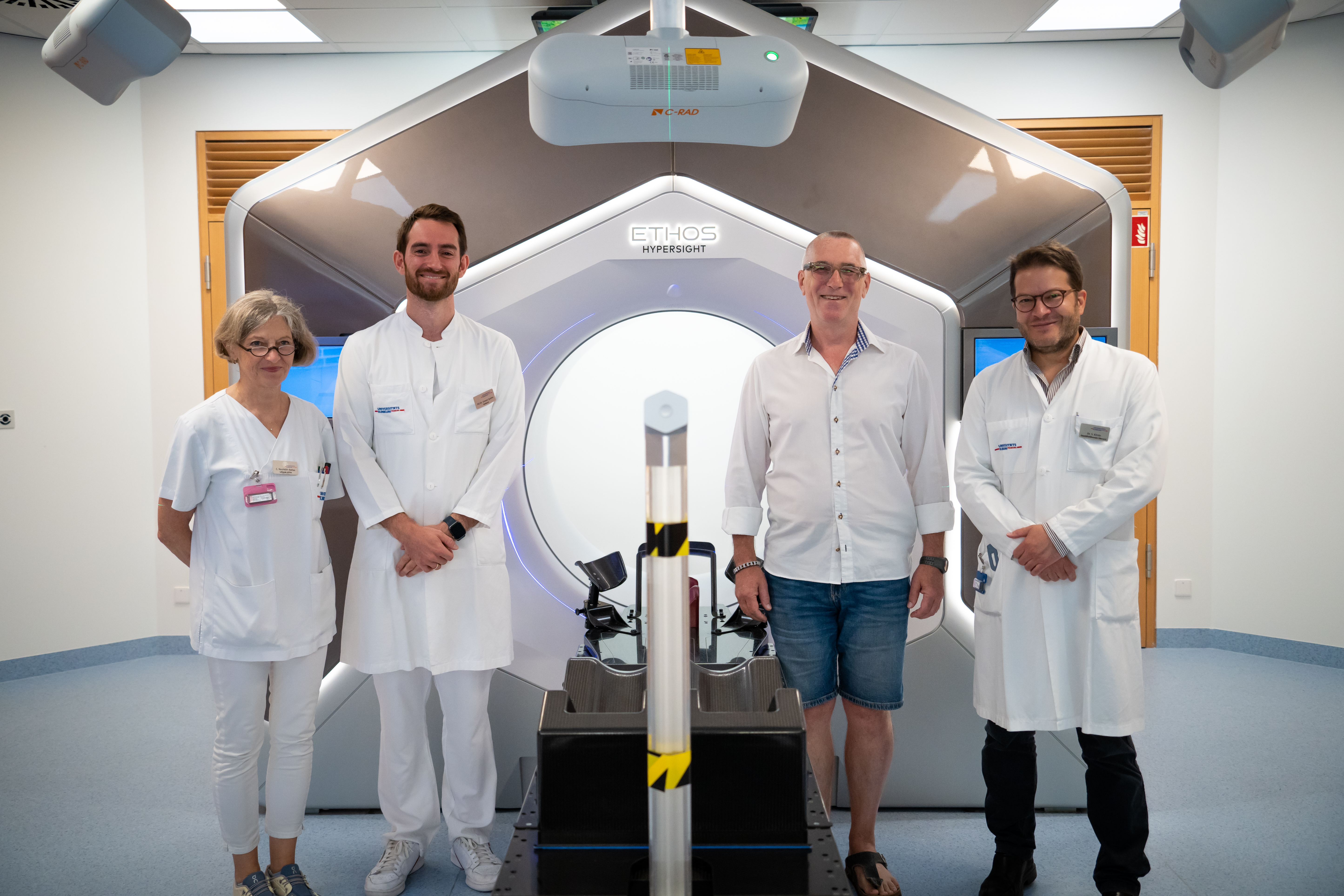
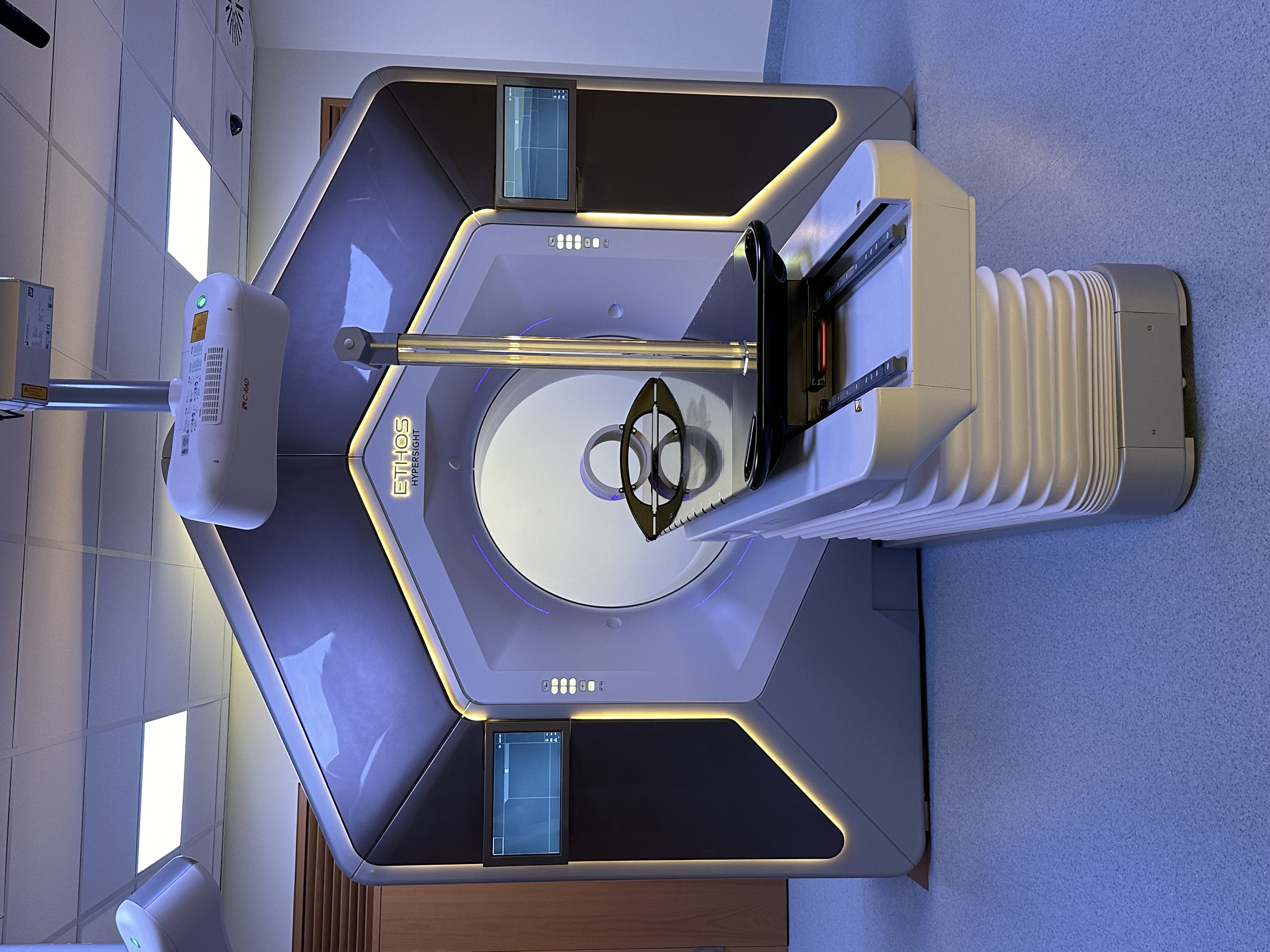
Since the end of July 2024, two linear accelerators of the latest generation have been in clinical use for the first time in Germany at the Department of Radiation Oncology at the Medical Center - University of Freiburg. Patients benefit from their use in several ways: computed tomography (CT) imaging based on innovative detector technology provides high-resolution 3D images within a few seconds before each treatment. On this basis and supported by artificial intelligence, the radiation plan can be adjusted with millimetre precision in just a few minutes and therefore on a daily basis. This is especially important when tumors and particularly sensitive mobile organs are located close to each other or the position of the target tissue changes. The first of the two linear accelerators was put into operation exactly one year ago. More than 500 patients have already been successfully treated with it.
"With the two linear accelerators, we can offer our patients radiation therapy at the highest level in the world," says Prof. Dr. Anca-Ligia Grosu, Medical Director of the Department of Radiation Oncology at the Medical Center - University of Freiburg.
High-resolution images after holding your breath once
Holding your breath once is enough for the new devices to produce high-resolution CT images. The image is taken after six seconds. "With other linear accelerators, it takes more than a minute to produce such CT images. In addition, the spatial resolution and contrast of the new devices is much higher than before, making them almost equivalent to conventional CT scanners," says Prof. Dr. Dimos Baltas, Head of the Department of Medical Physics at the Department of Radiation Oncology at the Medical Center - University of Freiburg. "The advances in technology make the examination and treatment much more comfortable and precise for patients," says Grosu.
Thanks to their speed and precision, the ETHOS™ linear accelerators from Varian, a subsidiary of Siemens Healthineers, enable so-called online-adaptive radiation planning. This involves calculating a new radiation plan for each session that takes the current anatomical conditions into account. In certain situations, this procedure can enable more precise and gentler therapy.
"Such high-precision and extremely fast imaging directly before radiotherapy allows us to adjust the radiotherapy treatment exactly every day. This allows us to further increase the quality of treatment and significantly improve therapy," says Grosu. Until now, CT imaging for radiation planning has been carried out once before the start of radiotherapy.
The linear accelerator also achieves five times faster rotation compared to conventional accelerators, which in turn opens up new possibilities for further optimization of the therapy, namely to attack the tumour as much as possible while at the same time protecting the risk structures and surrounding tissue as much as possible.
The Department of Radiation Oncology is the first institution in Germany to use two of these latest-generation radiation machines. "We are convinced that the combination of empathy and experience with technical and medical progress offers the best prospects for patients. This is what we offer here at the Medical Center - University of Freiburg," says Grosu.
Back
Medical Center - University of Freiburg
Central Information
Phone: 0761 270-0
info@uniklinik-freiburg.de
For press inquiries:
Corporate Communications
Breisacher Straße 153
79110 Freiburg
Phone: 0761 270-84830
kommunikation@uniklinik-freiburg.de