
Understanding blindness: New research on macular degeneration
New Emmy Noether Group at the University Medical Center Freiburg investigates the causes of age-related macular degeneration / 1.6 million euros in funding / Machine learning and liquid biopsies to elucidate disease mechanisms
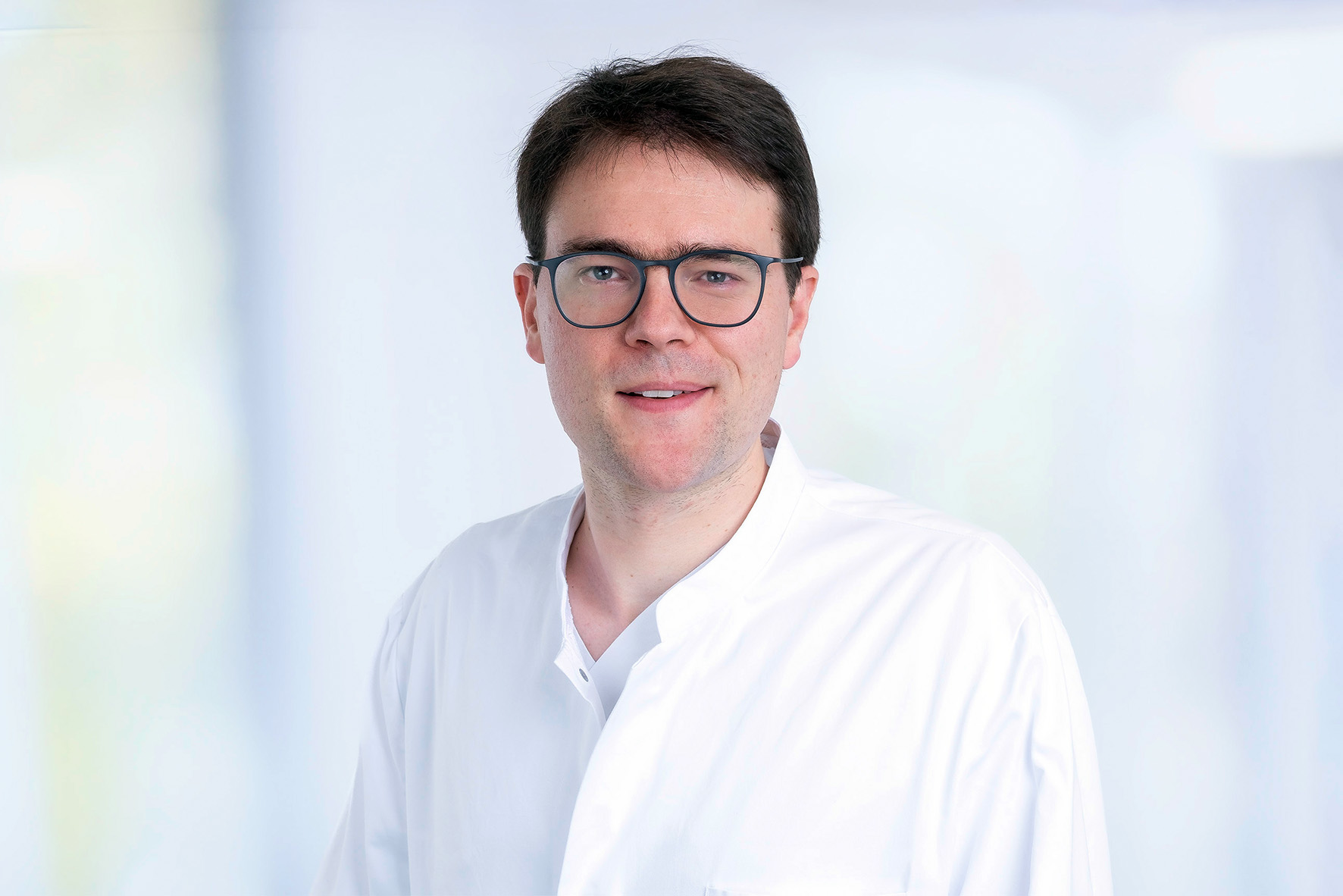
Age-related macular degeneration (AMD) is the most common cause of sight loss in older people worldwide. There is currently no effective treatment for most of those affected. In order to better understand the disease, the German Research Foundation (DFG) is now funding an Emmy Noether junior research group headed by Dr. Julian Wolf, research group leader at the Department of Ophthalmology at the University Medical Center Freiburg and member of the Medical Faculty of the University of Freiburg. The project is being funded with a total of around 1.6 million euros over six years. By combining high-resolution molecular analyses and machine learning, the aim is to decipher previously unknown disease mechanisms of AMD for the first time.
"I am very pleased about the funding, because in order to treat AMD effectively, we urgently need a deeper understanding of this complex disease," says Wolf. "Only if we understand exactly how the disease develops in the various stages can we develop targeted new therapies."
Hope for millions of sufferers worldwide
Around 200 million people worldwide suffer from age-related macular degeneration, often referred to as age-related macular degeneration. By 2040, the number of people with AMD worldwide will rise to around 300 million. Many of them gradually lose their central vision, which has a major impact on their independence and quality of life. "We hope that this project will enable us to make a contribution to helping affected people as early as possible in future - ideally before severe visual impairment occurs," says Wolf.
Liquid biopsies from the eye provide new insights
A key problem in AMD research is that conventional tissue samples cannot be taken from the light-sensitive retina without endangering vision. Wolf's team therefore relies on so-called liquid biopsies from the aqueous humor of the eye, which is obtained during eye operations. In this clear fluid, the researchers examine the composition of the proteins and the activity of the surrounding cells. With the help of machine learning, conclusions can be drawn for the first time about which cell types and signaling pathways are altered in early and late stages of the disease.
"The project is an excellent example of the close integration of basic and clinical research that we have at the University Medical Center in Freiburg," says Prof. Dr. Lutz Hein, Dean of the Faculty of Medicine at the University of Freiburg. "The biological principles are investigated using human samples - and patients benefit from these findings in the long term. Freiburg offers an excellent environment for this, especially for young, up-and-coming scientists."
"I am very pleased that this pioneering research project is being carried out at our Department of Ophthalmology and is being so generously supported by the German Research Foundation," adds Prof. Dr. Thomas Reinhard, Medical Director of the Department of Ophthalmology at the Freiburg University Medical Center.
Caption: Dr. Julian Wolf
Image source: University Medical Center Freiburg
Back
Medical Center - University of Freiburg
Central Information
Phone: 0761 270-0
info@uniklinik-freiburg.de
For press inquiries:
Corporate Communications
Breisacher Straße 153
79110 Freiburg
Phone: 0761 270-84830
kommunikation@uniklinik-freiburg.de