
More space, less anxiety: New MRI machines make exams easier for patients
The first MRI scanners of their kind in Europe combine patient-friendly design, AI-supported workflows, and resource-efficient technology
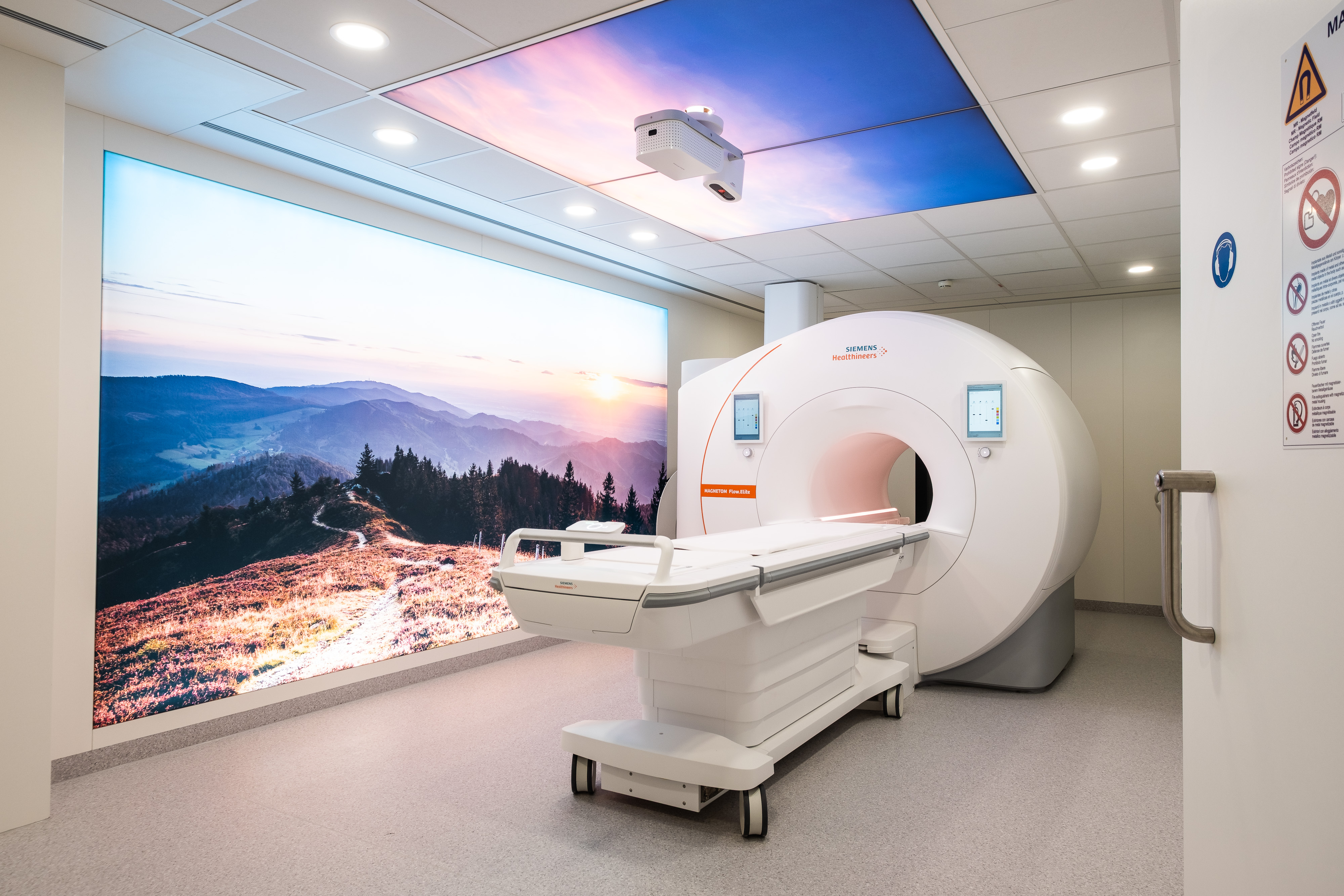
On Thursday, May 21, 2026, the Medical Center – University of Freiburg put Europe’s first Magnetom Flow.Elite P70 MRI system from Siemens Healthineers into operation. It offers patients more space, makes positioning easier, and can make examinations more comfortable. This is particularly important for people with claustrophobia, pain, or limited mobility. At the same time, it supports staff through automated processes and, due to its low power and helium consumption, is significantly more resource-efficient than many conventional MRI machines. An identical device will also be put into operation at the Bad Krozingen campus in the coming weeks.
“For many patients, an MRI exam is associated with anxiety—for example, due to the narrow tube, long lying times, or pain when repositioning,” says Prof. Dr. Fabian Bamberg, Medical Director of the Department of Radiology at the Medical Center – University of Freiburg. “The new system helps us better tailor examinations to patients’ needs. The progress lies particularly in the combination of greater comfort, reliable imaging, and simpler procedures.”
At the Bad Krozingen campus, the system will primarily benefit people with cardiovascular diseases as well as patients with pacemakers and other cardiac medical devices.
Patient-friendly technology for everyday clinical practice
With a diameter of 70 centimeters, the Magnetom Flow.Elite features a significantly wider opening than many previous models. In addition, the scan tube is shorter. Both features facilitate simpler and more stable patient positioning. This allows examinations to proceed more smoothly and reduces the strain caused by lying still for long periods or assuming unfamiliar positions.
This can make a noticeable difference, especially for people with pain, limited mobility, or obesity. Patients with claustrophobia also benefit from the more open design and an overall less stressful examination environment.
The procedures surrounding the examination are supported by automated programs. This can help make examinations more consistent and predictable. For patients, this means shorter preparation times and potentially fewer repeat scans. Additionally, noise levels are minimized.
AI-assisted image processing, lower power and helium consumption
There are also benefits for medical staff: Standardized examination procedures and AI-assisted image processing can make work easier while ensuring consistent image quality. This allows examinations to be organized more efficiently and existing capacities to be better utilized. Another key aspect is the resource-efficient technology. The MRI system does not need to be continuously cooled to extremely low temperatures. It requires only about 0.7 liters of helium over its entire lifetime, instead of the approximately 1,700 liters previously needed. The new systems consume 30 to 40 percent less electricity than the older systems that have been decommissioned.
Captions:
Image 1: People with pain, limited mobility, obesity, or claustrophobia in particular benefit from the more open design of the new MRI system and an overall less stressful examination environment.
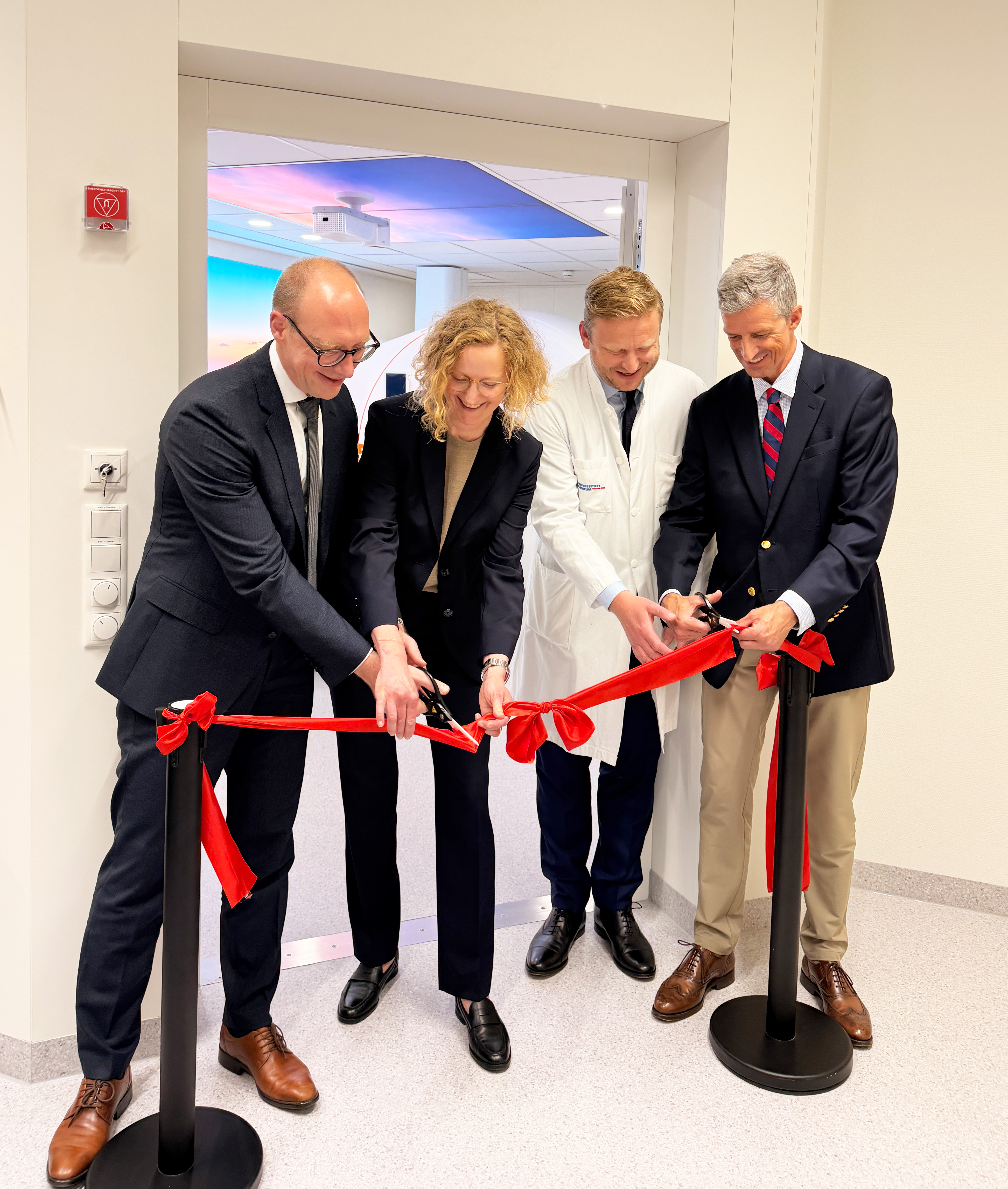
Image 2: Prof. Dr. Frederik Wenz (right), Chief Medical Officer of the Medical Center – University of Freiburg, Prof. Dr. Fabian Bamberg (2nd from right), Medical Director of the Department of Radiology at the Medical Center – University of Freiburg, celebrate the commissioning of Europe’s first Magnetom Flow.Elite P70 MRI system together with representatives from Siemens Healthineers.
Image source: Medical Center – University of Freiburg
Back
Medical Center - University of Freiburg
Central Information
Phone: 0761 270-0
info@uniklinik-freiburg.de
For press inquiries:
Corporate Communications
Breisacher Straße 153
79110 Freiburg
Phone: 0761 270-84830
kommunikation@uniklinik-freiburg.de