
A new look at how the heart really beats
Medical Center – University of Freiburg makes cardiac motion easy to understand with 3D animation / Common depictions often oversimplify cardiac deformation / New animation supports teaching and research
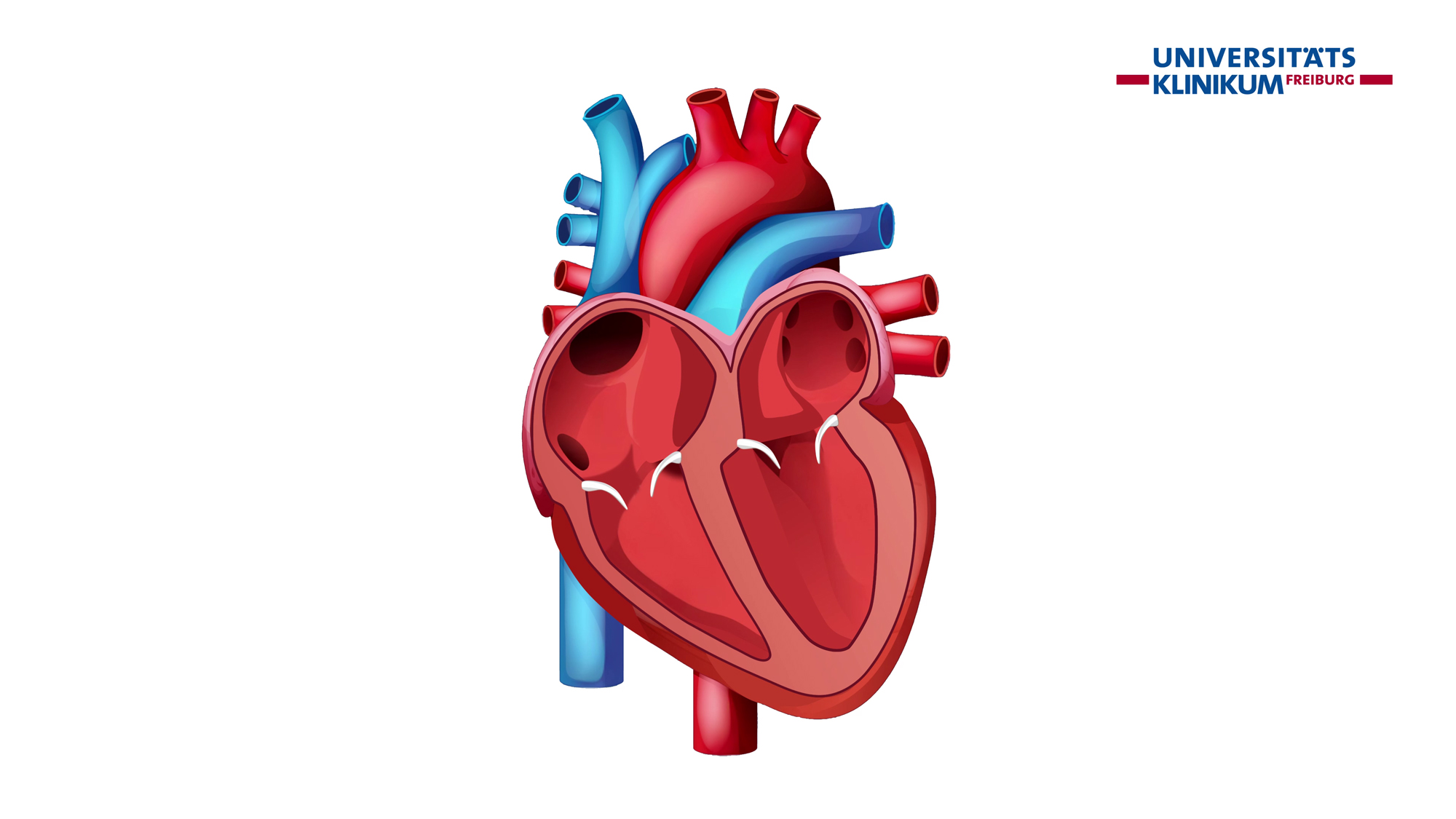
Medical Center – University of Freiburg has created a new miniature animation of the beating heart. To the knowledge of Medical Center – University of Freiburg, it is the first schematic 3D animation to showcase the dynamic movement of the heart in an anatomically and temporally representative manner. It shows that the heart pushes blood into the body while simultaneously drawing blood in from the veins, without significantly changing its overall outer dimensions. This can help physicians, researchers and students to better understand and explain heart function and heart disease.
“The idea people have of the beating heart can be mistaken. The heart as a whole does not expand or shrink during the heartbeat. Nor does the tip of the heart bounce up and down in the chest,” says Prof. Peter Kohl, Director of the Institute for Experimental Cardiovascular Medicine at Medical Center – University of Freiburg. “Pumping by the heart is not sequential, first drawing in blood, and then ejecting it; the heart is a pressure-suction pump, in which both happen simultaneously. During this process, the heart changes its internal shape, but retains an almost unchanged other shape and size.”
Why this animation is different
Many of the on-line animations to illustrate cardiac motion may appear quite precise and clear. However, they often show movements that do not occur in the body, such as when heart chambers appear empty or even filled with air after a beat, or when cardiac walls bend inwards. Such illustrations can convey an incorrect understanding of cardiac motion.
The new schematic animation from Medical Center – University of Freiburg avoids these errors. It shows how the four chambers of the heart change in shape and wall thickness with every beat, without the heart’s external volume as a whole becoming significantly larger or smaller. In this way, it explains the heartbeat more simply and more accurately than previous schematic representations. “The graphic may look less spectacular than other animations, but it is closer to reality,” says Kohl. The animation is intended for teaching and research.
Praise from international experts
The previously available depictions have been been found problematic by experts worldwide. First feedback on the new animation included responses such as: “Finally!”, “Very good” and “You can practically feel the heartbeat!”
The animation is available free of charge to all users worldwide.
Image: Medical Center – University of Freiburg has developed an anatomically representative animation of the beating heart.
Image source: Medical Center – University of Freiburg (CC BY-NC 4.0)
Back
Medical Center - University of Freiburg
Central Information
Phone: 0761 270-0
info@uniklinik-freiburg.de
For press inquiries:
Corporate Communications
Breisacher Straße 153
79110 Freiburg
Phone: 0761 270-84830
kommunikation@uniklinik-freiburg.de