
World-Class Collaboration Advances Radiation Therapy
World's First Joint Radiation Therapy Laboratory Established by Academia and Industry / Medical Center – University of Freiburg, the University of Freiburg, and Siemens Healthineers Are Pooling Their Research and Development Efforts at a Single Location /
On Friday, July 24, 2026, the Medical Center – University of Freiburg, the University of Freiburg, and the medical technology company Siemens Healthineers opened their joint Technology Innovation Lab, or TIL for short. In the lab at the Department of Radiation Oncology, experts in medicine, medical physics, radiation biology, and data science are working together with engineers to develop and test new technologies for radiation therapy to treat cancer. What makes this project unique is that, for the first time, basic research, clinical research and testing, and technical development are taking place together on a permanent basis. The project partners have invested approximately eight million euros in the construction and equipping of the joint laboratory.
The new methods are intended to treat tumors even more precisely, effectively, and quickly than before. Methods for adjusting radiation in real time and throughout the course of therapy are also to be developed.
“With the Technology Innovation Lab, we are reaching a new level of cooperation between university medicine and medical technology that is unique worldwide in the field of radiation therapy,” says Prof. Dr. Anca-L. Grosu, Medical Director of the Department of Radiation Oncology at the Medical Center – University of Freiburg. “Each of the partners from research, clinical practice, and industry is internationally recognized. But together, we will create something that has never existed before. Ultimately, patients worldwide will benefit from this.”
“Germany has a strong and internationally competitive medical technology industry, whose importance to Germany as a hub for business and innovation is steadily growing. Siemens Healthineers is one of the world’s leading companies in this field and makes a significant contribution to the technological advancement of modern medicine. A collaboration like the one at TIL strengthens both patient care and Germany’s position as a hub for innovation. We are therefore pleased to have two partners—the University of Freiburg and the Medical Center – University of Freiburg—that closely combine top-tier scientific expertise with clinical experience,” says Dr. Bernd Montag, Chairman of the Board of Directors of Siemens Healthineers.
Radiation Therapy as a Precise and Cost-Effective Cancer Treatment
The Department of Radiation Oncology at the Medical Center – University of Freiburg is one of the largest radiation oncology centers in Germany. Its internationally networked research has helped shape modern image-guided, stereotactic, and biologically individualized radiation therapy methods.
Demographic changes are also expected to lead to a significant increase in cancer cases. Alongside surgery and drug-based tumor therapy, radiation therapy is a central pillar of cancer treatment. More than half of cancer patients benefit from radiation therapy at some point during the course of their disease. “With radiation therapy, we can cure many people with cancer, control tumor growth in others, and alleviate symptoms,” says Grosu. At the same time, radiation therapy is a particularly cost-effective form of cancer treatment.
Radio-oncology is a medical specialty that is also heavily influenced by technology. Medical expertise reaches patients through the use of highly complex devices and digital systems. Technological progress is therefore an essential prerequisite for further developments in radiation therapy.
Placing Even Greater Emphasis on Tumor Characteristics
The new research laboratory is intended to develop technologies that allow radiation therapy to be tailored even more closely to the biological characteristics of a tumor. In addition, changes occurring during treatment are to be detected and addressed more quickly. In this process, basic research and new technical approaches are aligned early on with the demands of everyday clinical practice. Insights from patient care will be directly incorporated into the development process. This is intended to shorten the path from scientific concept to clinical application.
“The TIL is a prime example of our ‘Industry-on-Campus’ concept, through which we bring together medicine, research, and the healthcare industry at a single location and advance translation in medicine,” says Prof. Dr. Frederik Wenz, Chief Medical Officer of the Medical Center – University of Freiburg.
“Research requires scientific ideas, but also modern technologies and suitable research infrastructures,” says Prof. Dr. Lutz Hein, Dean of the Faculty of Medicine – University of Freiburg. “With the Technology Innovation Lab, we are strengthening both aspects.”
Operating Permit Under Regulated Conditions
At the opening ceremony, Regional President Carsten Gabbert presented the operating permit for the Technology Innovation Lab. “The Technology Innovation Lab combines medical development with high standards for safe operation,” says Gabbert. “New technologies are developed and tested here under controlled conditions.” Our role as the Regional Council is to guarantee these conditions—both during the approval process and in the subsequent monitoring of the facility. Given the constructive cooperation we’ve had with the two operators so far, I am confident that we will continue to succeed in this regard.”
About the Building
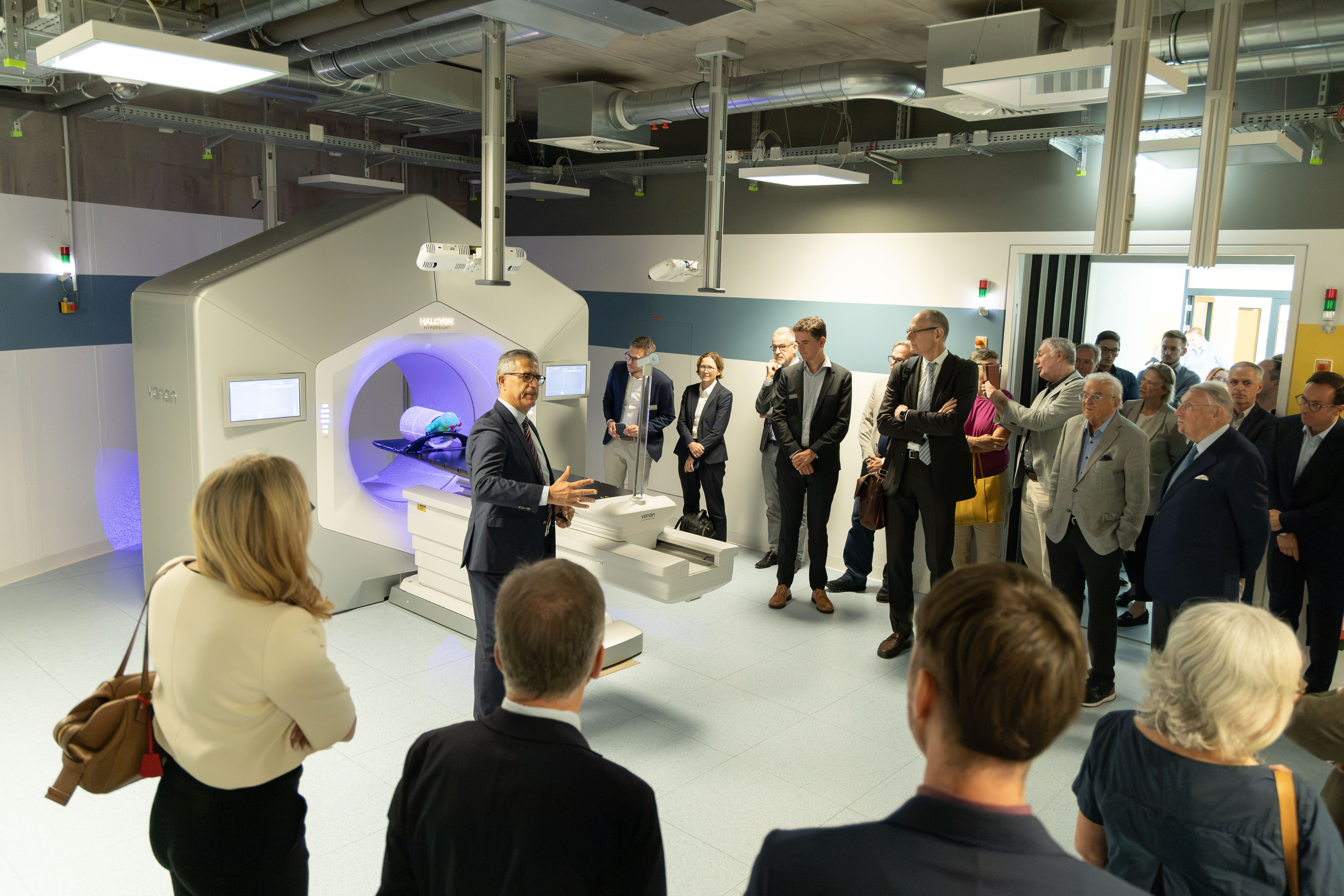
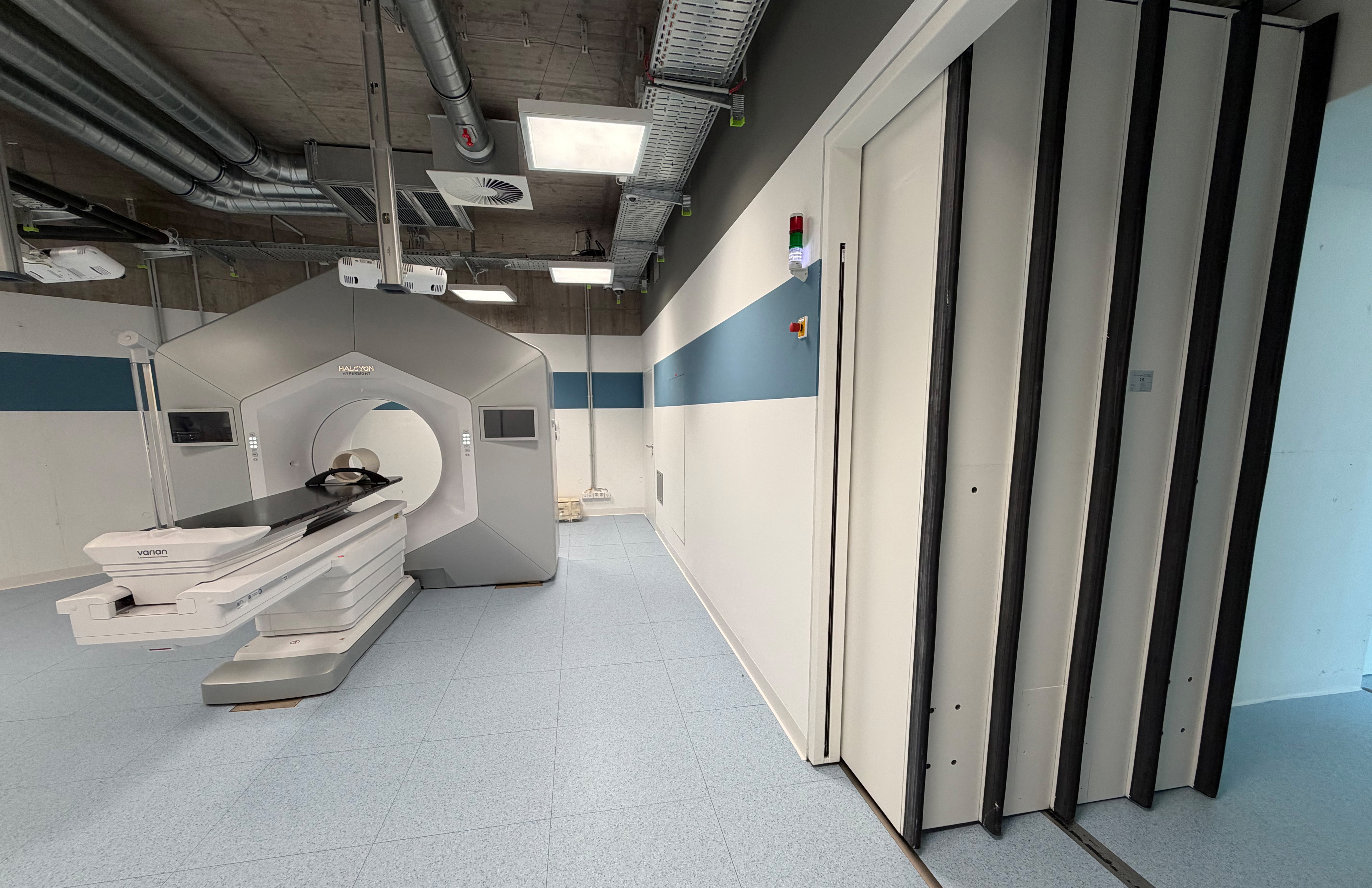
The Technology Innovation Laboratory was constructed in 20 months and is directly adjacent to the Department of Radiation Oncology. Two high-performance linear accelerators are installed in the TIL, which are being further developed jointly in close cooperation. Two radiation shielding doors, each weighing 28 metric tons, reinforced concrete walls up to 1.7 meters thick, and a sophisticated personal safety concept ensure maximum safety.
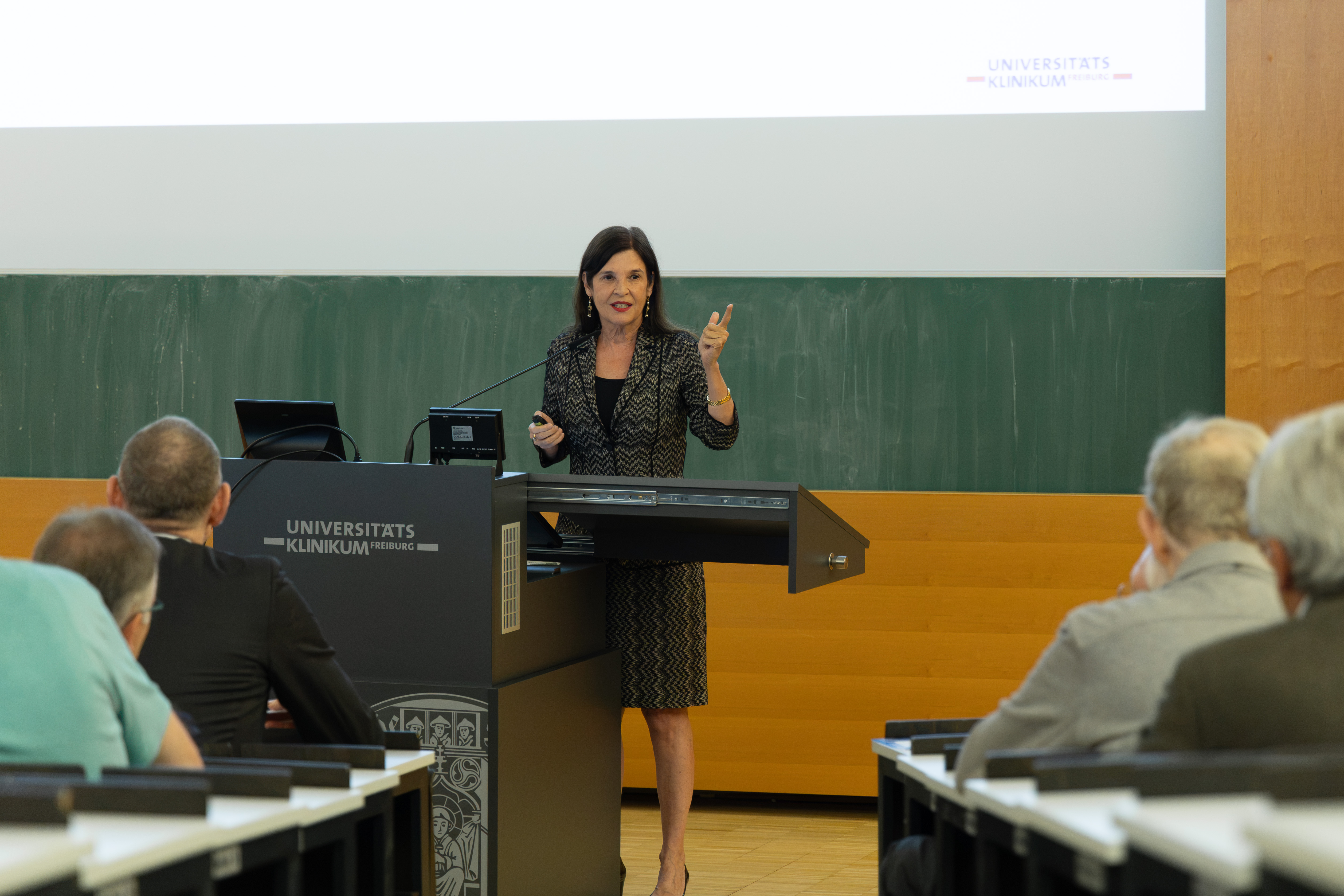
Caption 1: Prof. Dr. Anca-L. Grosu, Medical Director of the Department of Radiation Oncology at the Medical Center – University of Freiburg, emphasized in her presentation the high efficacy and significant benefits for patients.
Caption 2: Thanks to close collaboration, the Freiburg researchers led by Prof. Dr. Dimos Baltas, Head of Medical Physics at the Department of Radiation Oncology at the Medical Center – University of Freiburg, are able to conduct research using equipment that is not yet available on the market.
Caption 3: Walls up to 1.7 meters thick, two radiation-shielding doors weighing 28 metric tons each, and a sophisticated personal safety concept ensure maximum safety at the TIL.
Image source: Medical Center – University of Freiburg
Back
Medical Center - University of Freiburg
Central Information
Phone: 0761 270-0
info@uniklinik-freiburg.de
For press inquiries:
Corporate Communications
Breisacher Straße 153
79110 Freiburg
Phone: 0761 270-84830
kommunikation@uniklinik-freiburg.de