
New Approach to Treating Chemotherapy-Resistant Cancer Cells
Surviving cancer cells exhibit temporary vulnerabilities after chemotherapy / This approach could lead to new treatment strategies to prevent relapses / Published in *Cell Metabolism*
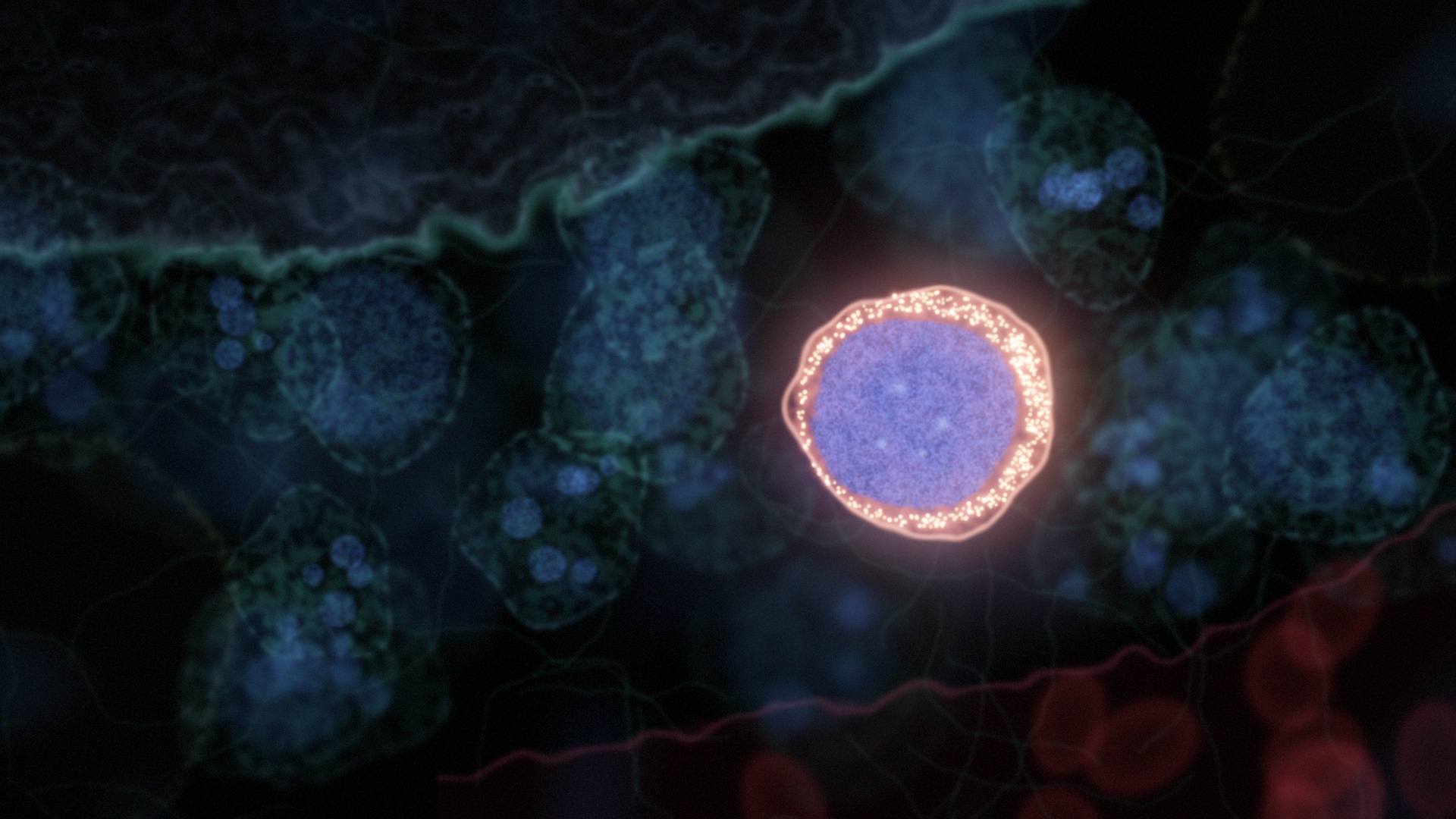
Some leukemia cells survive even intensive chemotherapy and can later trigger a relapse. A new research concept now describes how this very struggle for survival could create temporary vulnerabilities in the cells. The idea: An initial therapy puts cancer cells into a specific state, which a second, time-coordinated treatment then specifically exploits. The concept was presented on November 3, 2026, in the journal *Cell Metabolism*.
“We don’t view the cells that survive a therapy as merely particularly resilient,” says Dr. Christina Mayerhofer, a physician at the Center for Pediatrics at the Medical Center – University of Freiburg. Together with Prof. David T. Scadden of Harvard University, she summarizes the approach as “Dynamic Synthetic Lethality.” “We’re interested in the price the cells pay for this survival. Because that’s exactly where new opportunities for attack can arise.”
The type and timing of additional therapies could be decisive
The concept is based on several experimental studies on acute myeloid leukemia. They show that, under therapeutic pressure, surviving cancer cells alter their metabolism and protein production, which can make them temporarily particularly dependent on certain processes. “Therefore, what may be decisive is not only which cells we target, but also when. We are now building further research projects on this foundation,” says Mayerhofer.
“We are already able to cure the vast majority of children of cancer. But of course, our goal is to help all children. This approach is very promising in that regard,” says Prof. Dr. Tobias Feuchtinger, Medical Director of the Department of Pediatric Hematology and Oncology at the Center for Pediatrics at the Medical Center – University of Freiburg.
So far, the results are based on laboratory studies. Further studies are needed before new treatment strategies can be derived from them. Above all, it must be determined whether such time-limited vulnerabilities can be reliably identified in patients and safely exploited therapeutically.
Original title of the study:Leveraging induced cell states for cancer therapy: the case for Dynamic Synthetic Lethality
DOI: 10.1016/j.cmet.2026.08.017
Link to the study:https://www.cell.com/cell-metabolism/fulltext/S1550-4131(26)00369-4
Caption: AML cancer cells are barely visible in tissue. This AI-generated image shows what an AML cell that has survived chemotherapy might look like. Purple indicates the enlarged cell nucleus, while bright yellow indicates marker proteins that help researchers distinguish them from healthy cells. Image
source: Medical Center – University of Freiburg / Mayerhofer
Back
Medical Center - University of Freiburg
Central Information
Phone: 0761 270-0
info@uniklinik-freiburg.de
For press inquiries:
Corporate Communications
Breisacher Straße 153
79110 Freiburg
Phone: 0761 270-84830
kommunikation@uniklinik-freiburg.de