
Smartphone and wearables to warn of epilepsy seizures
Wearable system to permanently measure bodily functions and thus predict epileptic seizures and phases of high seizure risk / 800,000 euros in funding for the Medical Center - University of Freiburg
The Medical Center - University of Freiburg is playing a key role in the development of mobile devices that can predict epileptic seizures. For the prediction, the self-learning systems will examine skin moisture, body movement and other characteristics for typical changes. The use of smartphones and other existing technologies should make the warning system accessible to many people as quickly as possible. The transferability of the system to other neurological diseases is an explicit part of the project. The Department of Pre-Surgical Epilepsy Diagnostics at the Medical Center - University of Freiburg's Department of Neurosurgery is carrying out the five-year project in close collaboration with King's College London, UK. As part of the RADAR-CNS research program, the Freiburg site is now receiving 800,000 euros in funding.
"A reliable prediction system would enormously improve the quality of life of epilepsy patients. For example, it would give them the opportunity to take fast-acting medication or at least to move to a safe environment," says project leader Prof. Dr. Andreas Schulze-Bonhage, Head of the Department of Pre-Surgical Epilepsy Diagnostics at the Department of Neurosurgery at the Medical Center - University of Freiburg. In the future, such a system could also inform a caregiver or physicians in the event of a seizure. But even precise documentation of all of a patient's epileptic seizures would be a significant improvement. Until now, patients have kept handwritten seizure diaries in which they record the duration, severity and possible triggers of a seizure. However, many patients cannot remember their seizures due to amnesia, which makes therapy and therapy monitoring more difficult.
The new system will use sensors to measure biological parameters such as body acceleration, heart rate and skin conductivity, which are characteristically altered during epileptic seizures. This could be done using a watch or wristband that measures skin moisture and arm movement, for example. Using methods from the field of machine learning, the programs adapt better and better to the respective patient and should learn to recognize changes before a seizure and even differentiate between different types of seizures. The project will initially be developed together with 120 inpatients treated in Freiburg and London. In a second step, it will be extended to outpatients.
The project is being funded as part of the RADAR-CNS (Remote assessment of disease and relapse - Central Nervous System) research program, which is being financed by the Innovative Medicines Initiative (IMI) with a total of 12 million euros. The IMI is an alliance between the European Union and the European Pharmaceutical Industry Association. Prediction systems for depression and multiple sclerosis are also to be developed as part of RADAR-CNS.
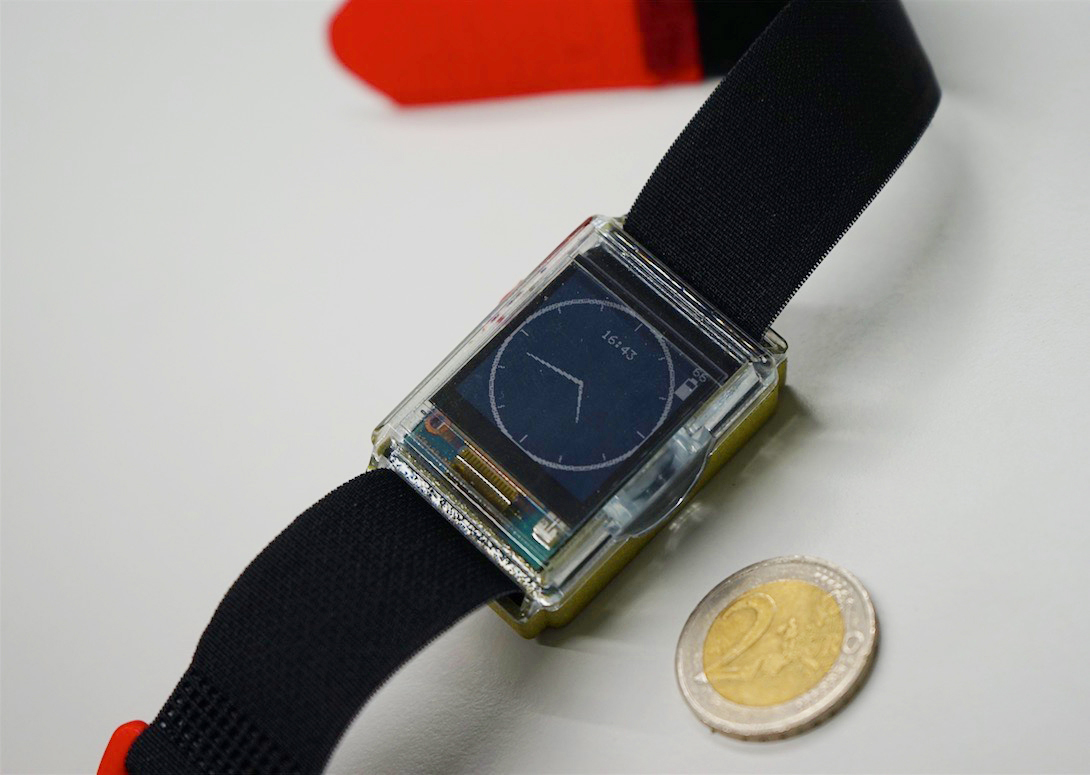
Caption: Modern "wearables" can integrate a variety of sensors that can be used to detect seizures (here: development by IMTEK Freiburg, Prof. van Laerhoven).
Image source: University of Freiburg / van Laerhoven
Further information:
Department of Pre-Surgical Epilepsy Diagnostics - Epilepsy Center
PM: Epilepsy: Sophisticated data analysis replaces risky brain stimulation
Contact
Prof. Dr. Andreas Schulze-Bonhage
Head of the Department of Pre-Surgical Epilepsy Diagnostics
Department of Neurosurgery
Medical Center - University of Freiburg
Phone: 0761 270-54250
andreas.schulze-bonhage@uniklinik-freiburg.de
Back
Medical Center - University of Freiburg
Central Information
Phone: 0761 270-0
info@uniklinik-freiburg.de
For press inquiries:
Corporate Communications
Breisacher Straße 153
79110 Freiburg
Phone: 0761 270-84830
kommunikation@uniklinik-freiburg.de