
Realistically practicing for emergencies
Physicians and nursing staff from the University Emergency Center at the Medical Center - University of Freiburg took part in a simulation training course
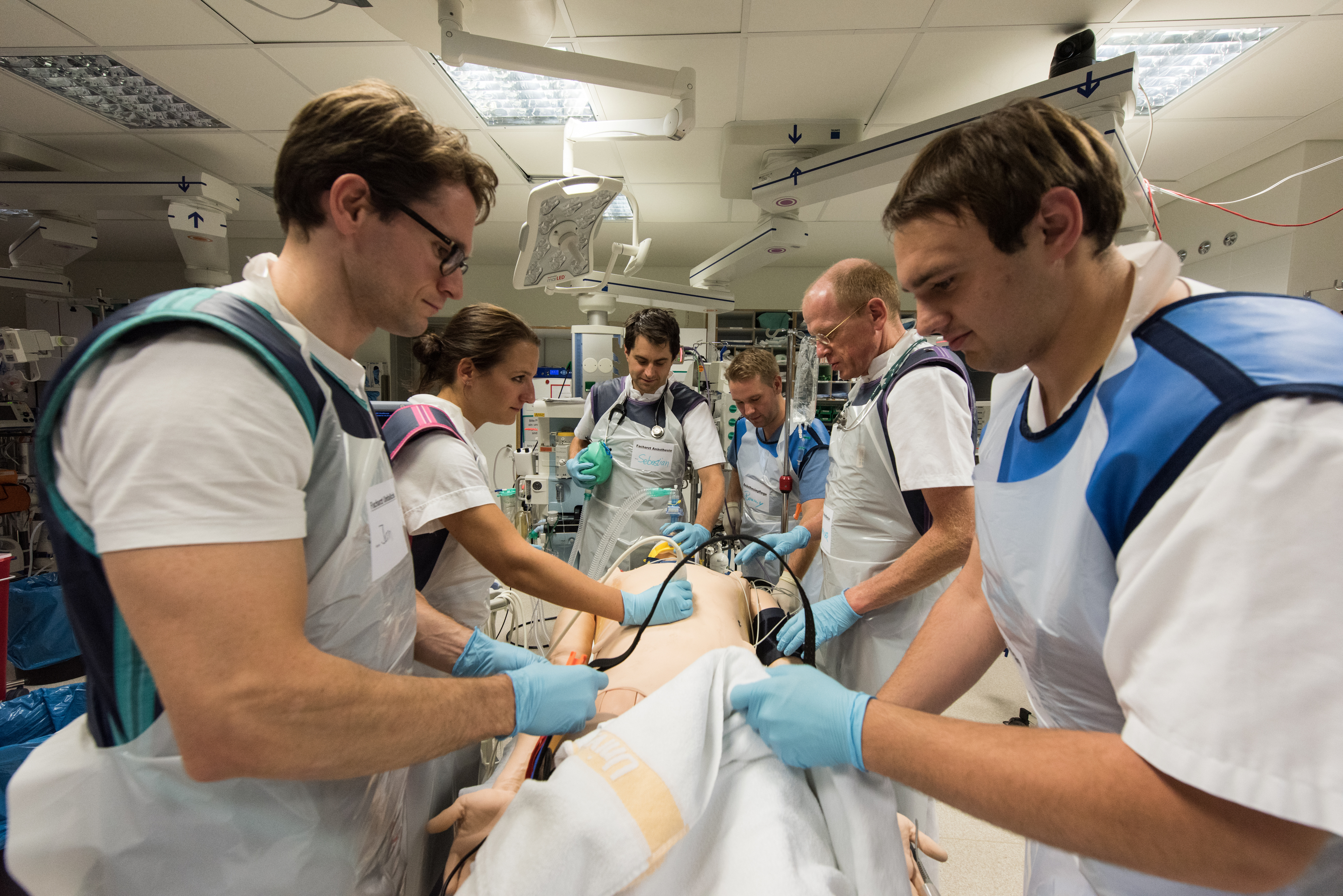
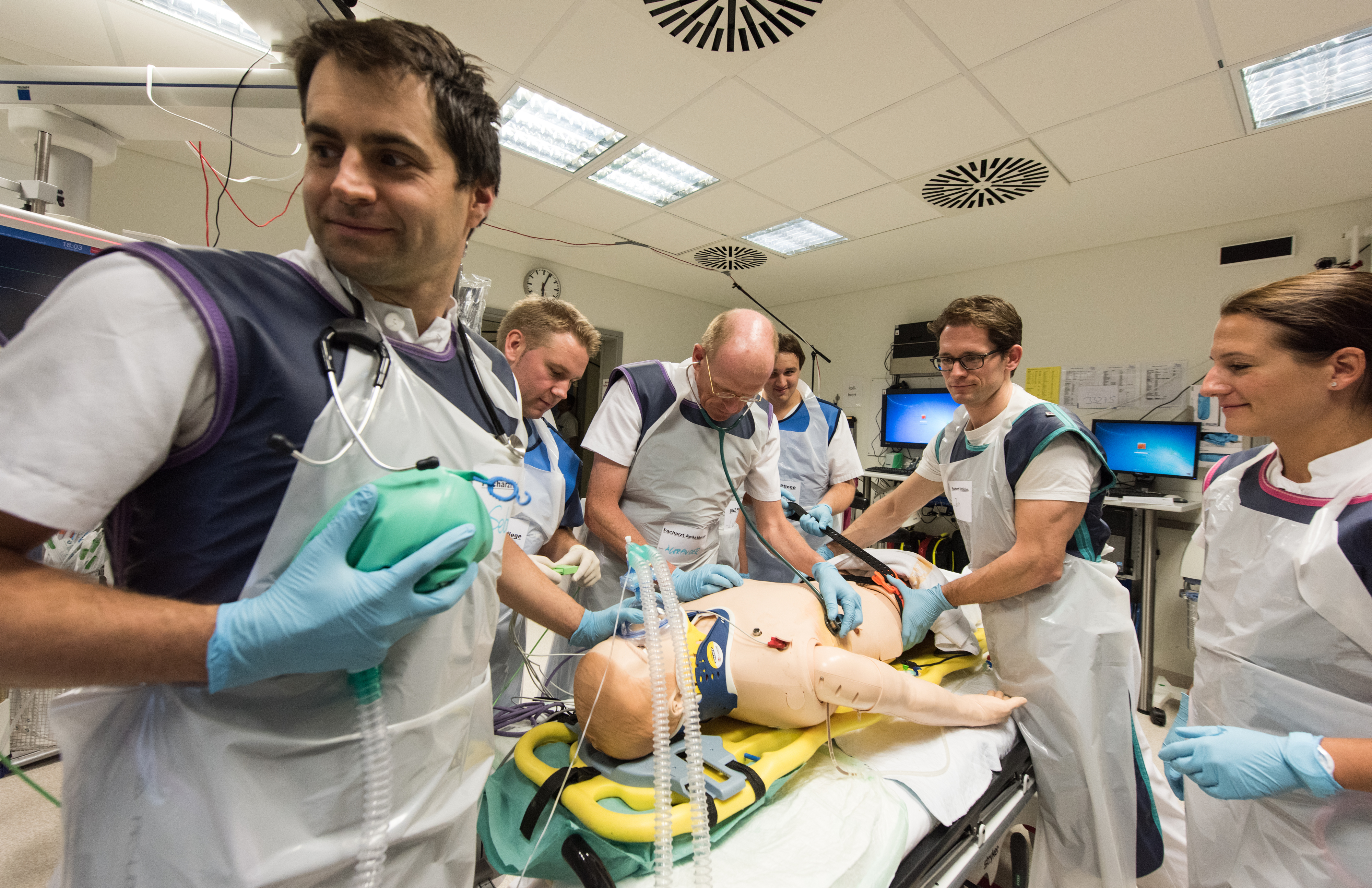
Physicians and nursing staff from the University Emergency Center at the Medical Center - University of Freiburg practiced communication and procedures in the shock room during HOTT® simulation training last weekend. Using a simulation mannequin, they practiced case scenarios that could occur at any time in everyday operations.
Specialists, nursing care staff and paramedics from the University Emergency Center took part in the training, which is organized by the Akademie der Unfallchirurgie GmbH and the German Society for Trauma Surgery (DGU). Over two days, they completed six case scenarios directly in the trauma room in teams of eight. In the training situations, the participating physicians and nurses have to spontaneously adapt to unforeseen incidents that also occur in real-life operations. "The simulation training teaches behavioral principles that can be applied in any team emergency," says Professor Dr. Norbert Südkamp, Director of the Department of Orthopedics and Trauma Surgery at the Medical Center - University of Freiburg.
During the training, cameras in the trauma room filmed what was happening. In addition, the team's communication was recorded with microphones. The instructors observing the situation controlled the simulation mannequin in an adjoining room via a computer. They can simulate cardiac arrhythmia or respiratory distress, for example. The tasks may include inserting a chest tube into the manikin, giving it artificial respiration or performing an ECG.
"The aim is to practice the coordinated takeover and handover of a patient in the shock room as well as communication with each other and the behaviors for more safety in the shock room," says Professor Dr. Hartmut Bürkle, Medical Director of the Department of Anesthesiology and Critical Care at the Medical Center - University of Freiburg.
Video-supported debriefings took place after the simulation training. Three camera perspectives allow the events in the shock room to be analyzed from different angles. "Conflicts or problems that arose during the simulation training can be discussed in peace," says PD Dr. Jörn Zwingmann, senior physician and specialist in orthopaedics and trauma surgery at the University Emergency Center - University of Freiburg. Communication and coordination within the team as well as potential improvements to procedures and the set-up of the shock room were discussed in detail. The course focuses on communication, team performance, decision-making and error prevention.
The shock room simulation HOTT® was developed by the DGU in close cooperation with the Tübingen Patient Safety and Simulation Center (TüPASS). It has been proven that the best effects are achieved in a familiar environment. Simulation training therefore always takes place at the hospital's workplaces. An additional shock room is available at all times during the exercise for real emergencies. Patient safety is essentially determined by the safety of the shock room team. HOTT® trains those principles of behavior that increase safety when dealing with critical situations, which are presented in their own shock room using realistic patient simulators.
Caption: During HOTT simulation training, specialists, nursing care staff and paramedics practise ventilation, sonography, ECG recording and other emergency measures on a simulation manikin.
Image rights: (c) Patrick Seeger / University Hospital Freiburg
Contact:
PD Dr. Jörn Zwingmann
Specialist in orthopaedics and trauma surgery
University Emergency Center (UNZ)
Uniklinik Freiburg
Phone: 0761 270-26530
joern.zwingmann@uniklinik-freiburg.de

Back
Medical Center - University of Freiburg
Central Information
Phone: 0761 270-0
info@uniklinik-freiburg.de
For press inquiries:
Corporate Communications
Breisacher Straße 153
79110 Freiburg
Phone: 0761 270-84830
kommunikation@uniklinik-freiburg.de