
Artificial intelligence learns to recognize bone fractures and kidney damage
New high-performance server at the Medical Center - University of Freiburg enables the training of artificial intelligence in the evaluation of radiological image data / This could enable diseases to be detected even earlier in future
At the beginning of October 2021, the Department of Radiology at the Medical Center - University of Freiburg put high-performance servers into operation to research and develop artificial intelligence (AI) methods in radiology for patient care. The new servers will make it possible to analyze large volumes of highly complex image data using artificial intelligence. The servers are equipped with one terabyte of RAM and four latest-generation graphics processors.
"Radiology has always been one of the digital pioneers in medicine. Now we are moving forward with the development of AI-supported diagnostics. Thanks to artificial intelligence, we want to compare image data from many patients and thus recognize new signs of disease. For patients, this means that treatment can be started earlier and in an even more targeted manner," says Prof. Dr. Fabian Bamberg, Medical Director of the Department of Radiology and Interventional Radiology at the Medical Center - University of Freiburg.
Detecting kidney damage and bone fractures
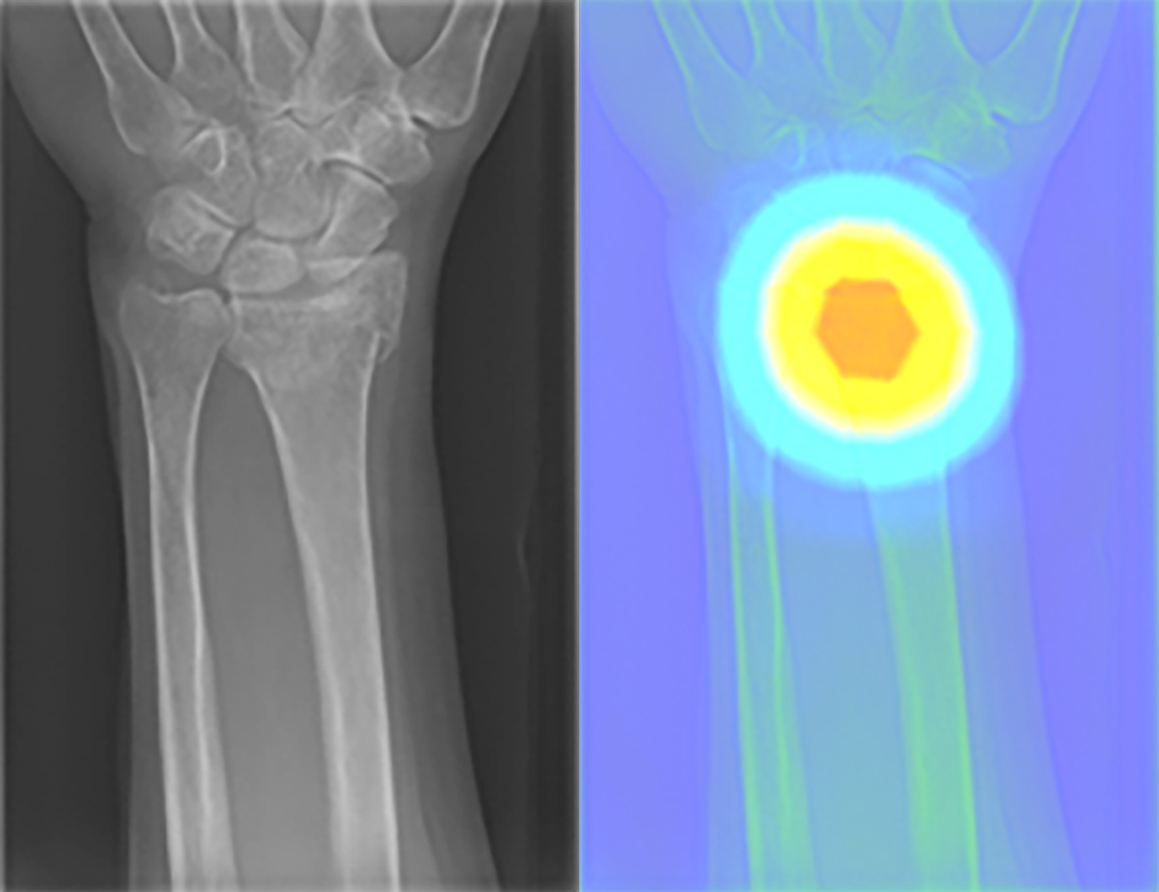
In a first project, the radiologists are working together with experts from the Institute of Genetic Epidemiology at the Medical Center - University of Freiburg to detect kidney disease at an early stage using magnetic resonance imaging (MRI) images. Another focus of the supercomputer is the analysis of X-ray images for possible bone fractures. It is crucial to be able to check the results of the AI software. To do this, the software places a so-called heat map over the X-ray image, highlighting in color where it has detected the bone fracture.
"With the newly expanded server environment, it is now possible to process large data sets in high resolution locally. Using these data sets makes it possible to train neural networks that can recognize a variety of signs of disease and injury in the X-ray image," explains Bamberg.
"At the Medical Center - University of Freiburg, we are driving forward the digital transformation for the benefit of patients. AI-supported evaluation of complex medical data enables us to offer even more precise diagnostics and treatment," says Prof. Dr. Frederik Wenz, Chief Medical Officer of the Medical Center - University of Freiburg.
The new high-performance servers are connected to the established NORA science platform, which was developed in the Department of Medical Physics in the Department - University of Freiburg Medical Center - University of Radiology. The expansion of the infrastructure was motivated in particular by research projects in the field of the NAKO health study and in the area of the priority program SPP2177 "Radiomics" funded by the German Research Foundation.
Caption: Illustration of an automatic detection of a distal radius fracture with explanatory heat map. Important image regions for the decision of the AI-trained network are automatically highlighted in color.
Image source: Medical Center - University of Freiburg
Contact:
Prof. Dr. Fabian Bamberg
Medical Director
Department of Radiology
Medical Center - University of Freiburg
Phone: 0761 270-38050
fabian.bamberg@uniklinik-freiburg.de
Back
Medical Center - University of Freiburg
Central Information
Phone: 0761 270-0
info@uniklinik-freiburg.de
For press inquiries:
Corporate Communications
Breisacher Straße 153
79110 Freiburg
Phone: 0761 270-84830
kommunikation@uniklinik-freiburg.de