
Detecting animal influenza viruses early, before they pose a pandemic threat
Freiburg Research Project Investigates How Animal Viruses Adapt to the Human Immune System / The European Research Council is funding the project with 1.5 million euros as part of an ERC Starting Grant
In the future, dangerous animal influenza viruses are to be detected earlier, before they adapt to humans to such an extent that they pose an increased risk of a pandemic. To this end, Dr. Kevin Ciminski, a member of the Faculty of Medicine – University of Freiburg and principal investigator of a young researchers’ group at theInstitute for Virology at the Medical Center – University of Freiburg, will receive an ERC Starting Grant of 1.5 million euros over five years, beginning in January 2027. The European Research Council (ERC) announced this on Thursday, September 3, 2026. It is the European Union’s most generously funded grant for early-career researchers. In the “FLU-ARMOR” research project, Ciminski and his team are investigating which changes in animal influenza A viruses enable them to overcome the protective barriers of the human immune system.
“Just because a flu virus jumps from animals to humans doesn’t mean it can spread among humans permanently. Our immune system puts several hurdles in the virus’s path,” says Ciminski. “We want to understand which viruses could overcome these barriers. This will help us identify threatening variants earlier and better assess the risks they pose.”
A Key Barrier Against Animal Influenza Viruses
Animal influenza A viruses occur primarily in wild birds and can jump to mammals or humans. These are referred to as zoonotic viruses. An important protective barrier following such a jump is the human protein MxA. It is part of the innate immune system and inhibits the replication of many animal influenza A viruses. Researchers in Freiburg have been studying this MxA barrier and the adaptation of zoonotic influenza viruses for years.
In FLU-ARMOR, Ciminski and his team aim to clarify how viruses overcome this barrier and what role intermediate hosts such as pigs, cattle, horses, or bats play. In addition, the researchers are investigating the viral protein NS1, which can weaken the innate immune response. Evidence from previous pandemics suggests that multiple adaptation mechanisms interact.
The research builds on many years of expertise at the Institute for Virology at the Medical Center – University of Freiburg. Among other things, the institute studies avian and bat influenza viruses as well as zoonotic risk assessment.
FLU-ARMOR stands for “Decoding Antiviral Restriction, Immune Modulation, and Risk Assessment of Influenza A Viruses.”
From Basic Research to an AI-Based Early Warning System
In the final phase of FLU-ARMOR, the findings will be integrated into a computer-based early warning system. Artificial intelligence will be used to scan publicly available virus data for experimentally determined risk characteristics. Suspect virus variants will then be examined in the laboratory.
In this way, the project combines basic research, risk assessment, and early warning. The goal is to detect viruses with increased pandemic potential earlier and monitor them more closely.
“Research on zoonotic viral infections in Freiburg has been highly regarded internationally for years. It is a strong sign that Kevin Ciminski has now prevailed in the highly competitive race for the ERC Starting Grants. Congratulations to him and his team,” says Prof. Dr. Lutz Hein, Dean of the Faculty of Medicine – University of Freiburg.
Image 1: Caption: Dr. Kevin Ciminski
Image source 1: Jürgen Brandel
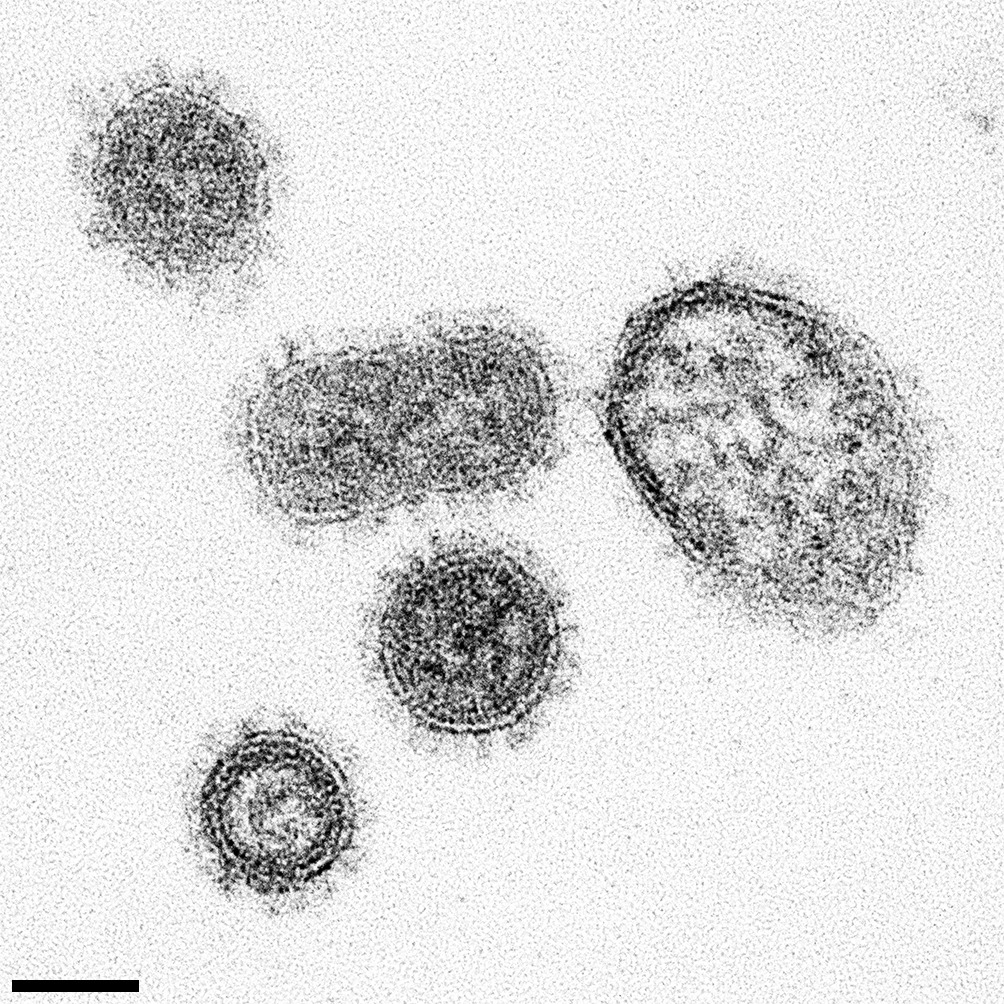
Image 2: Electron microscope image of influenza A viruses from bats
. Image source 2: Medical Center – University of Freiburg

Back
Medical Center - University of Freiburg
Central Information
Phone: 0761 270-0
info@uniklinik-freiburg.de
For press inquiries:
Corporate Communications
Breisacher Straße 153
79110 Freiburg
Phone: 0761 270-84830
kommunikation@uniklinik-freiburg.de