
Why the flu and other viral infections cause depression
Link between viral infection and depressive mood in mice clarified / Study published in the journal Immunity
Viral infections such as influenza flu can trigger depressive moods. Researchers at the Medical Center - University of Freiburg have now discovered the reason for this in mice. The protein CXCL10, which actually controls viral defense, is one of the factors responsible. As the scientists discovered, the protein inhibits a region of the brain that is also less active during cognitive processes in depression. The findings could help patients who suffer from depressive moods after a viral infection or immunotherapy in the future. The study was published on April 19 in the journal Immunity, which belongs to the Cell Group.
Viral infections often cause insomnia, headaches and behavior typical of depression. Until now, however, it was completely unclear how immune defense and psychological changes are linked. "We have now been able to identify the mechanisms by which the immune system influences the state of mind," says first author Dr. Thomas Blank, biologist at the Institute of Neuropathology at the Medical Center - University of Freiburg.
The researchers led by Prof. Dr. Marco Prinz, Medical Director of the Institute of Neuropathology at the Medical Center - University of Freiburg, demonstrated that blood vessel cells in the brain play an important role in mediating between the immune and nervous systems. These so-called endothelial and epithelial cells produce the protein CXCL10, which was previously known to attract immune cells and thus contribute to the defense against viruses. As the researchers have now shown, the protein also inhibits nerve cells in the hippocampus and thus also the cellular basis of learning. This ability of individual synapses and nerve cells to change depending on how they are used is known as neuronal plasticity and is also reduced in the hippocampus during depression.
Symptoms of depression can also be caused by immune proteins known as type I interferons. These proteins are used to treat hepatitis C, certain types of cancer and autoimmune diseases. As the Freiburg researchers discovered, interferons act via the same newly described signaling pathway. In future studies, the researchers will investigate the molecular and cellular basis. "However, our data already suggest that, at least at the beginning of a viral infection or during type I interferon therapy, blocking CXCL10 or its receptors can prevent the first disease-related behavioral changes," says Prof. Prinz.
The researchers investigated the influence of viral infection and type I interferons on the behavior of the animals in established experiments in which learning processes and the mood of the animals are measured. Animals with viral infection or type I interferons showed significantly reduced learning ability and were less active than the control group, which is interpreted as depression-like behavior. In order to rule out effects caused by the disease itself, the researchers also administered artificial virus genetic material and individual components of the virus to the animals. Both activated the immune system without making the animals ill. In both cases, the mice showed depression-like behavior. The behavioral effect can therefore be attributed to the newly discovered signaling pathway.
Title of the original paper: Brain Endothelial- and Epithelial-Specific Interferon Receptor Chain 1 Drives Virus-Induced Sickness Behavior and Cognitive Impairment
DOI: dx.doi.org/10.1016/j.immuni.2016.04.005
Link to the publication: http://www.cell.com/immunity/fulltext/S1074-7613%2816%2930110-8
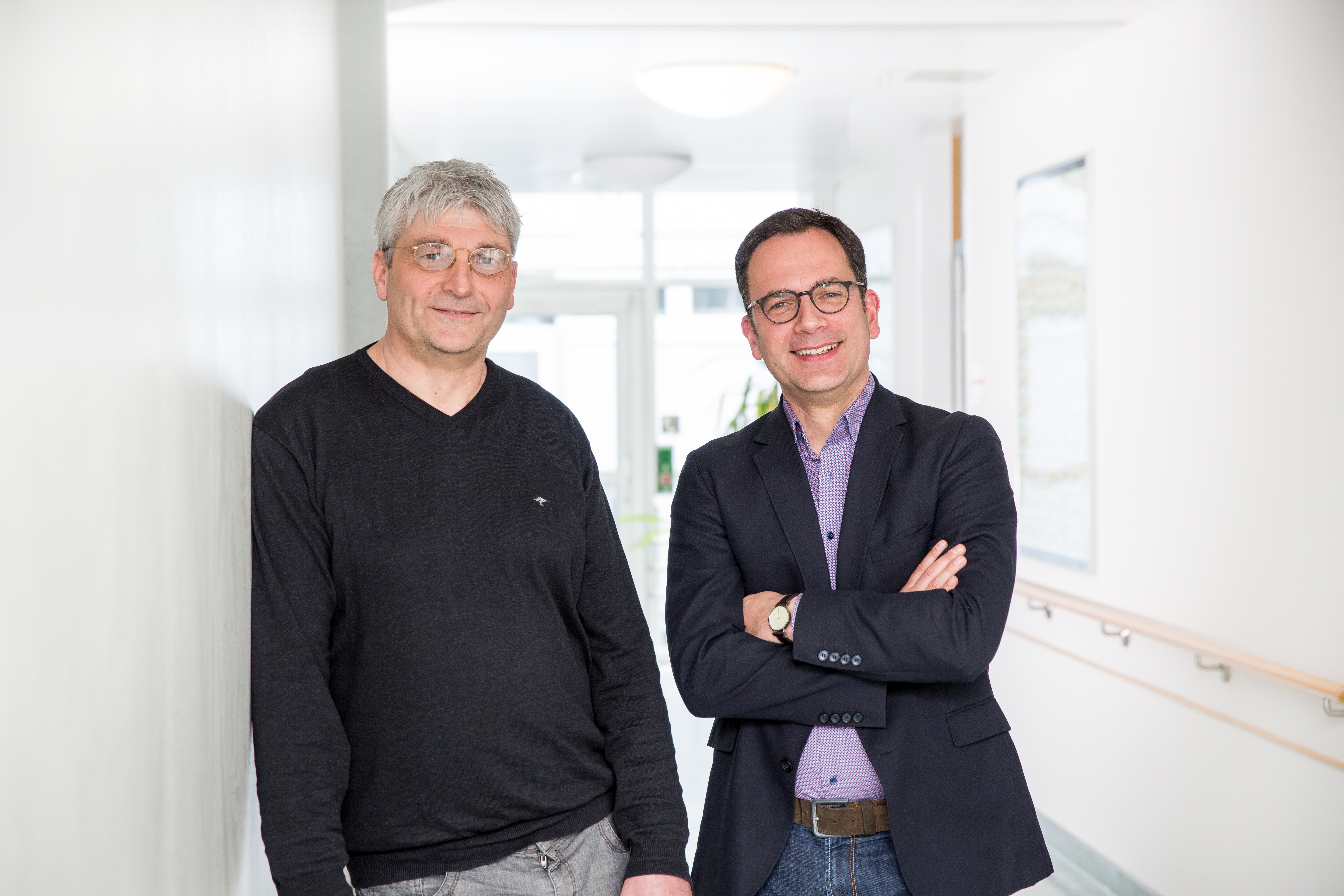
Caption: Dr. Thomas Blank, Prof. Dr. Marco Prinz
Image source: Britt Schilling/ Medical Center - University of Freiburg
Further information:
Institute of Neuropathology
PM: Freiburg neuropathologist receives one million euros in innovation funding from the DFG
PM: Intestinal bacteria ensure a healthy brain
Contact:
Prof. Dr. Marco Prinz
Medical Director
Institute of Neuropathology
Uniklinik Freiburg
Phone: 0761 270-51050
marco.prinz@uniklinik-freiburg.de
Back
Medical Center - University of Freiburg
Central Information
Phone: 0761 270-0
info@uniklinik-freiburg.de
For press inquiries:
Corporate Communications
Breisacher Straße 153
79110 Freiburg
Phone: 0761 270-84830
kommunikation@uniklinik-freiburg.de