
Dengue on the Rise: In Europe and Around the World
Infectious Diseases(August 17, 2026) Dengue fever is no longer confined to tropical regions. Effective mosquito protection remains crucial for travelers, while at the same time, tiger mosquitoes are making local transmission more likely even in Europe.
Anyone traveling to tropical or subtropical regions today will encounter dengue in significantly more countries than just a few years ago. At the same time, the situation in Europe is changing: The Asian tiger mosquito is spreading, thereby creating new conditions for local transmission. This raises two questions for travelers: How can you minimize your personal risk—and what should you be aware of upon your return? “Consistent mosquito protection and thorough travel medicine preparation are crucial,” says Prof. Dr. Siegbert Rieg, head of the Division of Infectious Diseases at the Department of Medicine II at the Medical Center – University of Freiburg.
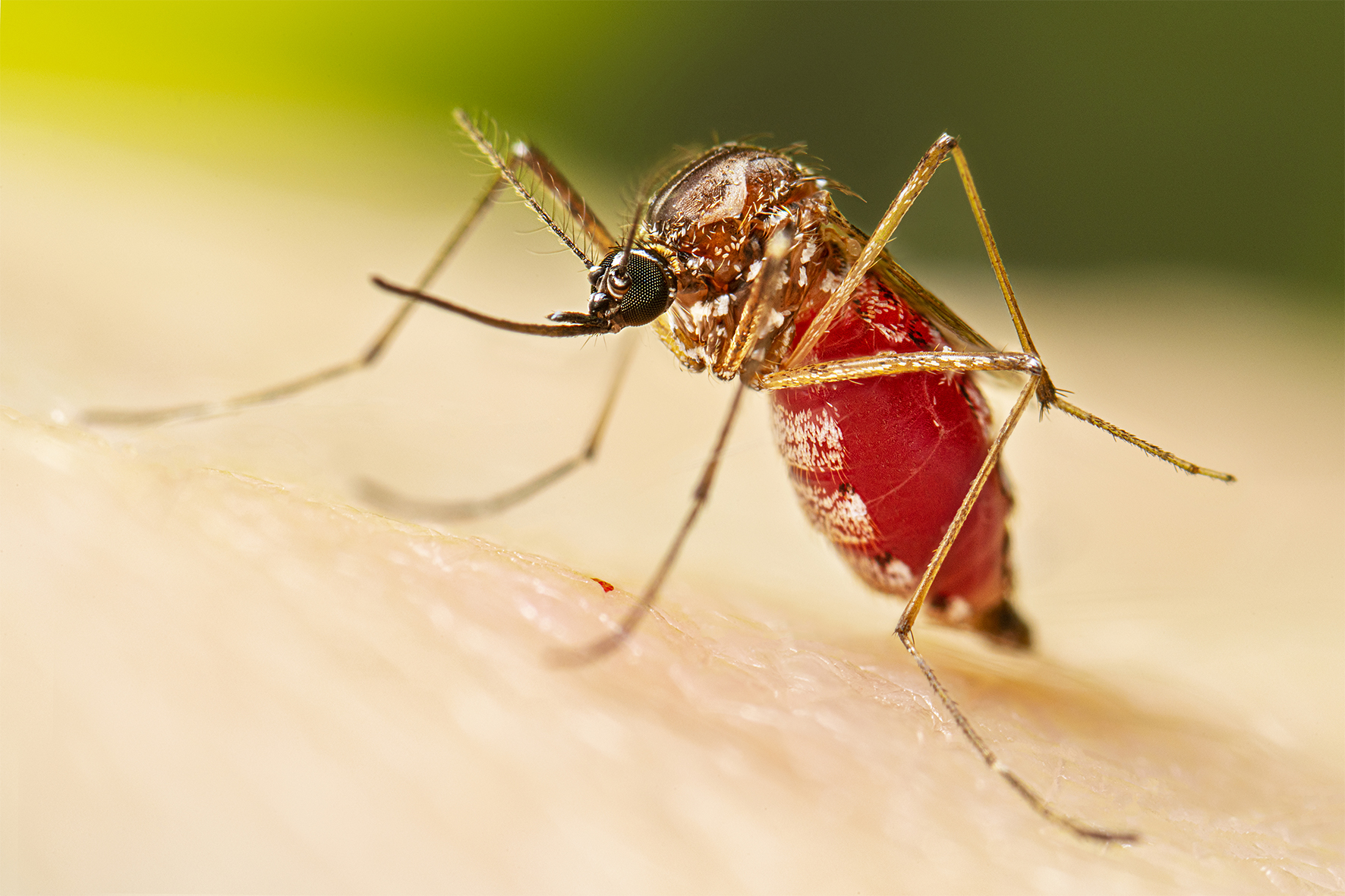
A female Aedes aegypti mosquito after feeding on blood. Image source: Lauren Bishop / CDC
“When evaluating a fever following travel to the tropics, a thorough travel history is crucial,” says Rieg. Key factors include the destination, the date of return, and the current dengue situation in the area.
After Travel: Take Symptoms Seriously
Worldwide, the number of dengue infections and cases has risen significantly in recent years. Approximately 100 to 300 million people contract the viral infection annually. The dengue virus is primarily transmitted by diurnal Aedes mosquitoes. “Typical symptoms include high fever, headaches, muscle aches, joint pain, nausea, or a rash. However, many infections are mild or asymptomatic,” says Rieg. If a fever develops after traveling to the tropics, diseases such as malaria, chikungunya, or Zika should always be considered.
Most people recover within one to two weeks. However, severe abdominal pain, persistent vomiting, bleeding, or circulatory problems may indicate a severe course of the disease. “Travelers returning home should definitely seek medical advice if they develop a fever or other typical symptoms after a stay in a high-risk area,” emphasizes Rieg.
Before Travel: Mosquito Protection Remains Crucial
There is no specific antiviral treatment. It is important to stay well-hydrated and, in severe cases, to undergo close medical monitoring. Pain relievers can be used to treat fever and pain. However, choosing the right medication is crucial.
For travelers, consistent mosquito protection—even during the day—is the most important preventive measure. Repellents, long clothing, and window screens reduce the risk. The dengue vaccine is not generally recommended in Germany. It is particularly suitable for people who have already had a confirmed dengue infection and are traveling to a high-risk area again.
Why Dengue Also Affects Europe
“Europe is not—yet—an endemic area for dengue,” says Rieg, who also served as president of the 17th Congress on Infectious Diseases and Tropical Medicine in 2026. However, the Asian tiger mosquito (Aedes albopictus) has become established in many regions. If infected travelers returning from abroad encounter active mosquitoes and suitable temperatures, local transmission can occur.
In 2025, the ECDC recorded 35 locally acquired dengue cases in France, Italy, and Portugal. “Dengue remains significantly less common in Europe than in tropical and subtropical regions. Nevertheless, we must detect imported cases early and closely monitor local developments,” says Rieg.
More Interesting Articles


Medical Center - University of Freiburg
Central InformationPhone: 0761 270-0
info@uniklinik-freiburg.de
Corporate Communications
Breisacher Straße 15379110 Freiburg
Phone: 0761 270-84830
kommunikation@uniklinik-freiburg.de