
Targeted Radiation Therapy for Prostate Cancer
The HypoFocal SBRT study on precision radiation therapy has reached an important milestone(July 3, 2026) Prostate cancer is the most common cancer among men in Europe. Thanks to tremendous advances in imaging and technical innovations in radiation therapy, it is now possible to irradiate prostate cancer tumor tissue with great precision. This led to the HypoFocal-SBRT study, funded by the Federal Ministry of Research, Technology, and Space (BMFTR) and led by Prof. Dr. Anca-L. Grosu, Medical Director of the Department of Radiation Oncology at the Medical Center – University of Freiburg, which could significantly change the way patients are treated.
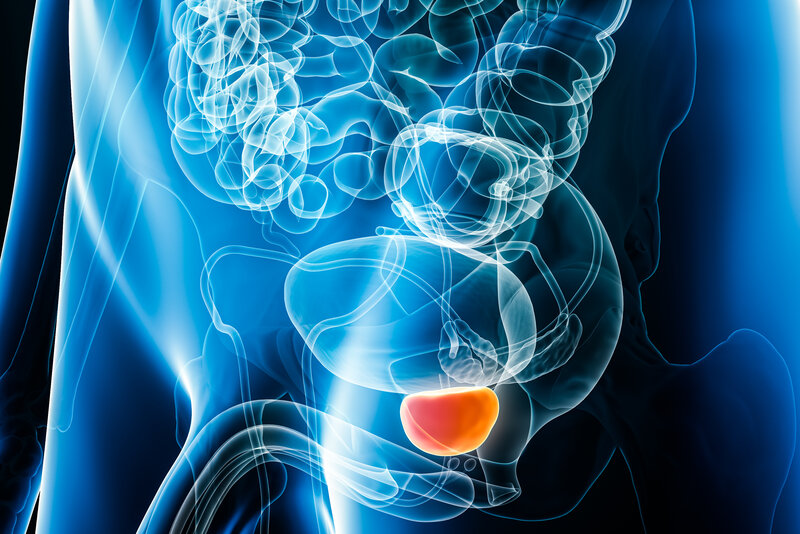
The HypoFocal-SBRT study at the Medical Center – University of Freiburg is investigating a highly precise radiation therapy for prostate cancer designed to target tumor tissue while sparing surrounding tissue. © Adobe Stock
Destroy tumor tissue while sparing surrounding tissue
The HypoFocal-SBRT study is investigating whether high-precision radiation therapy delivered in 5 sessions may be more effective than moderately hypofractionated radiation therapy delivered in 20 sessions for prostate cancer without metastasis. Instead of irradiating the entire prostate uniformly, as has been done in the past, the HypoFocal-SBRT study additionally targeted those areas of the organ where high-precision imaging identified the tumor with a higher intensity of radiation. At the same time, efforts were made to spare the surrounding tissues—such as the bladder and bowel—as much as possible. “This is intended to achieve a more effective treatment with good tolerability,” explains co-study leader PD Dr. Simon Spohn, Executive Senior Physician at the Department of Radiation Oncology at the Medical Center – University of Freiburg. “In addition, the treatment time is significantly shortened, which can further improve patients’ quality of life,” says Spohn.
In August 2022, the first patient with prostate cancer was enrolled in the study in Freiburg and treated with high-precision radiation therapy. Thanks to excellent collaboration with 23 other centers in Germany, Switzerland, Austria, and Cyprus, a total of 397 patients had been enrolled in the study by April 7, 2026. “We have thus reached our recruitment goal and have enough patients in the study to be able to draw conclusions about the treatment outcomes and side effects once the follow-up phase is complete,” says Spohn.
The study team led by Professor Grosu would like to thank all patients who were willing to participate in this study. “Even though we can no longer accept new patients into this study, we naturally offer appropriate modern therapies at the Department of Radiation Oncology at the Medical Center – University of Freiburg—possibly similar to those in the HypoFocal-SBRT study—and, where applicable, the opportunity to participate in other studies,” adds Grosu, “From a current, purely clinical perspective, both the oncological outcome and the tolerability of this high-precision therapy appear to be promising.” Initial analyses and publications of the results regarding acute side effects and quality of life are planned for early 2027.
This article was medically reviewed by
Prof. Dr. Anca-Ligia Grosu
, Medical Director of the Department of Radiation Oncology
at the Medical Center – University of Freiburg
More Interesting Articles


Medical Center - University of Freiburg
Central InformationPhone: 0761 270-0
info@uniklinik-freiburg.de
Corporate Communications
Breisacher Straße 15379110 Freiburg
Phone: 0761 270-84830
kommunikation@uniklinik-freiburg.de