
When the body sounds the alarm
Psychiatry and psychotherapy(08.06.2026) Suddenly, your heart is racing, your breathing becomes shallow, and your body is out of control. At this moment, many people fear they are having a heart attack—but it is often a panic attack. An expert explains what helps in an acute case.
"The symptoms are so intense that sufferers believe at that moment that they are losing control or dying," says Prof. Dr. Dr. Katharina Domschke, Medical Director of the Department of Psychiatry and Psychotherapy at the Medical Center – University of Freiburg. Panic attacks usually come on suddenly, often without any apparent trigger – and yet they feel extremely real and threatening. But what exactly happens in the body during a panic attack? And why is it often so difficult to distinguish them from other illnesses?
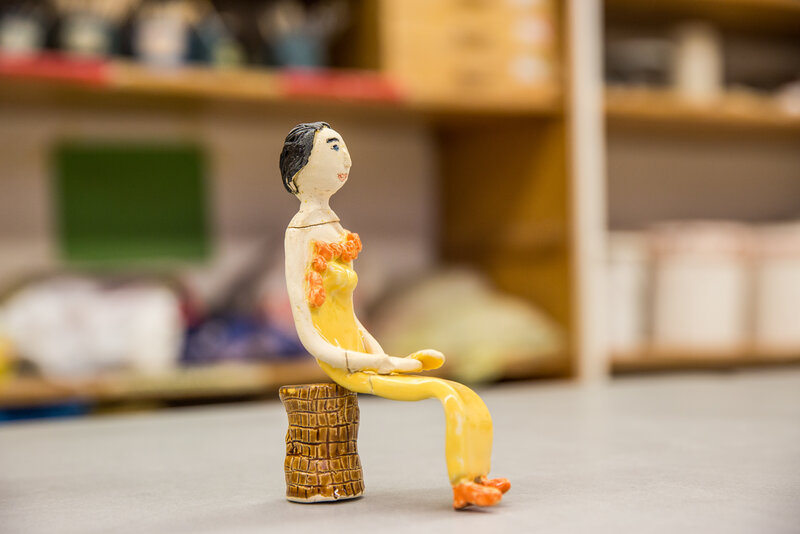
During a panic attack, it can help to breathe in and out slowly and consciously. ©Medical Center – University of Freiburg/Britt Schilling
- Why the body reacts incorrectly
From an evolutionary perspective, the panic reaction makes sense: it enables people to flee or fight in a flash. In a panic attack, however, this alarm system is activated without any real danger. Researchers believe that several factors come together.
Increased sensitivity in the brain's fear network, genetic predisposition, and psychological stressors such as stress or traumatic life events increase susceptibility. "It is rarely a single trigger—usually several factors interact," says Domschke.
- When fear overwhelms the body
A panic attack is an acute alarm reaction of the body and psyche. Within a few minutes, the organism switches into stress mode: the heart beats faster, breathing becomes shallow, and the muscles tense up. Trembling, sweating, dizziness, or an oppressive feeling in the chest are typical.
In addition, there are psychological symptoms such as intense fear, the feeling of losing control, or a pronounced fear of death. Some sufferers also experience a sense of alienation from themselves or their surroundings.
"The symptoms are extreme, but usually not dangerous from a medical point of view," explains Domschke. Panic attacks are self-limiting. This means that the symptoms subside because the body cannot maintain this state permanently.
- Stress, life stage, and hormonal changes
Panic attacks often occur for the first time in young adulthood, but can also develop later in life. Periods of increased stress, professional pressure, family responsibilities, or hormonal changes—such as during menopause—can increase susceptibility.
"In middle age in particular, several stress factors often come together," says Domschke. "This can put additional strain on the already sensitive stress system."
It can be a relief for those affected to know that a panic attack is not a sign of weakness, but rather a stress reaction of the body that should be taken seriously and is easily treatable.
- These conditions can cause similar symptoms
Precisely because panic attacks cause so many physical symptoms, they are often confused with other conditions. In fact, there are a number of medical causes that can trigger very similar symptoms.
These include metabolic disorders such as hypoglycemia or hyperglycemia, hormonal disorders of the thyroid gland, asthmatic complaints, or severe allergic reactions. Cardiac arrhythmias or other cardiological conditions can also be accompanied by palpitations, shortness of breath, and dizziness.
"This is precisely what makes panic attacks so treacherous," says Domschke. "The symptoms are nonspecific and overlap significantly with physical illnesses." Therefore, especially during the first attack, a doctor should determine whether the symptoms are due to another illness or organ dysfunction.
Other risk factors such as the consumption of caffeine, nicotine, cannabis, or other drugs also play a role.
- Heart attack or panic attack?
The greatest fear of many sufferers is the thought of a heart attack. And indeed, the symptoms are similar: chest pain, shortness of breath, nausea, exhaustion, dizziness, and anxiety occur in both cases. However, there are clues that physicians use to differentiate between the two. Among other things, the type of pain is decisive. For medical laypeople, however, this assessment is hardly possible.
That is why the expert emphasizes: "When in doubt, always call 911! This is not a false alarm, but responsible action."
As a rough guide – not a self-diagnosis:
Signs of a panic attack can include:
- The symptoms begin suddenly and quickly reach their peak.
- Strong palpitations are accompanied by intense fear or fear of death.
- Tingling in the hands or face occurs.
- The symptoms slowly subside after 10 to 30 minutes.
Signs of a heart attack may include:
- Persistent, severe pressure or tightness in the chest.
- Pain radiating to the arm, back, jaw, or upper abdomen.
- Cold sweat, pronounced weakness, nausea.
- Symptoms do not improve on their own.
Important: These signs are not a substitute for a medical diagnosis.
- When panic becomes a medical condition
Around one in five people experience at least one panic attack in their lifetime. A single attack is not a mental illness. It becomes problematic when attacks occur repeatedly out of the blue, fear of the next attack dominates everyday life, and those affected begin to avoid certain situations.
This can lead to the development of a panic disorder, which significantly reduces quality of life. In these cases, experts recommend psychotherapeutic treatment, often in the form of cognitive behavioral therapy, and sometimes also well-tolerated medication. "It's not about becoming fearless," says Domschke. "It's about learning that fear is manageable."
- How to act correctly in an emergency
In acute cases, the following always applies: it is better to seek medical advice once too often than not enough.
In the event of unclear or severe symptoms, those affected should call the emergency number 112 or seek medical attention immediately.
5 Immediate measures for panic attacks
- Breath control: Breathe deeply into your abdomen, pause briefly, and then exhale significantly longer, for example using the 4-7-8 technique, to calm your heartbeat.
- Cold stimulus: Splash ice-cold water on your face, hold ice cubes in your hand, or chew strong-flavored gum.
- Grounding (5-4-3-2-1 method): Focus on 5 things you see, 4 you feel, 3 you hear, 2 you smell, and 1 thing you taste.
- Muscle relaxation: Clench your fists tightly, hold briefly, then consciously release.
- Acceptance: Don't fight the panic, but allow it as a temporary state.
Further interesting articles
Medical Center - University of Freiburg
Central InformationPhone: 0761 270-0
info@uniklinik-freiburg.de
Corporate Communications
Breisacher Straße 15379110 Freiburg
Phone: 0761 270-84830
kommunikation@uniklinik-freiburg.de