
The Beginnings of Radiation Therapy
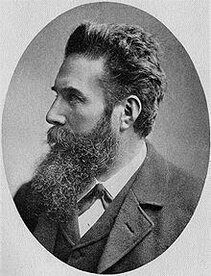
W.C. Röntgen
On November 8, 1895, physicist Wilhelm Conrad Röntgen made a revolutionary discovery at the Physics Institute of the University of Würzburg: a new type of radiation, which he called X-rays. They allowed a glimpse into the body’s interior, thereby opening up entirely new possibilities for diagnostics. Just two weeks later, the first X-ray image in history was taken: after a 20-minute exposure, the skeleton of his wife’s hand was captured.
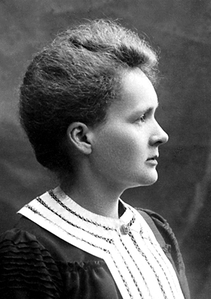
M.S. Curie
The focus of Marie Skłodowska Curie’s scientific work was the study of radioactive substances: she investigated the radiation emitted by uranium compounds, which had been observed by Henri Becquerel. Together with her husband, Pierre Curie, she discovered the chemical elements polonium and radium.
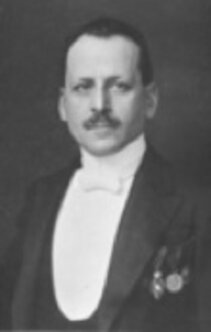
L. Freund
The increasing use of radium in medicine required precise and comparable measurements. An international radium standards commission decided that the unit of measurement for radioactivity should be called the “curie.” Radioactive substances were initially used in diagnostics, for example in cases of thyroid disorders. From the beginning of the 20th century, they were also used therapeutically and, for example, applied directly to the uterus in the treatment of gynecological tumors. The new radiation fascinated and inspired scientists. Just one year after their discovery, X-rays were used to treat skin lesions: The Viennese physician Leopold Freund irradiated a hairy birthmark on the back of an eight-year-old girl, which disappeared permanently. At the beginning of the 20th century, radiation increasingly became a treatment method in cancer therapy, particularly for leukemia, where significant success could already be achieved with low doses of radiation.
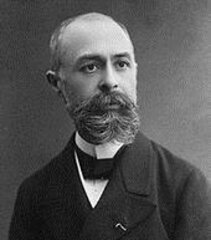
A.H. Becquerel
In 1896, the French scientist Antoine Henri Becquerel discovered that uranium salts emit radiation that does not fall within the visible light spectrum. This radiation is produced when unstable atomic nuclei decay and emit radiation in the process.
History of Radiation Oncology at the Medical Center – University of Freiburg
The tradition of radiation therapy at the Medical Center – University of Freiburg dates back to 1896. That year, physicist Ludwig Zehnder, a colleague of Wilhelm Conrad Röntgen, conducted the first experiments with X-rays in Freiburg. The first experiences with X-rays in diagnostics and therapy were gained at the Surgical and Medical Clinics, as evidenced by a 1904 report by Liebermeister, an assistant at the Medical Clinic. Beginning in 1910, the gynecologist Krönig used radium preparations in addition to X-rays as part of radiation therapy. Together with the physicist Friedrich, Krönig was also one of the first to recognize the need for biological and physical studies on the effects of ionizing radiation: in 1914, the first institute for the research of high-energy radiation at a German university was founded in Freiburg. In the following years, numerous publications on physical and biological topics and questions were authored.
After the war, Hans Langendorff (http://langendorff-stiftung.de/) continued to lead the Radiological Institute. At the same time, Otto Glasser and Wilhelm Hammer developed the fundamentals for measuring ionizing radiation using dosimeters at the University’s Physics Institute.
Starting in 1963, patients were treated with radiation from cobalt and cesium devices in both the Gynecological and Medical Clinics. Methods for external and internal radiation therapy were used. In 1973, the first compact linear accelerator was installed. Under the direction of Michael Wannenmacher, treatment began using the aforementioned wide-field technique for Hodgkin’s disease and whole-body irradiation for acute leukemia. In addition, gold seeds were implanted for tongue tumors, and iodine seed implantation for prostate cancer was performed for the first time in Germany. At the Women’s Clinic, afterloading therapy for gynecological tumors was also implemented using a cobalt device.
With Hermann Frommhold’s appointment to Freiburg, additional treatment options were established at the hospital. Thus, at the end of 1990, the first intraoperative radiation therapy took place in a separate operating room at the Surgical Clinic. By merging the Radiation Department of the Women’s Clinic with Hermann Frommhold’s department, the scope of treatment could now be expanded to include non-gynecological tumors.
In the early 1990s, in collaboration with the Neuroscience Center, the hospital began performing stereotactic convergence radiation therapy using a specially configured linear accelerator. Further developments included initial steps in the field of hyperthermia.
As the number of patients continued to grow in the following years and the old radiation department in the Medical Clinic could no longer be expanded, Hermann Frommhold secured the construction of a separate building for the Radiation Clinic. After several years of construction, the new clinic building on Robert-Koch-Straße was occupied in 2005. The entire move was completed in 2006.