
News

Invitation to the Freiburg Extracellular Vesicles Day on October 23
On Friday, October 23, 2026 from 11am, the EV Research Group of Prof. Irina Nazarenko hosts the Extracellular Vesicles Day. Expanding across the Trinational Upper Rhine Metropolitan Region (Dreyeckland) and the Eucor network, this interactive meeting connects researchers, clinicians, and R&D innovators of all career levels. Join us to hear from international guest speakers, pitch your own work in short talk sessions, and forge new cross-border partnerships using the EV-Core and smartXhealth platforms. Participation is free of charge, but registration is required by September 27 via our meeting website.
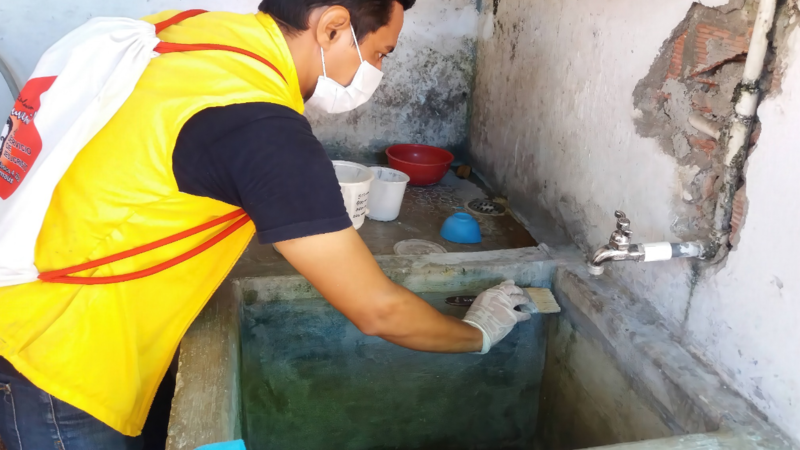
Impact of a dual-action insecticidal coating applied to Aedes breeding sites on dengue transmission: a cluster-randomised trial in Colombia
Cardenas et al. wiesen nach, dass ein einmaliger Anti-Mücken-Anstrich von Wassertanks die Dengue-Erkrankungen in untersuchten Stadtgebieten um 45 Prozent stärker reduzierte als in Kontrollgebieten.
Cardenas Rocio*, Kroeger Axel* et al. Epidemiological impact of a dual-action insecticidal coating applied to Aedes aegypti breeding sites on dengue transmission in Colombia: a cluster-randomised trial. The Lancet Infectious Diseases. Published online August 19, 2026. doi:10.1016/s1473-3099(26)00363-4
* Institute for Infection Prevention and Control/Centre for Planetary Health, Medical Centre - University of Freiburg.

Prof. Philipp Henneke, director of the IIK, has been elected to the National Academy of Sciences Leopoldina.
Find out more here.
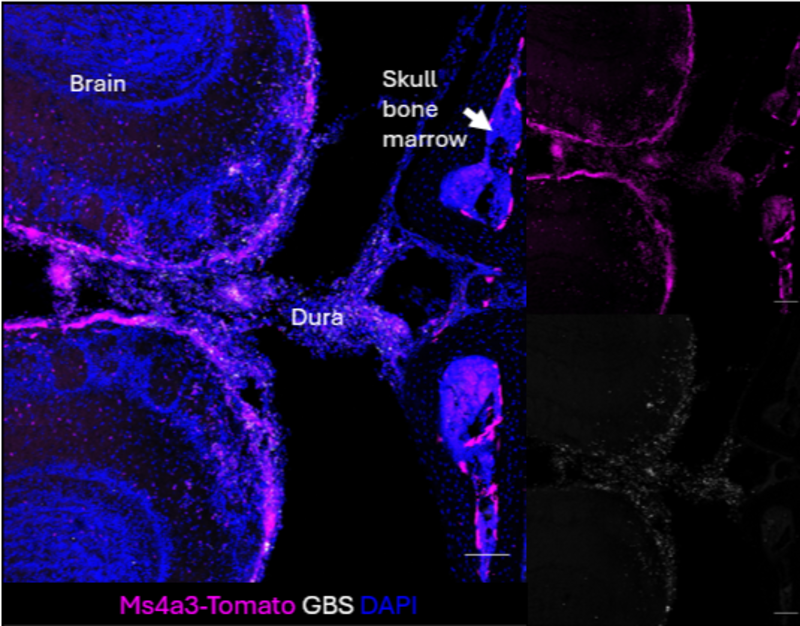
Bacterial infection reshapes monocyte and macrophage ontogeny at the CNS borders | A Publication in Science Immunology
Vitka Gres et. al. from the Henneke lab observed a dynamic, tissue-specific reorganisation of monocyte differentiation and recruitment from the cranial and peripheral bone marrow to the meninges in bacterial brain infection.
Gres V, Lohrmann F, Fuchs V, Neuber J, Moghadam ZM, Lösslein AK, Bosch LFP, Figueiral-Martins T, Baasch S, Obwegs D, Monaco G, Henschel J, Knobeloch KP, Prinz M, Jung S, Kierdorf K, Sagar, Kolter J, Erny D, Henneke P. Bacterial infection reshapes monocyte and macrophage ontogeny at the CNS borders. Sci Immunol. 2026 Jun 19;11(120):eaee9584. doi: 10.1126/sciimmunol.aee9584. Epub 2026 Jun 19. PMID: 42319911.
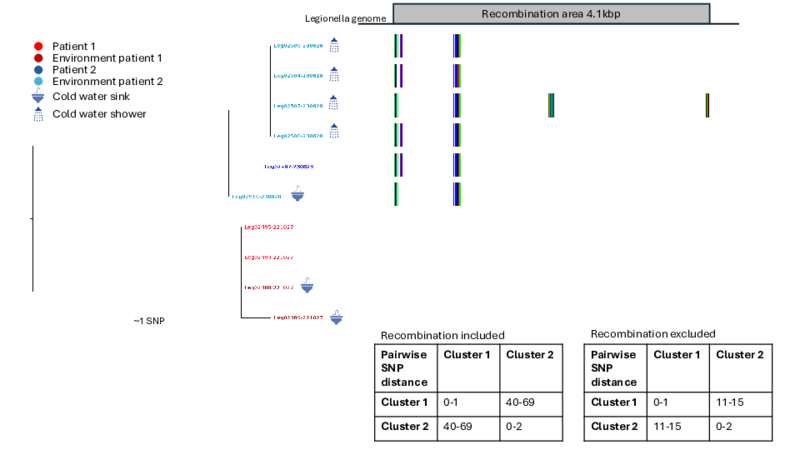
The burden of hospital-acquired legionellosis in German teaching hospitals | Publikation in Infection
Die Arbeitsgruppe zur Prävention von Krankenhausinfektionen in Baden-Württemberg (BW-HIP Freiburg, Heidelberg, Tübingen, Ulm) untersuchte die Inzidenz und die Präventionsmaßnahmen von nosokomialen Infektionen durch Legionellen in deutschen Universitätskliniken.
Kramme S, Ebner W, Lösslein A, Maier B, Schneider C, Liese J, Brandt C, Heininger A, von Baum H, Donker T, Reuter S, Henneke P; Baden-Württemberg Hospital Infection Prevention Group (BW-HIP). The burden of hospital-acquired legionellosis in German teaching hospitals. Infection. 2026 Apr 1. doi: 10.1007/s15010-026-02782-2.
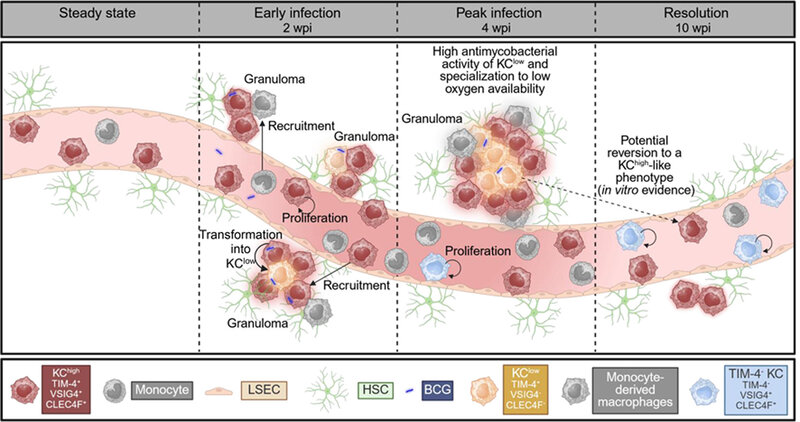
Kupffer cell plasticity regulates hepatic immunity in mycobacterial infection | publication in Journal of Hepatology
Together with RG Henneke, Dr Jana Neuber explored Kupffer cell (KC) plasticity and the impact of their ontogeny in persisting mycobacterial infections, which primarily target macrophages.
Neuber J, Lohrmann F, Wald S, Göçer M, Lösslein AK, Obwegs D, Rogg M, Gres V, Kolter J, Goldmann T, Walter K, Hölscher C, Schell C, Preissl S, Sagar, Henneke P. Kupffer cell plasticity regulates hepatic immunity in mycobacterial infection: Kupffer cell plasticity. J Hepatol. 2026 Mar 4:S0168-8278(26)00118-2. doi: 10.1016/j.jhep.2026.02.024.

Carbapenem resistant Klebsiella pneumoniae isolates at a tertiary hospital in Cape Town, South Africa, are dominated by specific local clones rather than previously described international lineages | publication in PLAS pathogens
During a research visit to RG Reuter, Kedišaletše Moloto investigated carbapenem-resistant Klebsiella pneumoniae isolated from their local university hospital. Together, they found out that this outbreak was caused by locally endemic strains that had acquired resistance genes, rather than by globally disseminated lineages.
Moloto K, Newton-Foot M, Dramowski A, Ayala-Montaño S, Akintayo I, Whitelaw A, Reuter S. Carbapenem resistant Klebsiella pneumoniae isolates at a tertiary hospital in Cape Town, South Africa, are dominated by specific local clones rather than previously described international lineages. PLoS Pathog. 2026 Jan 16;22(1):e1013859. doi: 10.1371/journal.ppat.1013859. PMID: 41544111; PMCID: PMC12810914.
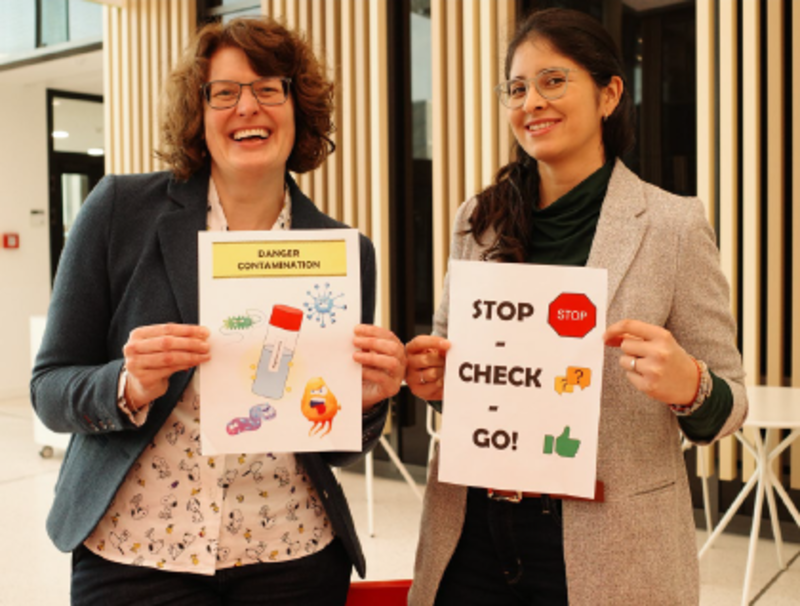
Mitigation and detection of putative microbial contaminant reads from long-read metagenomic datasets | publication in Microbial Genomics Journal
Stefany Ayala-Montaño and Ayorinde O Afolayan from RG Reuter together with Raisa Kociurzynski from RG Donker investigate how to deal with microbial contaminant DNA in clinical long-read metagenomic datasets. They developed and evaluated a new “Stop-Check-Go” workflow to separate such contaminant reads to improve the accuracy of microbial profiling and provide strategies to avoid contamination in such studies.
Ayala-Montaño S, Afolayan AO, Kociurzynski R, Loeber U, Reuter S. Mitigation and detection of putative microbial contaminant reads from long-read metagenomic datasets. Microb Genom. 2026 Jan;12(1):001609. doi: 10.1099/mgen.0.001609. PMID: 41569097; PMCID: PMC12828179.
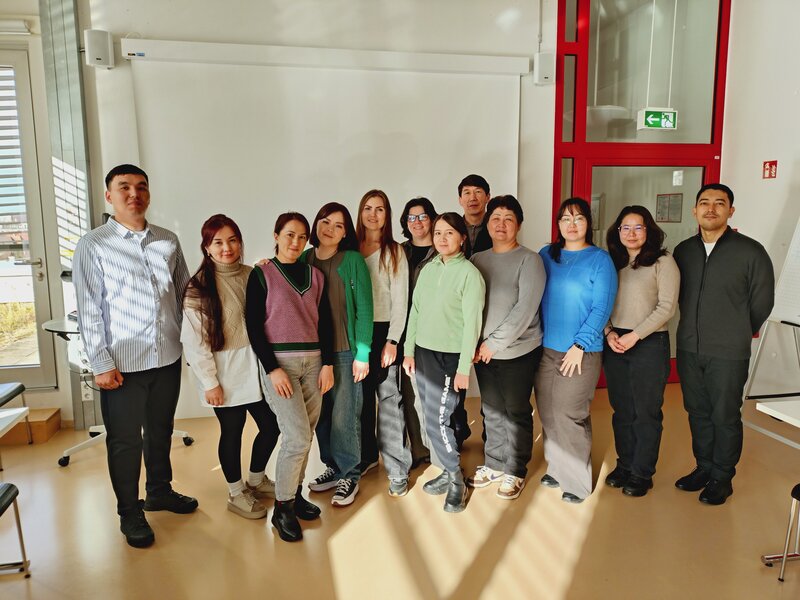
Visiting the IIK – A delegation from Kazakhstan
At the beginning of December 2025, the RG Nazarenko welcomes a scientific delegation from Kazakhstan. We are delighted to have them here and hope that they will learn many new things during their visit. Find out exactly what they are learning here.
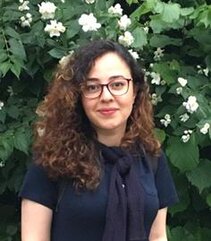
Dr. Zohreh Moghadam – Hans A. Krebs Medical Scientist Program
Dr. Zohreh Moghadam from the RG Henneke has been awarded the Hans A. Krebs Programme. From January 2026, she will receive funding from the Hans A. Krebs Medical Scientist Programm, which supports outstanding medical scientists on their path to scientific independence

PILOT seminar series on perinatal Immunity | event in Freiburg
The next event in the TRR 359 PILOT external seminar series on perinatal immunity will take place on Wednesday, the 17th of December 2025, at 1 p.m. in Freiburg.
Speaker: Naomi McGovern from Cambridge.
Date and time: Wednesday, 17 December 2025 at 1 p.m.
Venue: Paul Ehrlich Seminar Room (3rd floor), Institute for Infection Prevention and Control (IIK),
Medical Center – University of Freiburg, Breisacher Str. 115b, 79106 Freiburg i. Br.

Prospective Whole-Genome Sequencing to Identify Bacterial Transmission and Its Modifiers in Neonates | publication in JAMA Network open
Together with RG Henneke and TRR 359 PILOT Timmy Nguyen et al. researched the question, whether prospective whole-genome sequencing can identify bacterial transmission events and associated factors in a neonatal intensive care unit.
Nguyen, T., Bürkin, F., Ayala-Montaño, S., Monterrosa, I. A., Jonas, D., Klotz, D., Fuchs, H., Kuntz, M., Schneider, C., Wolkewitz, M., Donker, T., Reuter, S., Götting, T., & Henneke, P. (2025). Prospective Whole-Genome sequencing to identify bacterial transmission and its modifiers in neonates. JAMA Network Open, 8(11), e2541409. https://doi.org/10.1001/jamanetworkopen.2025.41409
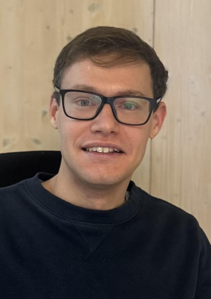
Dr. Gabriele Lubatti: New junior group leader for systems infection biology
Dr. Gabriele Lubatti has recently taken over as head of the System Infection Biology Group
- Gabriele Lubatti et. al (2025). The emergence of human primordial germ cell–like cells in stem cell–derived gastruloids. Science Advances. doi:10.1126/sciadv.ado1350
- Gabriele Lubatti, et al. (2023). CIARA: a cluster-independent algorithm for identifying markers of rare cell types from single-cell sequencing data. Development. doi: 10.1242/dev.201264
- Gabriele Lubatti, et al. (2021). Cell competition acts as a purifying selection to eliminate cells with mitochondrial defects during early mouse development. Nature Metabolism. doi: 10.1038/s42255-021-00422-7

Emmy-Noether Förderung für Dr. Julia Kolter
Dr Julia Kolter, group leader barrier Immunity in Barrier Tissues, has successfully secured an Emmy Noether grant for her project entitled ‘Decoding neuro-immune interactions and their functional significance in the skin’. Further information here.
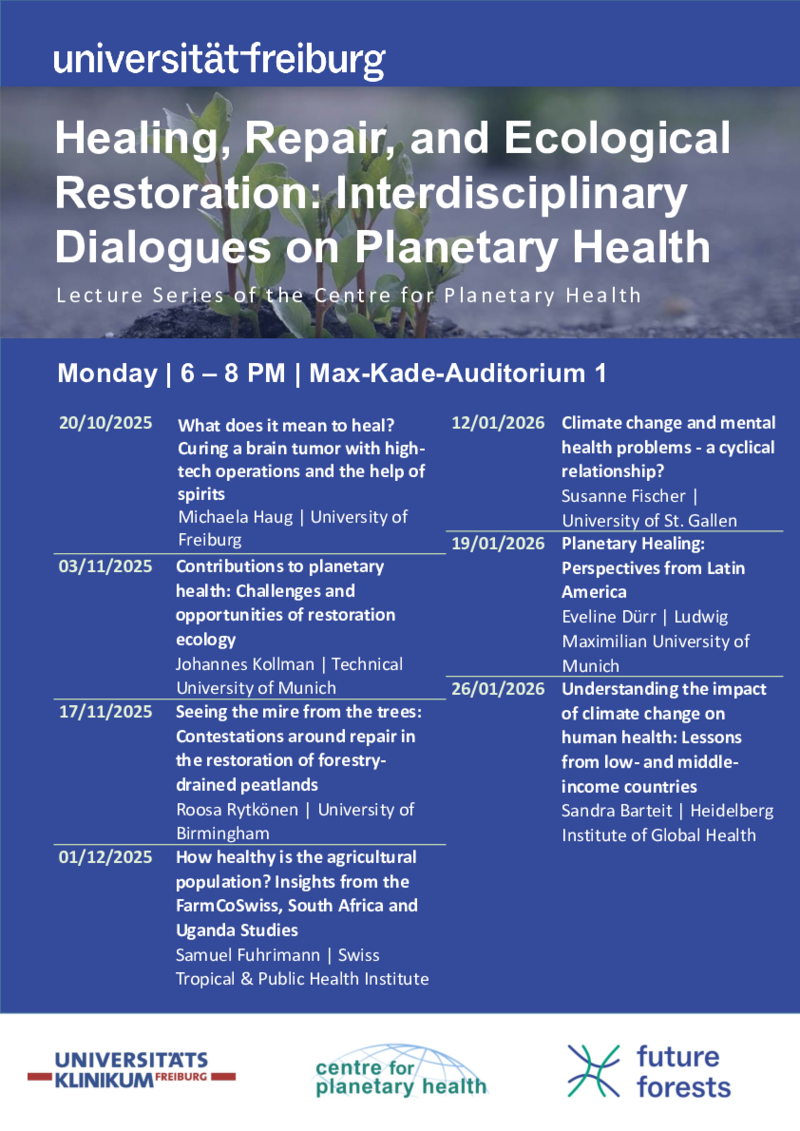
Planetary Health Lecture series is starting on Monday 20th of October
Healing, Repair, and Ecological Restoration: Interdisciplinary Dialogues on Planetary Health
First lecture on Monday 20/10/2025 6.00 pm by Michaela Haug from the University of Freiburg
What does it mean to heal? Curing a brain tumor with hightech operations and the help of spirits
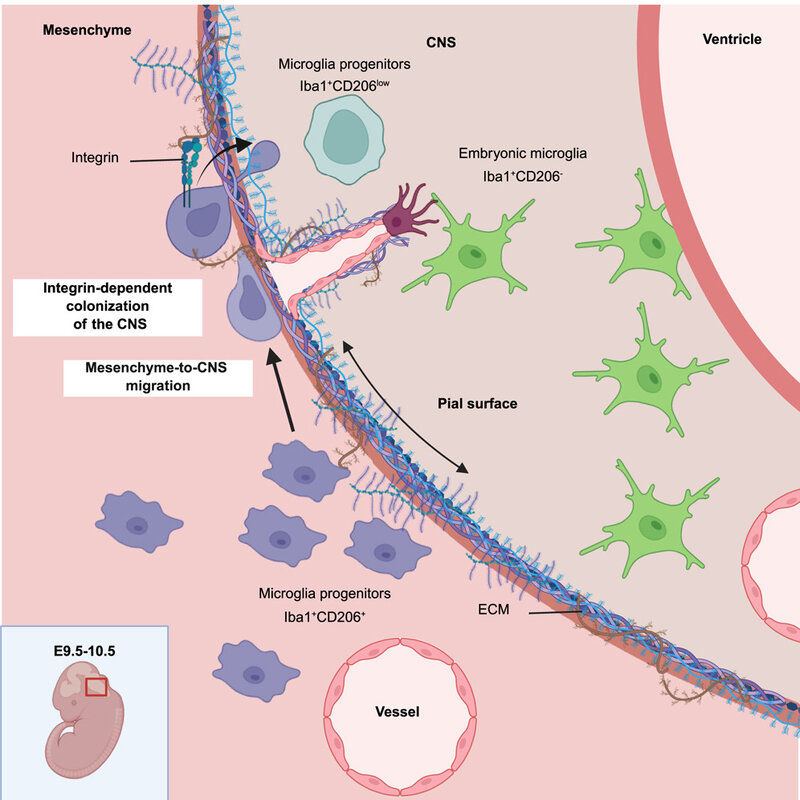
Early microglia progenitors colonize the embryonic CNS via integrin-mediated migration from the pial surface | publication in Cellpress journal
Philippe Petry and Alexander Oschwald et al. from the Research Group Infection Resistance demonstrate a defined migration route of microglia progenitors from the surrounding mesenchyme into the embryonic CNS. This process relies on integrin activation and interactions with the ECM-rich pial surface, highlighting a previously unrecognized migration route and molecular requirements for early microglia colonization of the CNS.
Petry, P., Oschwald, A., Merkt, S., Dinh, T. J., Andrieux, G., Crisand, C., Botterer, H., Nent, E., Paterson, N., Havermans, M., Sankowski, R., Schilling, O., Boerries, M., Amann, L., Groß, O., Schlitzer, A., Prinz, M., Lämmermann, T., & Kierdorf, K. (2025). Early microglia progenitors colonize the embryonic CNS via integrin-mediated migration from the pial surface. Developmental Cell. https://doi.org/10.1016/j.devcel.2025.08.012
Learn More About Infection Resistance
Students and graduates with an interest in tissue-resident macrophages are invited to join the Research Group Infection Resistance . Our research investigates how tissue-resident macrophages develop and function, aiming to uncover mechanisms that may inspire new strategies to prevent and treat diseases involving tissue resident macrophages.
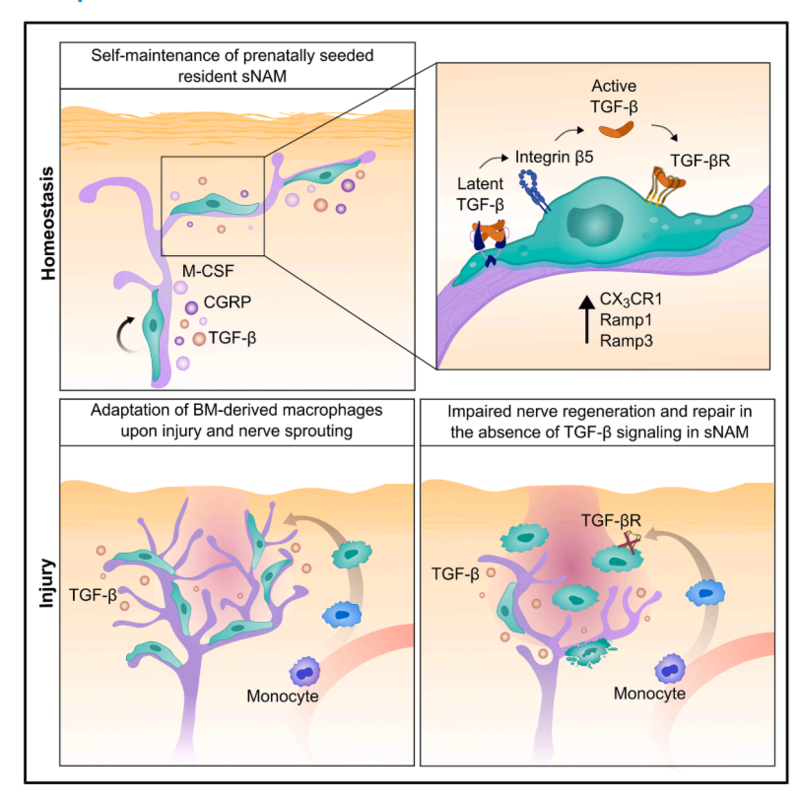
Sensory neurons shape local macrophage identity via TGF-β signaling | publication in Immunity journal
Specialized macrophages are known to persist within tissue niches, but the molecular mechanisms guiding their sustained functional adaptation remain unclear. Kolter and Doering et al. show that local interactions between sensory nerves and macrophages activate TGF-β, which imprints and maintains nerve associated macrophages that contribute to regeneration after tissue injury.
Julia Kolter, Clarissa-Laura Döring, Samah Sarout, Sebastian Baasch, Lloyd Steele, Reem Alsumati, Gabriel V. Lucena Silva, Conceição E. Aníbal Silva, Isadora Marques Paiva, Zohreh Mansoori Moghadam, Vitka Gres, Florens Lohrmann, Philipp Aktories, Theresa Buchegger, Mitchell Bijnen, Layal Doumard, Benjamin Voisin, Christelle Le Foll, Nico Lachmann, Melanie Greter, Katrin Kierdorf, Muzlifah Haniffa, Thiago M. Cunha, Vincent Flacher, Philipp Henneke, Sensory neurons shape local macrophage identity via TGF-β signaling, Immunity, 2025, https://doi.org/10.1016/j.immuni.2025.08.004
Learn More About Immunology and Infection Prevention
Students and graduates interested in barrier immunity are welcome to join AG Kolter and further impact the research on macrophages. Explore more about dermal macrophages and neuro-immune interactions in the skin!
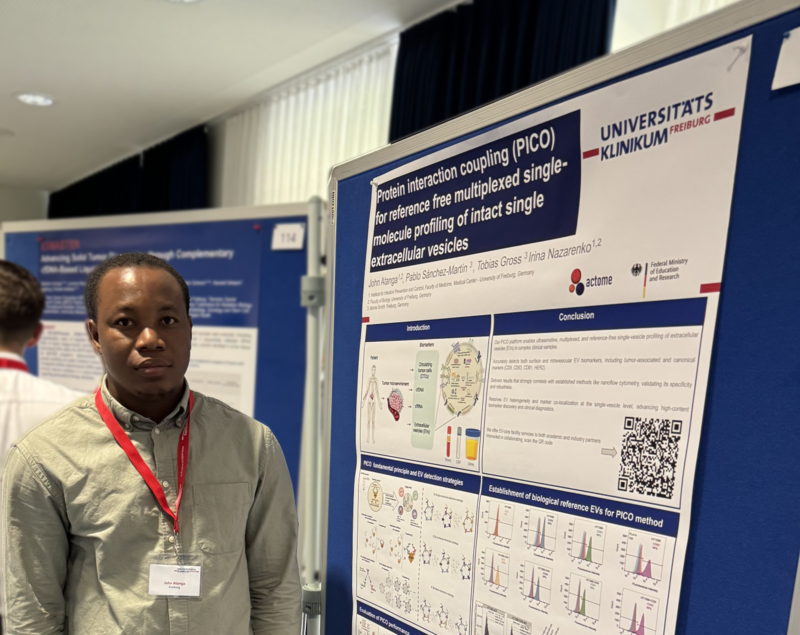
John Atanga won a poster prize at the 5th International Liquid Biopsy Symposium 2025
John Atanga from the group Extracellular Vesicles (EV) participated in the 5th International Liquid Biopsy Symposium
John Atanga has tackled the problem of the lack of standardized, sensitive, and precise methods for EV detection and quantification. In this project, we extended PICO (Protein Interaction Coupling), a reference-free novel platform for the multiplexed and ultrasensitive profiling of individual intact EVs positive for specific markers by identifying two or more copies of the same molecule or distinct molecules (e.g. CD9 or CD9/CD63) on individual vesicles. PICO achieves single-molecule resolution sensitivity and multiplexing ability up to 8-plex (demonstrated here 3-plex). Our platform leverages DNA-labeled antibody pairs, droplet digital PCR (dPCR), and co-detection analysis to detect specific surface and internal protein markers with high specificity and quantitation.