
Study on Emergency Rooms: Only One-Third of Trauma Room Cases Are Accident Victims
The largest German study to date, conducted in Freiburg and Lübeck, shows that severe acute conditions such as heart attacks and strokes account for the majority of emergency treatments / Specialized teams and interdisciplinary expertise are crucial
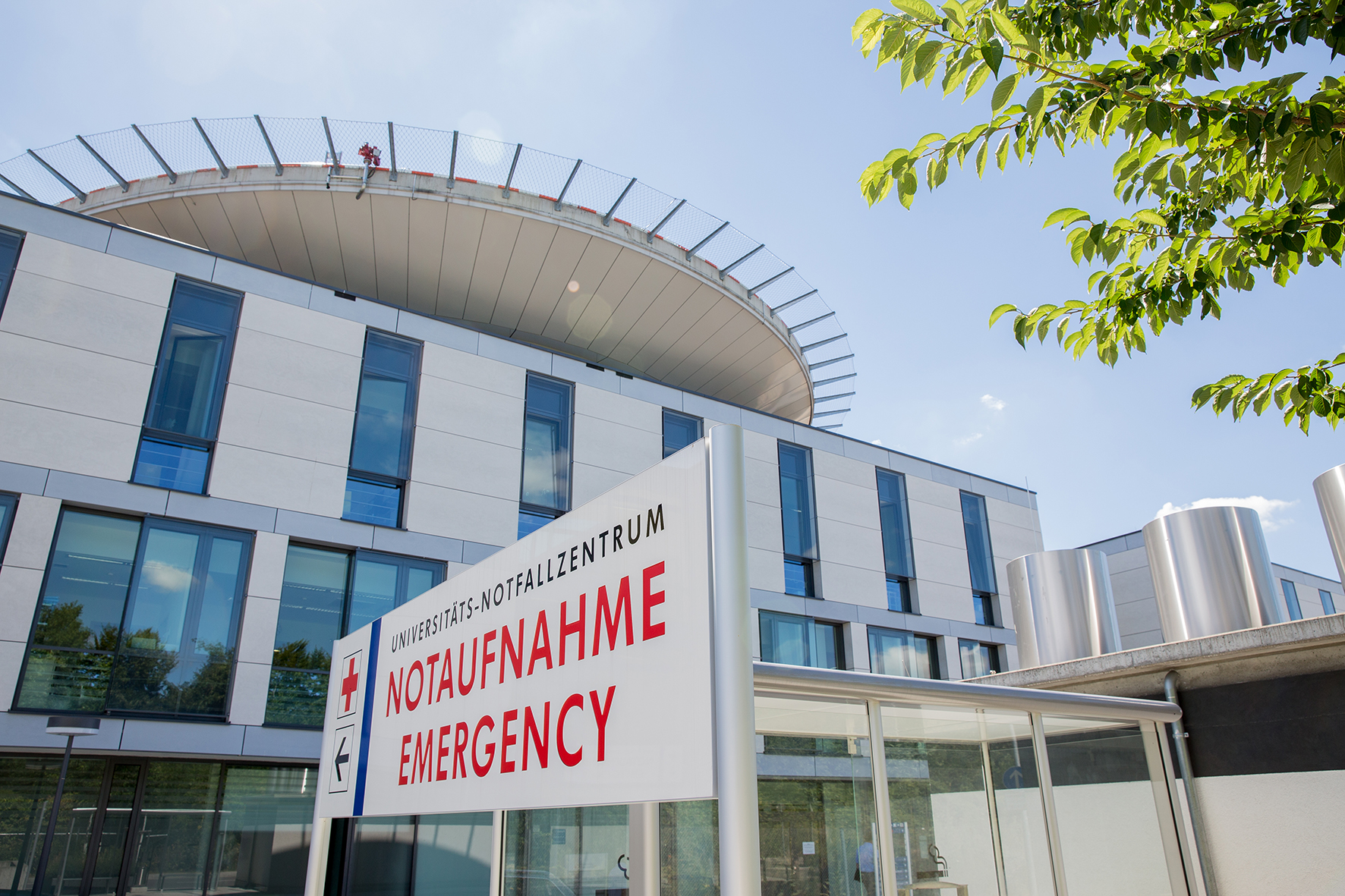
Patients treated in an emergency room’s trauma unit are not necessarily seriously injured: Two-thirds of patients suffer from acute conditions such as severe infections, strokes, heart attacks, or unexplained disturbances of consciousness. Accident victims, by contrast, account for only about one-third of cases. This is shown by the largest German study to date on trauma room care, conducted by the Medical Center – University of Freiburg in collaboration with the University Medical Center Schleswig-Holstein (UKSH), Lübeck Campus. The findings, published on November 11, 2026, in the *Deutsches Ärzteblatt*, help to organize emergency departments more efficiently.
The team led by Dr. Sebastian Wolfrum, head of the Interdisciplinary Emergency Department at UKSH, Lübeck Campus, and PD Dr. Katrin Fink, senior physician at the Emergency Department at the Medical Center – University of Freiburg, analyzed a total of 19,360 emergency room visits from 2020 to 2023. The analysis shows that patients who arrive not as a result of an injury but due to a serious illness are usually over 60 years old and require hospitalization.
Targeted Dispatch
Another key finding of the study: Many of these emergencies can already be reliably assigned to specific care pathways based on information provided by the emergency medical services. In more than three-quarters of the cases, a specialized neurological trauma team could be specifically alerted even before the patients’ arrival—for example, in cases of suspected acute stroke or cerebral hemorrhage.
“This supports the idea of having specialized teams on standby—for example, for particularly time-critical neurological emergencies. This allows diagnostic and therapeutic steps to be initiated immediately upon arrival in the trauma room,” says Katrin Fink, the study’s first author.
At the same time, the study shows that the diagnosis cannot always be assigned to a specific specialty right from the start. In 17 to 30 percent of patients, the responsible specialty department changed over the course of treatment. For example, what was initially suspected to be a neurological cause of impaired consciousness may later turn out to be a severe infection or metabolic disturbance.
“These overlaps make it clear that specialized treatment pathways alone are not sufficient,” says Sebastian Wolfrum, the study’s last author. “Interdisciplinary emergency medical expertise must be available simultaneously in the trauma room. Only in this way can initially unclear clinical presentations be quickly identified and treated in an interdisciplinary manner.”
The researchers also advocate for the establishment of a nationwide registry for non-traumatic emergency room patients—that is, those without acute injuries or broken bones. Such a registry could, similar to the established trauma registry for seriously injured patients, help systematically compare care structures, further develop treatment protocols, and continue to improve the quality of emergency care.
Publication:
Original title of the publication: Critically ill non-trauma patients in the shock room: An analysis from two university hospital emergency departments.
DOI: 10.3238/arztebl.m2026.0139
Link to the study: https://www.aerzteblatt.de/archiv/nichttraumatologische-kritisch-kranke-im-schockraum-961048ba-588f-4fa2-a27c-9e53b7d81244
Back
Medical Center - University of Freiburg
Central Information
Phone: 0761 270-0
info@uniklinik-freiburg.de
For press inquiries:
Corporate Communications
Breisacher Straße 153
79110 Freiburg
Phone: 0761 270-84830
kommunikation@uniklinik-freiburg.de