
T-helper cells switch to self-protection mode under prolonged stress
Research(April 14, 2026) Chronic infections cause long-term changes in key immune cells. T-helper cells suppress their immune function to ensure their survival. New avenues for vaccines and cancer immunotherapies.
T-helper cells, scientifically known as CD4⁺ T cells, control key processes in our immune system. They detect signs of pathogens and relay signals to other immune cells. In this way, they help B cells produce antibodies and support T killer cells in fighting infected cells. Researchers at the Medical Center – University of Freiburg have now investigated how these immune cells change under prolonged stress during chronic infections. Using chronic hepatitis C infection as an example, the team demonstrated that T helper cells shift their focus: they regulate the immune response less vigorously in order to ensure their own survival. This helps to better understand the course of chronic infections and opens up avenues for new therapies. The findings were published on April 1, 2026, in the journal Immunity.
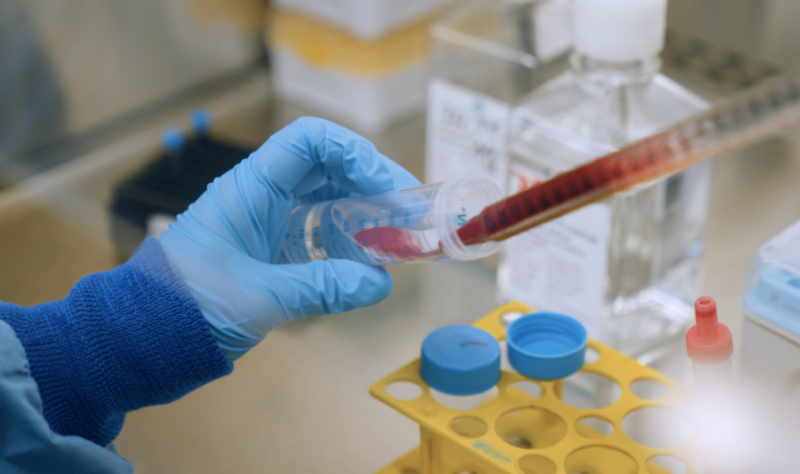
Blood samples from hepatitis C patients were analyzed in the laboratory, revealing significant changes. ©Medical Center – University of Freiburg
New Approaches to Therapeutic Vaccines and Cancer Treatments
T helper cells, scientifically known as CD4⁺ T cells, control key processes in our immune system. They detect signs of pathogens and relay signals to other immune cells. In this way, they help B cells produce antibodies and support T killer cells in fighting infected cells. Researchers at the Medical Center – University of Freiburg have now investigated how these immune cells change under sustained stress during chronic infections. Using chronic hepatitis C infection as an example, the team demonstrated that T helper cells switch their mode of operation: they regulate the immune response less vigorously in order to ensure their own survival. This helps to better understand the course of chronic infections and opens up avenues for new therapies. The findings were published on April 1, 2026, in the journal Immunity.
“We were able to uncover a resilience program within our immune system. T helper cells shift their focus from maximum efficacy to ensuring their own survival,” says research group leader Prof. Dr. Maike Hofmann, who led the study at the Department of Medicine II at the Medical Center – University of Freiburg together with its Medical Director, Prof. Dr. Robert Thimme, and Prof. Dr. Tobias Böttler, Director of the Gerok Liver Center. “This explains the impaired immune response in chronic diseases and simultaneously opens up new approaches for therapeutic vaccines and cancer therapies.”
How T-helper cells adapt to chronic stress
For the study, the Freiburg research team analyzed specific T-helper cells from blood samples taken from patients following acute infection, after spontaneous recovery, in cases of chronic hepatitis C, and after therapeutic cure. Using single-cell analyses and T-cell receptor data, it was shown that the functioning and properties of T-helper cells change during a chronic infection. As a result, they are less able to control the infection. At the same time, they persist longer under chronic stress.
Chronic infections leave an immune memory
It is particularly important that this adaptation does not simply disappear. Even after successful therapy, T helper cells bear traces of the long-term stress. “The cells not only remember the previous infection, but also that it was chronic,” explains co-first author Matthias Reinscheid. Co-first author Jill Weißer adds: “The cells form a chronic immune memory.”
The findings align with earlier work by the Freiburg researchers on T-killer cells—scientifically known as CD8⁺ T cells—and demonstrate how profoundly chronic infections shape the immune system.
What this means for patients
This could have clinical relevance for patients. “Our findings suggest that patients who have recovered from chronic hepatitis C are not protected against reinfection to the same extent,” says Böttler. “Furthermore, these adapted T-helper cells likely cannot be easily stimulated to mount a strong immune response again.” This is also significant for other chronic infections and for cancers, in which immune cells are challenged over long periods of time.
The study thus lays an important foundation for further research. In the next step, the researchers want to examine how well these observations can be applied to other chronic infections and to cancer. They also aim to determine whether the lasting changes in T-helper cells can be specifically influenced or partially reversed.
In the long term, this knowledge could help to specifically strengthen immune responses following chronic infections and develop new treatment approaches for cancer and chronic viral infections.
Original title of the publication: Acute and chronic infections drive distinct trajectories in human memory CD4+ T cell formation
DOI: 10.1016/j.immuni.2026.03.008
Link to the study: https://doi.org/10.1016/j.immuni.2026.03.008
Prof. Dr. Maike Hofmann, Research Group Leader, Department of Medicine II at the Medical Center – University of Freiburg
Prof. Dr. Robert Thimme, Medical Director of the Department of Medicine II at the Medical Center – University of Freiburg
Prof. Dr. Tobias Böttler, Director of the Gerok Liver Center at the Medical Center – University of Freiburg
More interesting articles


Medical Center - University of Freiburg
Central InformationPhone: 0761 270-0
info@uniklinik-freiburg.de
Corporate Communications
Breisacher Straße 15379110 Freiburg
Phone: 0761 270-84830
kommunikation@uniklinik-freiburg.de