
News | News
Uniklinik Freiburg on Youtube
(21.08.2023) Video Colorectal cancer - diagnosis, treatment, prevention
Experts from the Medical Center - University of Freiburg explain the warning signs of bowel cancer and which treatment options are used when. They also talk about the importance of screening.
Alarm signals and prevention: The transition from polyps to cancer is discussed. Prof. Dr. Robert Thimme, Medical Director of the Department of Medicine II at the Medical Center - University of Freiburg, presents the signs and symptoms of colorectal cancer and emphasizes the importance of regular check-ups.
Colorectal cancer surgery: Prof. Dr. Stefan Fichtner-Feigl and Prof. Dr. Hannes Neef from the Department of General and Visceral Surgery describe the procedure for colorectal cancer surgery and discuss minimally invasive, robot-assisted methods in particular.
Radiotherapy: Prof. Dr. Anca-Ligia Grosu, Medical Director of the Department of Radiation Oncology, explains the use of radiotherapy for colorectal cancer and provides information about the treatment process.
The video provides a structured overview of bowel cancer, from the first signs to treatment options.
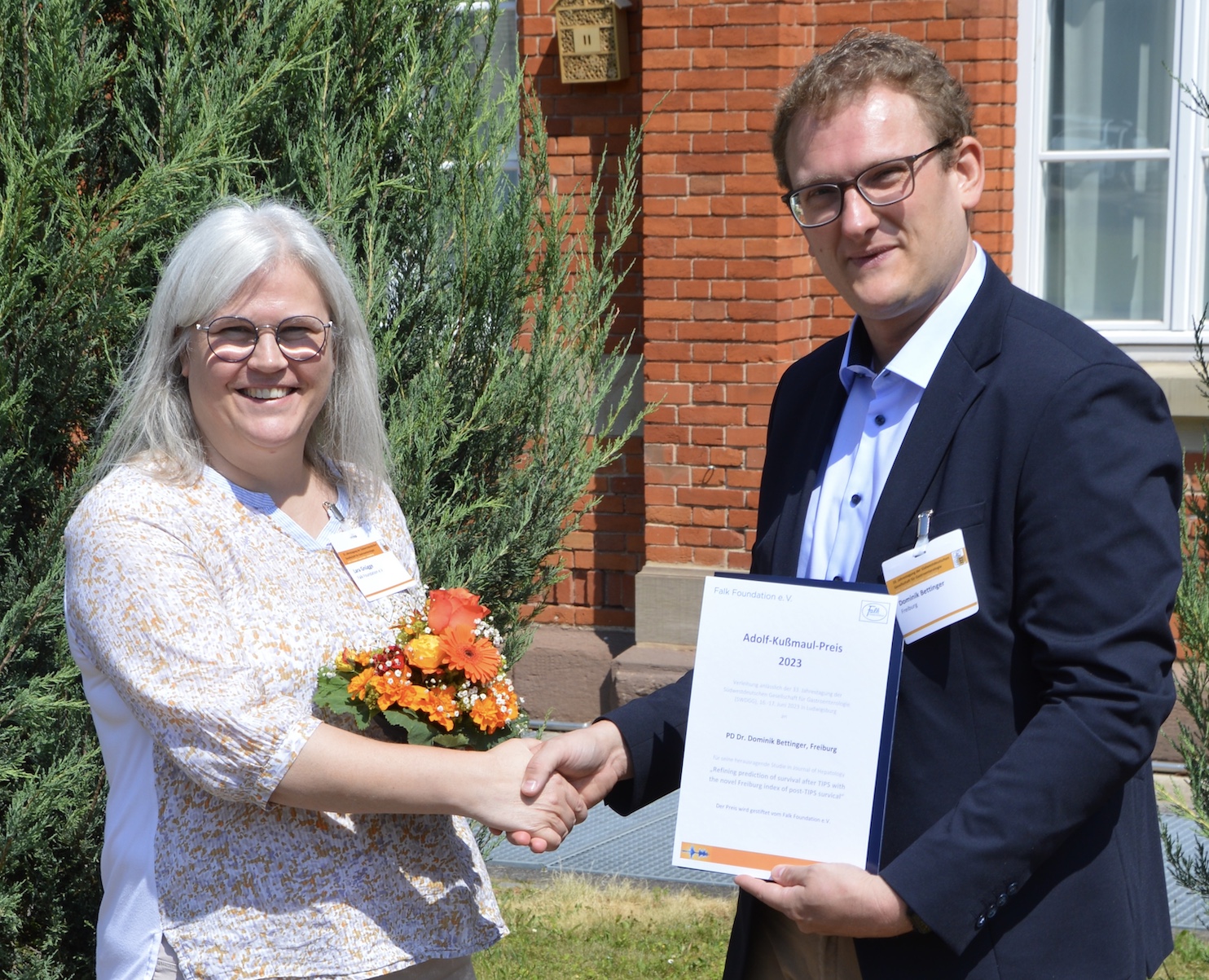
(07.07.2023) PD Dr. Dominik Bettinger awarded the prestigious Adolf-Kußmaul Prize
Reliable risk assessment of patients with liver cirrhosis
PD Dr. Dominik Bettinger, Scientific Head of the TIPS Section in the Department of Medicine II at the Medical Center - University of Freiburg, has been awarded this year's Adolf Kußmaul Prize of the Southwest German Society of Gastroenterology. The prize, endowed with 5,000 euros, was presented to Bettinger at the annual meeting of the Southwest German Society of Gastroenterology on June 16, 2023. Bettinger was honored for his research on risk assessment during the placement of a transjugular intrahepatic portosystemic shunt (TIPS) for patients with liver cirrhosis.
The insertion of a TIPS protects patients with liver cirrhosis from life-threatening complications, such as varicose vein bleeding in the esophagus. The cause of this life-threatening condition is increased blood pressure in the portal circulation, which carries blood from various internal organs back to the heart via the liver. In order to lower the blood pressure, a short-circuit connection, a so-called shunt, is created between the portal vein and the hepatic vein. As a result, the varicose veins in the esophagus recede.
However, strict patient selection is necessary before a TIPS procedure, as there are numerous risk factors that can speak against this procedure. In recent years, Bettinger's working group has conducted intensive research into the most precise risk assessment possible. In an international and interdisciplinary observational study with 1,871 patients, they were able to develop a new risk score that can be used to calculate a more reliable prognosis. The resulting Freiburg Index of post-TIPS survival (FIPS) can identify high-risk patients before a TIPS procedure and thus improve the individual treatment of these patients.
Caption: PD Dr. Dominik Bettinger accepted the award from Dr. Lara Gnügge of the Falk Foundation.
Image source: Falk Foundation e.V.
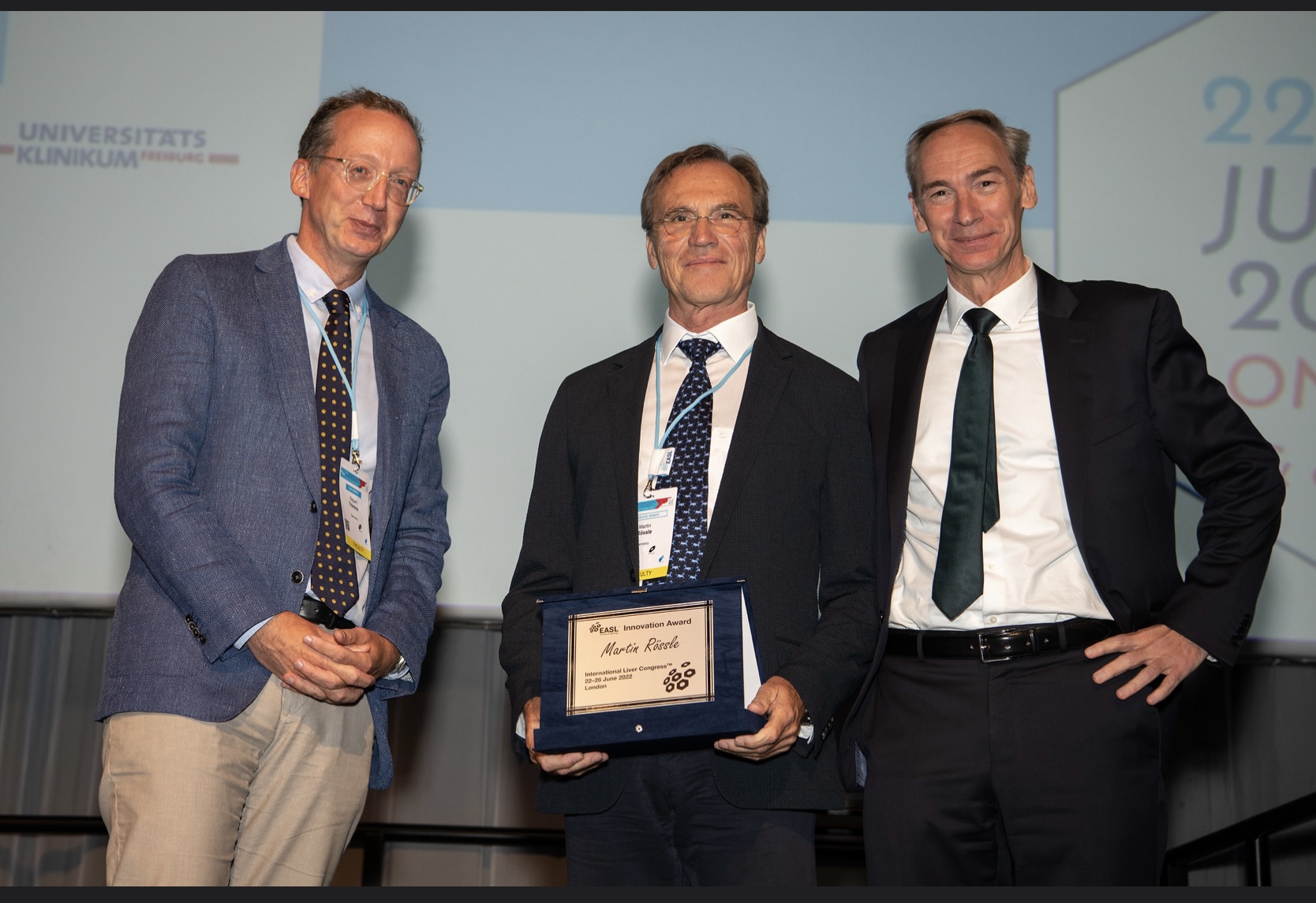
(04.07.2022) Innovation prize for Freiburg specialist
At the annual meeting of the European Liver Society (EASL), Prof. Dr. Martin Rössle, specialist in internal medicine and long-time employee at the Department of Medicine II at the Medical Center - University of Freiburg, was presented with the EASL Innovation Award on Friday, June 24, 2022 in London. The award recognizes his development of the so-called "transjugular intrahepatic porosystemic shunt" (TIPS), a minimally invasive procedure that can successfully treat numerous complications of liver cirrhosis. In this procedure, the blood is diverted past the liver using a type of bypass, thereby reducing the pressure in the vascular system upstream of the liver, which can lead to a life-threatening condition if left untreated. TIPS is now a standard procedure that is performed worldwide and is anchored in national and international guidelines. It increases both life expectancy and quality of life for patients.
"We are very proud of Prof. Rössle's remarkable lifetime achievement," says Prof. Dr. Robert Thimme, Medical Director of the Department of Medicine II at the Medical Center - University of Freiburg. "He has made a major contribution to establishing us internationally as a leading center in the field of liver diseases." More than 100 TIPS procedures are performed at the Medical Center - University of Freiburg every year.
Caption: (from left to right) Prof. Dr. Robert Thimme, Medical Director at the Medical Center - University of Freiburg, award winner Prof. Dr. Martin Rössle and Prof. Dr. Thomas Berg, President of the EASL, at the presentation of the EASL Innovation Award.
Image rights: European Association for the Study of the Liver (EASL)
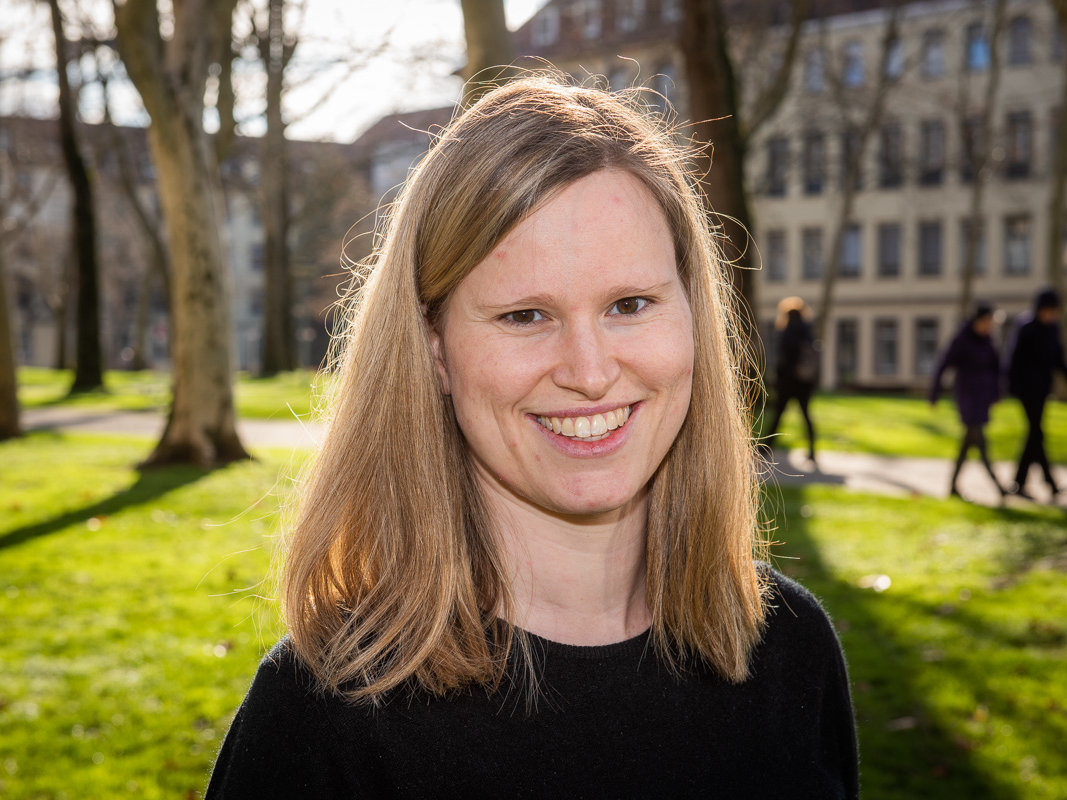
(08.03.2022) Heinz Maier-Leibnitz Prize for Maike Hofmann
Congratulations! Immunologist Dr. Maike Hofmann has been awarded the Heinz Maier-Leibnitz Prize by the German Research Foundation (DFG). This was decided by a selection committee set up by the DFG and the Federal Ministry of Education and Research. The prize is regarded as the most important award for young scientists in Germany. It will be awarded a total of ten times this year and is endowed with 20,000 euros each.
Hofmann studies the human immune system. She is a research group leader at the Department of Medicine II under the direction of Medical Director Prof. Dr. Robert Thimme. Among other things, Hofmann is a sub-project leader in the Collaborative Research Center (CRC) 1160 "IMPATH - Immunopathology due to impaired immune responses", CRC 1479 "OncoEscape - Oncogene-driven immune escape" and TRR 179 "Determinants and dynamics of elimination versus persistence of hepatitis virus infections". In her habilitation project, she is investigating how so-called killer cells of the human immune system control viral hepatitis. These cells are a group of white blood cells that have cell-damaging properties - and play a central role in the immune response to hepatitis viruses and liver cancer cells. Since 2019, her work has been funded by the "Margarete von Wrangell Habilitation Program for Women" of the Baden-Württemberg Ministry of Science, Research and the Arts.
Publications on SARS-CoV-2
Most recently, Hofmann was significantly involved in two Freiburg studies on SARS-CoV-2. In their publications, the scientists were able to show that immune cells are formed after a SARS-CoV-2 infection, so-called memory T cells, which are retained in the body and could mediate a rapid immune response in the event of a new infection. The study was published in the journal Nature Medicine. In a second study, published in Nature, the researchers identified when an initial immune protection can be detected after SARS-CoV-2 vaccination with an mRNA-based vaccine and how the reactions of the different components of the human immune system develop over months.
Copyright: University of Freiburg / Klaus Polkowski
Update! (14.02.2022) DFG funds the continuation of the IMM-PACT program for clinician scientists
The continuation proposal submitted to the DFG for the Clinician Scientist Program "IMM-PACT: Targeting common principles of immune mediated disease: from basic science to novel therapies" under the direction of Prof. Thimme, Medical Director of the Department of Medicine II, was approved by the German Research Foundation (DFG). This means that excellent research by young physicians in the field of immunology will be funded for a further two years with a sum of around €1.36 million, in line with their specialist training. Further information can be found here.
(28.11.2018) Million-euro funding dovetails immunology research and specialist training
New training program for young physicians combines patient care and immunological research at the Medical Center - University of Freiburg / 2.7 million euros in funding from the German Research Foundation (DFG)
Combining challenging immune research projects with clinical training: A new training program at the Medical Center - University of Freiburg makes this possible for young physicians. The German Research Foundation (DFG) is funding the "IMM-PACT: Uncovering common principles of immune-mediated diseases: from basic science to new therapies" program with around 2.7 million euros. The "Clinician-Scientist" program will run for three years from January 2019 and consists of structured specialist training with room for clinical and basic research. Following a successful interim evaluation, the program can be extended by two years. Among other things, the money will be used to establish 24 specialist posts at 20 clinics and institutes. The participants will also be supported by experienced mentors.
"Nowhere is the combination of research and patient care practiced as intensively as at university hospitals. With this program, we want to enable young researchers to pursue a sustainable academic career at the interface between clinical practice and research," says project leader Prof. Dr. Robert Thimme, Medical Director of the Department of Medicine II at the Medical Center - University of Freiburg. The DFG certifies that the program offers the best conditions for carrying out high-quality scientific projects.
Clinician-scientist programs such as IMM-PACT promote both the networking of research and clinical application, as well as cooperation between different institutions. This is reflected, among other things, in the interdisciplinary composition of the applicants: in addition to Prof. Thimme, these are Prof. Dr. Leena Bruckner-Tuderman, Clinic for Dermatology and Venereology, Prof. Dr. Stephan Ehl, Center for Chronic Immunodeficiency, Dr. Miriam Erlacher, Department of Pediatric Hematology and Oncology, Prof. Dr. Heike Pahl, Department of Medicine I and Prof. Dr. Robert Zeiser, Department of Medicine I. IMM-PACT is planned in close coordination with the already successful Berta Ottenstein Program for Clinician Scientists.
Image rights: University of Freiburg / Britt Schilling
(30.03.2021) 9.3 million euros in funding for physicians conducting research
Federal Ministry of Education and Research (BMBF) funds program to study immune-mediated diseases at the Medical Center - University of Freiburg
The "IMMediate - Immune-Mediated Diseases" program at the Medical Center - University of Freiburg is based in the fields of immunology, oncology and cell biology. It supports researching medical specialists who, as so-called Advanced Clinician Scientists, investigate immune-mediated diseases that affect the brain, heart, liver or intestines, for example. The program has now been selected for funding by the Federal Ministry of Education and Research (BMBF) as one of eight projects at various university hospitals in Germany, with 9.3 million euros going to Freiburg.
"With this generous funding, we will be able to release 12 specialists and senior physicians from 50 percent of their duties for research over the next five years. This will give them more freedom for their research activities," says Prof. Dr. Robert Thimme, Medical Director of the Department of Medicine II (Gastroenterology, Hepatology, Endocrinology, Infectiology) at the Medical Center - University of Freiburg and project leader of IMMediate. Thimme submitted the successful application together with Prof. Dr. Stephan Ehl, Medical Director of the Institute of Immunodeficiency at the Medical Center - University of Freiburg, and Prof. Dr. Leena Bruckner-Tuderman, Medical Director of the Department of Dermatology and Venereology at the Medical Center - University of Freiburg.
The program, which is the only project in Baden-Württemberg to receive funding, strengthens the excellent framework conditions for scientists at the Faculty of Medicine - University of Freiburg. "I am delighted that we are able to further expand the structured training program for physicians in Freiburg with IMMediate. It already starts with MOTI-VATE in medical school. Together with the Berta-Ottenstein program and now with IMMediate, all phases of medical training up to long-term career prospects are covered," says Thimme.
Background:
At university hospitals in Germany, medical research and the treatment of patients are closely linked. This link is a central feature of university medicine. It enables the clinics to significantly advance health research and quickly bring important advances to treatment. With this funding initiative, the Federal Ministry of Education and Research wants to ensure that local doctors also have the best conditions for their research.
In recent years, the Faculty of Medicine - University of Freiburg has developed a structured advanced training program for physicians conducting research (Berta Ottenstein Program), which covers all phases of advanced medical training.
(13.08.2020) Two scientists from the Medical Center - University of Freiburg newly admitted to the Leopoldina
Prof. Dr. Stephan Ehl and Prof. Dr. Robert Thimme have been appointed to the National Academy of Sciences / Election is considered one of the highest honors for researchers
With Prof. Dr. Stephan Ehl and Prof. Dr. Robert Thimme, two more Freiburg researchers have been members of the Leopoldina - National Academy of Sciences since August 2020. Ehl is Medical Director of the Center for Chronic Immunodeficiency (CCI) at the Medical Center - University of Freiburg, while Thimme is Medical Director of the Department of Medicine II - Gastroenterology, Hepatology, Endocrinology and Infectiology at the Medical Center - University of Freiburg. Being elected a member of the Leopoldina is considered one of the highest academic honors and recognitions for scientists. "The Leopoldina is currently becoming increasingly important - also in light of the coronavirus crisis. I am very pleased that Freiburg is now so well represented in the Academy with eight members," says Prof. Dr. Frederik Wenz, Chief Medical Officer of the Medical Center - University of Freiburg.
Expert for the child's immune system
Prof. Dr. Stephan Ehl studied medicine in Aachen, Erlangen and Munich. The clinical focus of the specialist in pediatric and adolescent medicine is in the field of pediatric immunology, in particular the diagnosis and treatment of congenital disorders of the immune system. He also researches immunodeficiencies with autoimmunity and chronic inflammation. In 2003, Ehl habilitated in the field of pediatrics. Prof. Ehl has been Medical Director of the Center for Chronic Immunodeficiency (CCI) at the Medical Center - University of Freiburg since 2008 and spokesperson for the Collaborative Research Center 1160 on immunopathology since 2015. As head of the Department of Pediatric Immunology, the 55-year-old looks after children with immunological diseases in the Department of Pediatric Hematology and Oncology at the Medical Center - University of Freiburg. He was awarded the research prize of the German Society for Pediatric Infectiology in 1999 and the Kind-Philipp Foundation Prize for Pediatric Oncology Research in 2001.
Internist and hepatitis researcher
Prof. Dr. Robert Thimme (50) studied medicine both in his home town of Berlin and in Freiburg. He is a specialist in internal medicine, gastroenterology and endocrinology. He habilitated in internal medicine in 2006. Since 2015, Thimme has been Medical Director of the Department of Medicine II at the Medical Center - University of Freiburg, where he has set new priorities, including the founding of the Gerok Liver Center and IGE (Interdisciplinary Gastrointestinal Endoscopy). Thimme's research focuses on the immune response to hepatitis viruses. He is particularly interested in promoting young scientists and has set up training programs for clinician scientists funded by the German Research Foundation and the Else Kröner-Fresenius Foundation, among others.Thimme has received numerous prizes and awards, including for the best experimental doctoral thesis, acceptance into the Emmy Noether Program of the German Research Foundation, an appointment to a Heisenberg professorship, the Thieme Prize of the Leopoldina - National Academy of Sciences and acceptance into the American Society of Clinical Investigation (ASCI).
Leopoldina - National Academy of Sciences
The Leopoldina, founded in 1652, is one of the oldest scientific academies in the world. With around 1,500 members, the Leopoldina brings together outstanding scientists from Germany, Austria, Switzerland and numerous other countries. As Germany's national academy, the Leopoldina has represented German science in international bodies since 2008 and takes an independent position on the scientific basis of political and social issues. In interdisciplinary expert groups, the Leopoldina develops public statements on current topics, also together with other German, European and international academies.
(05.05.2020) Artificial intelligence improves colorectal cancer screening
AI-based system at the Medical Center - University of Freiburg detects up to ten percent more colorectal cancer precursors during a colonoscopy
Endoscopy experts at the Medical Center - University of Freiburg are now using artificial intelligence (AI) to reliably detect even more and smaller precancerous lesions during colonoscopies. During the colonoscopy, the system analyzes the live video images and marks suspicious areas on the monitor with a green rectangle. Studies show that physicians find around ten percent more precancerous lesions than without AI support. Since the beginning of the year, all screening colonoscopies at the Medical Center - University of Freiburg have been carried out with the help of the new system. More than 50 people have already been successfully examined in this way. This makes Medical Center - University of Freiburg the first university hospital in Germany to use the new technology on a regular basis.
"With the support of artificial intelligence, we can offer our patients even greater safety in colorectal cancer screening," says PD Dr. Arthur Schmidt, Head of Interdisciplinary Endoscopy at the Department of Medicine II at the Medical Center - University of Freiburg. The system can help even very experienced doctors to detect abnormal tissue structures more reliably. "This allows us to detect and remove very small precursors even more reliably," says Schmidt.
The system was trained using several thousand images of suspicious precancerous lesions using the deep learning method. The software developed its own search patterns, with which the success rate for detecting these tissues was particularly high. As the optical markers are superimposed on the colonoscopy image immediately during the examination, physicians do not need any training. "While the human eye always focuses on one point in the image, the AI has the entire image in view at all times. Ultimately, however, it is of course us humans who assess and decide whether something needs to be removed," says Schmidt.
Colonoscopy: one of the most effective tools for early cancer detection
Around 60,000 people are diagnosed with bowel cancer in Germany every year. Regular screening examinations could prevent the majority of these diseases. This is because screening colonoscopy is considered one of the most effective tools for the early detection of cancer. It is paid for by health insurance companies every ten years from the age of 55. For people with an increased risk of developing the disease, such as those with a family history of bowel cancer, an earlier examination may also be advisable.
During a colonoscopy, physicians examine the condition of the colon. A special endoscope is inserted, which immediately provides a moving and illuminated image of the inside of the body. If suspicious tissue is detected, it can be cut off directly with a wire loop and sent to the laboratory for further examination.
Contact: Prof. Dr. Arthur Schmidt, Medical Director of Endoscopy
As soon as suspicious tissue appears on the monitor, it is marked with a green rectangle. The marking remains quite accurate even when the camera moves. Medical Center - University of Freiburg
Department of Medicine II
Medical Director:Prof. Dr. Robert Thimme
Gastroenterology, Hepatology,
Endocrinology and Infectiology
Hugstetter Straße 55
79106 Freiburg
Info Medicine: +49 (0) 761 270-34010