
Weak Pelvic Floor: What Helps Women with Incontinence and Prolapse Symptoms
UrogynecologyWhere can I find specialized care for incontinence and pelvic floor weakness in Freiburg?
The certified Continence and Pelvic Floor Center at the Medical Center – University of Freiburg offers specialized diagnosis and treatment for urinary incontinence, fecal incontinence, and pelvic organ prolapse.
- Treatment: Pelvic floor exercises, medication, pessaries, and surgical procedures.
- Special Feature: Interdisciplinary collaboration among gynecology, urology, surgery, radiology, and physical therapy.
- Director: Prof. Dr. Markus Hübner, Deputy Medical Director and Head of the Urogynecology Section at the Department of Obstetrics and Gynecology.
- To schedule an appointment in Urogynecology: 0761 270-30250/31680. A referral from your primary care physician or gynecologist is required.
- Further information: Continence and Pelvic Floor Center

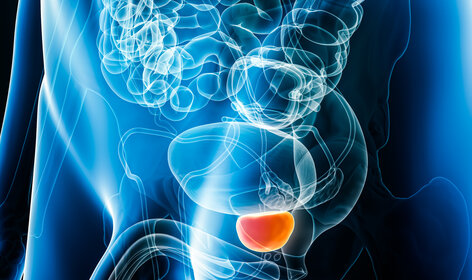
The pelvic floor consists of muscles and connective tissue and supports important organs such as the bladder, uterus, and intestines. © Adobe Stock
Whether it’s during sports, at work, or in a relationship: When the pelvic floor no longer functions properly, it can significantly impair quality of life. Nevertheless, many women don’t talk about their symptoms for a long time out of embarrassment. Yet these problems are by no means limited to older people. Pregnancies and vaginal births, in particular, can put a lot of strain on the pelvic floor.
“Pelvic floor issues can affect women in a wide variety of life situations. It’s important for those affected to know that they don’t have to simply accept these limitations. There are many ways to effectively treat these symptoms,” says Prof. Dr. Markus Hübner, Director of the Interdisciplinary Continence and Pelvic Floor Center and Deputy Medical Director of the Department of Obstetrics and Gynecology at the Medical Center – University of Freiburg.
What symptoms can occur with pelvic floor weakness?
The pelvic floor consists of muscles and connective tissue that support, among other things, the bladder, the uterus, and the intestines. If its function is impaired, this can manifest in various ways.
The most common urogynecological symptoms include:
- Stress urinary incontinence: Urine leaks involuntarily when coughing, sneezing, laughing, lifting, or exercising.
- Overactive bladder: Those affected often experience a sudden, strong urge to urinate and need to use the restroom frequently.
- Prolapse: The bladder, uterus, or other pelvic organs descend. This can cause a feeling of pressure or a sensation of a foreign body and make it difficult to empty the bladder or bowels.
- Fecal incontinence: The passage of stool or gas can no longer be reliably controlled.
These symptoms may occur individually or in combination. The extent to which they interfere with daily life varies from patient to patient.
What treatments are effective for incontinence and pelvic floor weakness?
“Not every case of pelvic floor weakness requires surgery,” clarifies the gynecologist at the Medical Center – University of Freiburg. The appropriate treatment depends on the cause, the nature of the symptoms, and the individual’s needs.
“In the case of stress urinary incontinence, for example, targeted pelvic floor exercises under the guidance of a physical therapist can help strengthen the muscles and improve their function,” says Prof. Hübner.
Other treatment options include:
- Medications: These can be used, particularly in cases of an overactive bladder, to reduce a strong urge to urinate.
- Pessaries: These silicone devices are inserted into the vagina and can provide support for prolapsed pelvic organs.
- Surgical procedures: If conservative measures are not sufficiently effective, various surgical interventions may be considered, depending on the condition.
The key is to work with the patient to find a treatment that suits her symptoms and her life situation.
How are pelvic floor symptoms evaluated?
At the Continence and Pelvic Floor Center at the Medical Center – University of Freiburg, the diagnostic process begins with a detailed consultation. This focuses not only on the nature and duration of the symptoms, but also on the situations in which they occur and the extent to which they interfere with daily life.
Depending on the symptoms, this is followed by a gynecological examination and ultrasound scans. If further information is needed, additional procedures may be used:
- Cystometry: This test evaluates the function of the bladder and the bladder sphincter.
- Cystoscopy: This procedure allows the interior of the bladder to be examined using a small camera.
- Magnetic resonance imaging (MRI): This can aid in the evaluation of the pelvic organs in specific cases.
Not every patient requires all of these tests. The decision on which procedures are appropriate is made on a case-by-case basis.
Why is individualized treatment so important?
Pelvic floor symptoms can have various causes and affect multiple organs simultaneously. Therefore, it is not always sufficient to examine only the bladder or only the pelvic floor muscles.
At the certified Continence and Pelvic Floor Center at the Medical Center – University of Freiburg, specialists from various disciplines therefore work closely together. When necessary, findings are discussed jointly and treatment plans are coordinated.
The goal is not merely to improve test results. Above all, treatment is intended to ensure that those affected can once again participate in everyday life as freely as possible—whether through sports, shared activities, or in their relationships.
“Pelvic floor issues are no reason to withdraw from social life or permanently give up activities you enjoy. Those who seek help early can often achieve significant improvement through targeted, non-surgical measures,” emphasizes Prof. Hübner.
This article has been fully medically reviewed by
Prof. Dr. Markus Hübner
, Deputy Medical Director and Head of the Urogynecology Section at the Department of Obstetrics and Gynecology, Medical Center – University of Freiburg
More Interesting Articles

Medical Center - University of Freiburg
Central InformationPhone: 0761 270-0
info@uniklinik-freiburg.de
Corporate Communications
Breisacher Straße 15379110 Freiburg
Phone: 0761 270-84830
kommunikation@uniklinik-freiburg.de