
Your advanced training
Emergency care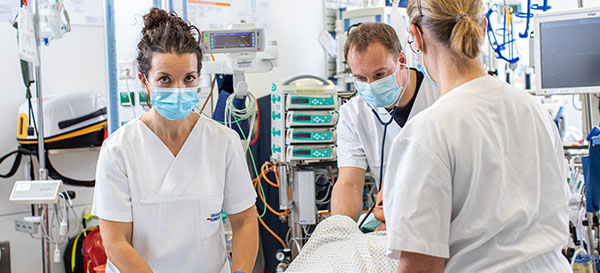
Duration of advanced training: 21 months for full-time employment, longer for part-time employment if necessary
Start of advanced training: Annually. Start February
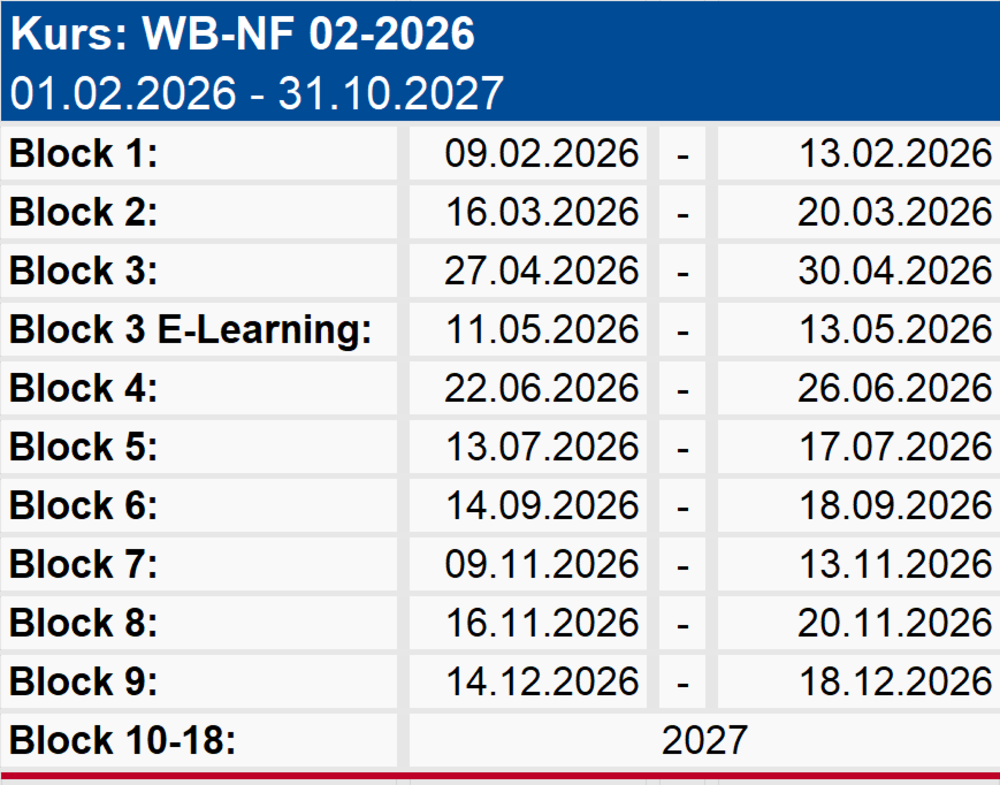
The next advanced training course is expected to start in February 2027.
- Nursing care staff with a professional license in accordance with Section 1 of the Nursing Professions Act.
- Nursing care staff in emergency departments with at least one year's professional experience, including at least six months in an emergency admission area.
Qualification for nursing tasks in emergency care, including
- Integration of current scientific nursing, medical and other scientific findings into everyday professional life.
- Development and promotion of professional, personal, social and methodological skills in the professional field.
- Initial assessment of patients with illnesses/injuries of all degrees of severity.
- Expanding the ability to monitor patients at risk of death using invasive and non-invasive monitoring.
- Recognize therapeutically relevant and life-threatening complications.
- Safe care of patients in the event of life-threatening complications until transfer to subsequent care units.
- Support and assistance in the diagnosis and initial treatment of patients in the emergency room.
- Ability to assist in the care of seriously ill or seriously injured patients in the shock room.
Total scope: 720 hours, divided into modules
Our state-recognized advanced training is offered in modules. Modules are self-contained learning units. The modules are offered in parts together for the various advanced training courses.
The content of the basic modules can be credited to the advanced training courses in intensive care, intermediate care, pediatric intensive care and anesthesia care.
The theoretical lessons take place in block phases (1-2 weeks each) and possibly as study days.
Teaching times: Mon-Fri, 8.30 am - 4.00 pm
Location: Classrooms of the Academy for Medical Professions at the Medical Center - University of Freiburg
Basic modules: 170 hours in total
Basic modules provide basic content for the areas of intensive, IMC and emergency care as well as for nursing care in anesthesia. They address fundamental nursing-relevant topics from the related sciences that are independent of the area of application.
Basic module I | Applying professional basics | 94 hours |
Module unit 1 | Thinking and acting ethically and inclusively | 16 hours |
Module unit 2 | Theory-based nursing care | 32 hours |
Module unit 3 | Incorporating models of health and illness into nursing care | 12 hours |
Module unit 4 | Acting economically in healthcare | 18 hours |
Module unit 5 | Basics of emergency management | 8 hours |
Module unit 6 | Basics of hygiene management | 8 hours |
Basic module II | Initiating and shaping developments | 76 hours |
Module unit 1 | Learning | 36 hours |
Module unit 2 | Planning and designing instruction processes | 16 hours |
Module unit 3 | Quality management - designing work processes in complex situations | 16 hours |
Module unit 4 | Working in projects | 8 hours |
Specialist modules in emergency care: total: 550 hours
Specialist modules impart relevant specialized knowledge.
Specialist module I | Initial assessment, admission and support of patients in the emergency department | 154 hours |
Module unit 1 | Managing the initial contact with patients | 54 hours |
Module unit 2 | Initial assessment and documentation of the urgency of patient treatment | 30 hours |
Module unit 3 | Acting in a symptom-oriented manner in the emergency department | 10 hours |
Module unit 4 | Monitoring patients with acute syndromes in the emergency department and acting accordingly | 40 hours |
Module unit 5 | Acting as an emergency nurse and dealing with stress | 20 hours |
Specialist module II | Supporting patients in special care situations | 130 hours |
Module unit 1 | Assisting patients with thermal damage or emergencies, electrical and lightning accidents, chemical and radiation accidents in their special care situation | 16 hours |
Module unit 2 | Caring for patients with dementia in the emergency room | 24 hours |
Module unit 3 | Supporting patients who have experienced violence and abuse | 20 hours |
Module unit 4 | Monitoring and caring for patients in acute psychiatric and behavioral emergencies | 20 hours |
Module unit 5 | Monitoring and caring for patients with acute gynecological, urological and nephrological diseases | 10 hours |
Module unit 6 | Supporting gerontological patients in emergency situations | 20 hours |
Module unit 7 | Monitoring and accompanying children with acute illnesses in the emergency department | 20 hours |
Specialist module III | Monitoring and caring for patients with acute diagnoses | 90 hours |
Module unit 1 | Supporting patients with haematological or oncological syndromes | 10 hours |
Module unit 2 | Caring for patients with acute gastroenterological and metabolic syndromes or intoxications | 20 hours |
Module unit 3 | Monitoring and caring for patients with acute cardiologic and/or pulmonologic diseases | 40 hours |
Module unit 4 | Monitoring and accompanying patients with neurological diseases | 20 hours |
Specialist module IV | Caring for and monitoring patients with acute traumatological events | 110 hours |
Module unit 1 | Caring for and monitoring patients with acute traumatological events or cardiovascular surgical emergencies | 30 hours |
Module unit 2 | Caring for and monitoring patients with acute traumatological events in the trauma room | 40 hours |
Module unit 3 | Monitoring and accompanying patients with acute injuries to the central nervous system in the emergency room | 20 hours |
Module unit 4 | Monitoring and assisting patients with pain in the emergency department | 10 hours |
Module unit 5 | Monitoring and accompanying patients with acute ear, nose and throat diseases and acute ophthalmologic diseases | 10 hours |
Specialist module V | Structuring and organizing processes in emergency departments | 40 hours |
Module unit 1 | Organizing emergency departments and helping to shape processes | 10 hours |
Module unit 2 | Implementing legal principles in emergency care | 12 hours |
Module unit 3 | Implementing occupational safety and hygiene guidelines in the emergency room | 8 hours |
Module unit 4 | Dealing with special situations and mass casualty incidents in the emergency department | 10 hours |
Lesson hours at free disposal | For example, free time for in-depth study, excursion Examination | 26 hours |
- Total scope: 1800 hours with mandatory and optional areas of deployment.
- Assignment in an emergency/emergency room, intensive care unit, anesthesia and ambulance service.
- External participants can also be deployed in their own hospital after consultation with the head of advanced training.
- Further training title "Health and nursing professional*/health and pediatric nurse*/pediatric nurse*/nursing specialist*/senior nurse* for emergency care.
- The advanced training courses are based on the Ordinance of the Ministry of Social Affairs on Advanced Training for Nursing Professions in Baden-Württemberg (WVO-Pflegeberufe) dated October 22, 2020.
- The advanced training concludes with a state examination, which consists of a written, an oral and a practical part.
- Participation is free of charge for employees of the hospital.
- The course fee for external participants is €6,815.
- The course comprises a total of 720 teaching units.
- You will receive 40 continuing education points as part of the registration of professional nursing care staff.

Andreas Leonhardt
B.A. Vocational Educator in Healthcare
Phone: 0761 270-92551
andreas.leonhardt@uniklinik-freiburg.de