
TIPS technology
The liver is the central metabolic organ in the human body. Blood absorbed from the gastrointestinal tract is therefore transported via the mesenteric veins and the portal vein to the liver for further metabolization of nutrients. If there is nodular remodeling of the liver as part of liver cirrhosis or a thrombosis in the portal vein, the blood pressure in the portal vein system increases. This leads to congestion and the development of portal hypertension. Ascites (abdominal fluid) and bypass circuits in the form of esophageal and gastric varices develop, which can lead to severe bleeding.
In this situation, the pressure in the portal vein can be reduced by inserting a shunt (TIPS) through a small metal stent. The abbreviation TIPS stands for transjugular intrahepatic portosystemic shunt and explains the access route via the jugular vein and the positioning of the stent in the liver between the portal vein and the draining hepatic vein. The technical procedure is explained in Figures 1-4:
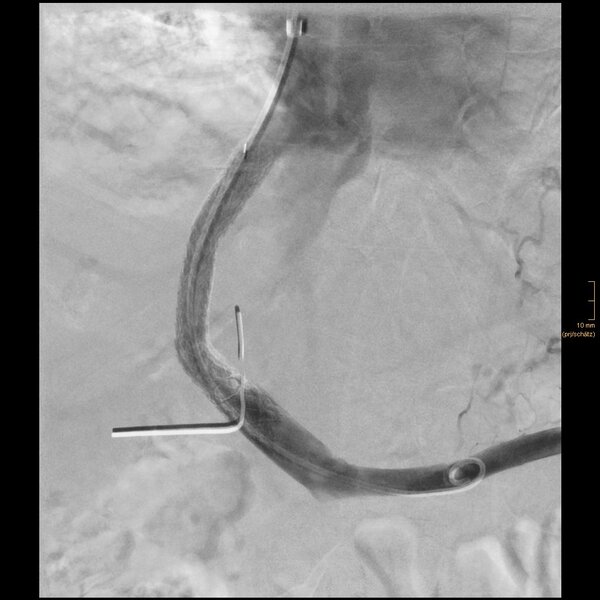
Image material: Dr. M. Schultheiß
Before a TIPS procedure, patients undergo a thorough examination to check the indication, rule out possible contraindications and provide detailed information about the procedure as well as the risks and side effects. This is usually done in advance in an outpatient appointment at the TIPS outpatient clinic of the Gerok Liver Center. The procedure itself is performed under inpatient conditions and the patients are sedated by the continuous administration of painkillers and sedatives.