
Lung cancer screening will be covered by health insurance starting April 1
Diagnostic and Interventional Radiology(April 7, 2026) The Medical Center – University of Freiburg has been offering this screening since September 2025. Statutory health insurance plans will cover the costs starting April 1, 2026.
Starting April 1, 2026, lung cancer screening for heavy smokers will be covered by statutory health insurance. The Medical Center – University of Freiburg has been offering this form of early detection since September 2025, making it the first hospital in Baden-Württemberg to include this service in its clinical care. Insured patients receive counseling, diagnostics, and, if necessary, further treatment all in one place. For people at increased risk, screening can help detect lung cancer at an early stage, even before symptoms appear.
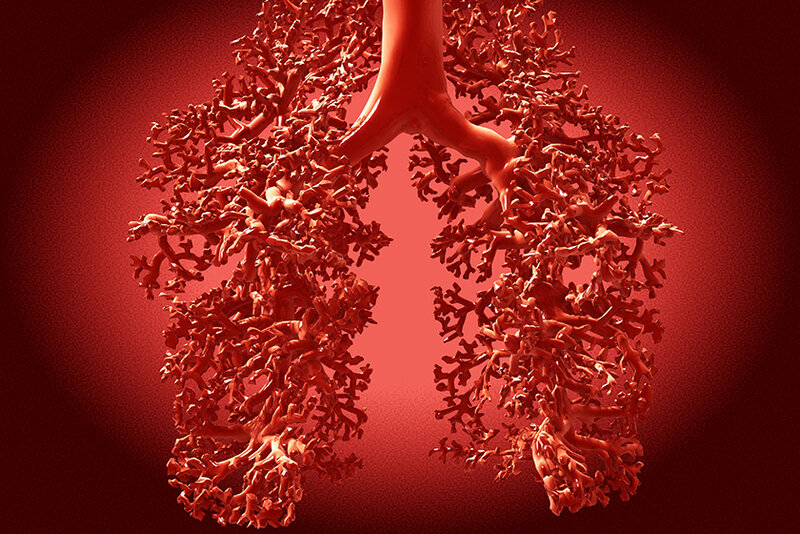
Lung cancer screening is intended for people between the ages of 50 and 75 who currently smoke or who quit smoking less than ten years ago. ©Juan Gärtner/Fotolia
Quick decisions on abnormal findings
“With this new insurance coverage, lung cancer screening is finally becoming accessible to many people,” says Dr. Prerana Agarwal, Head of Lung Cancer Screening at the Medical Center – University of Freiburg. “We support patients from the initial consultation through the examination to further evaluation. This allows us to quickly decide what further steps are necessary if abnormal findings are detected.”
Screening Process at the Medical Center – University of Freiburg
The screening is intended for people between the ages of 50 and 75 who currently smoke or who quit smoking less than ten years ago. Eligibility requires at least 25 years of smoking history and at least 15 pack-years. A pack-year means one pack of cigarettes per day over the course of a year. Additionally, the last chest CT scan must have been performed more than twelve months ago.
The process begins with a referral from a qualified specialist in general medicine, internal medicine, or occupational medicine. A medical consultation takes place before enrollment. During this consultation, the benefits and risks are explained, such as radiation exposure and the possibility of incidental or false-positive findings. The CT scan is painless and takes only a few minutes. Contrast agents are not required for this procedure. A low-dose CT scan is used, meaning a chest CT scan with minimal radiation exposure. “We use state-of-the-art equipment, such as photon-counting CT, which has been proven to provide the lowest radiation exposure and the best image quality. It provides accurate images of the lungs and can also reveal even small changes,” says Prof. Dr. Christopher Schlett, Head of the Section for Cardiothoracic Imaging at the Department of Radiology at the Medical Center – University of Freiburg. The examination is offered at both the Freiburg location and the Bad Krozingen campus.
Information on support for quitting smoking
The screening is integrated into the care provided by the Interdisciplinary Lung Cancer Center at the Medical Center – University of Freiburg. If a finding requires further evaluation, the departments of Pulmonology, Thoracic Surgery, Oncology, Radiology, Nuclear Medicine, and Pathology are available for further diagnosis and treatment. The program also includes information on support for quitting smoking. In this way, the program combines early detection with preventive measures to promote long-term health improvement.
For more information, visit www.lungenkrebsscreening-freiburg.de
Prof. Dr. Christopher Schlett, Head of the Section for Cardiothoracic Imaging at the Department of Radiology, Medical Center – University of Freiburg
Dr. Prerana Agarwal, Head of Lung Cancer Screening at the Medical Center – University of Freiburg
More interesting articles


Medical Center - University of Freiburg
Central InformationPhone: 0761 270-0
info@uniklinik-freiburg.de
Corporate Communications
Breisacher Straße 15379110 Freiburg
Phone: 0761 270-84830
kommunikation@uniklinik-freiburg.de